
How to Choose the Right House Painter in Porirua: 7 Questions to Ask Before You Hire
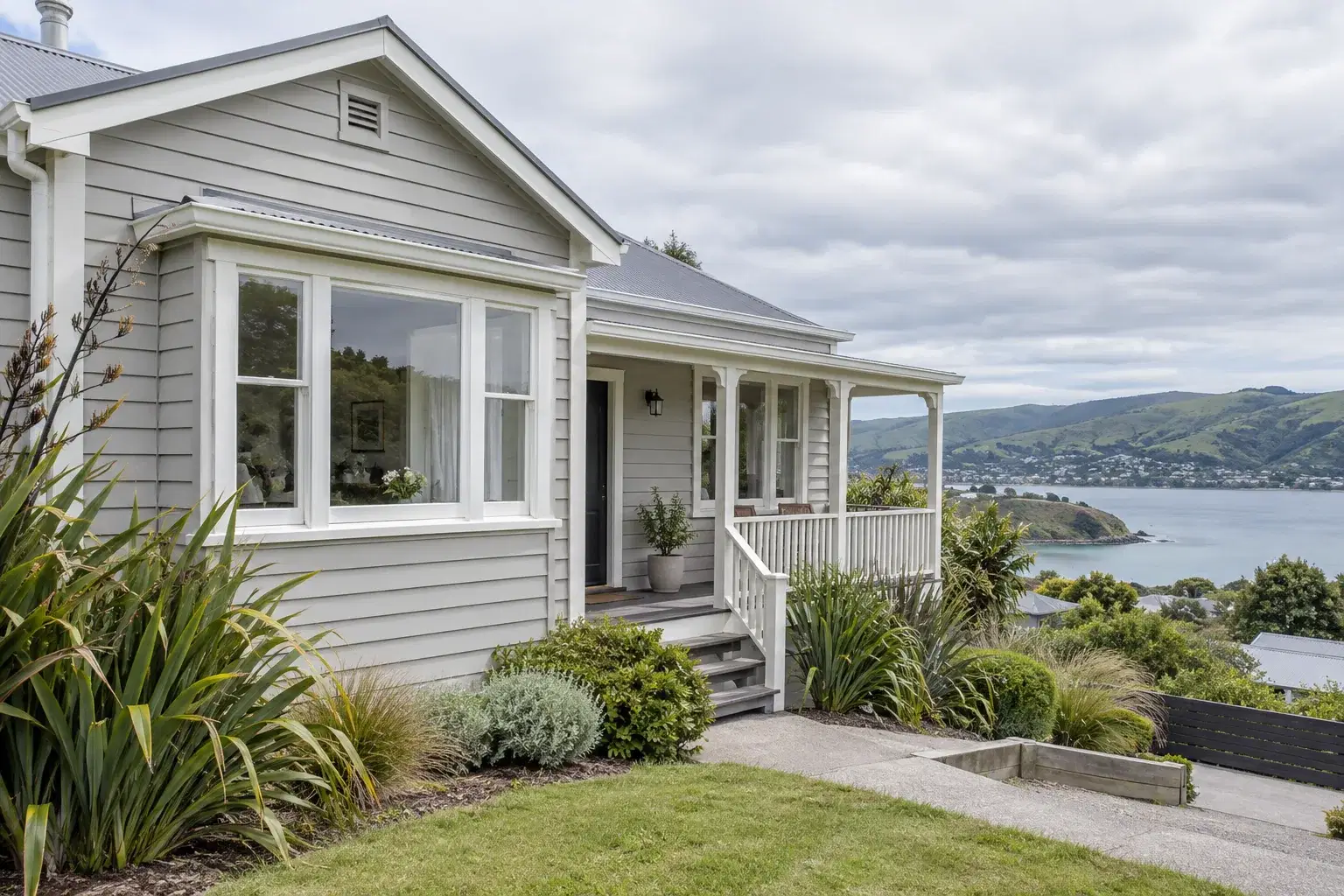
Choosing the right house painter in Porirua starts with asking clear questions. Painting your home is a major investment. A fresh coat of paint makes your home look fresh and clean, and it also protects your timber weatherboards, plaster cladding, and roofs from heavy rain, salty ocean winds, and harsh sun. In Porirua, from the coastal breeze in Titahi Bay and Plimmerton to the hills of Whitby and Aotea, our local weather is tough on houses. If paint is not applied properly, it will peel and crack very quickly.
When you begin searching for a painter, you might receive three completely different prices. One quote might say $13,500, another says $9,500, and a third says $4,800. It is tempting to choose the cheapest price to save cash. But in painting, a low upfront price can cost more in the long run if poor preparation leads to bubbling paint and early repairs.
Before you hire anyone, here are 7 simple questions you should ask to make sure you choose an honest, skilled house painter in Porirua.
Before you accept a quote
Compare the written scope, surface preparation, paint system, insurance, lead-paint precautions, on-site supervision and workmanship warranty.
1. Is Your Quote Fixed, Written, and Detailed?
Never agree to a verbal price given over the phone or a single handwritten note that simply says “Paint house: $5,000.”
There is an important difference between an estimate and a fixed quote:
- An estimate is an informed indication of the likely cost, rather than a fixed price. Ask how any extra work or changes in cost will be discussed and agreed before the work proceeds.
- An accepted fixed quote sets the price for the specified scope, subject to its agreed terms. Ask for any variations and their costs to be confirmed in writing.
Your quote must be written down clearly. It should list every single surface that will be painted: ceilings, walls, skirtings, doors, window frames, or exterior weatherboards.
Also, make sure the quote states whether it includes GST. In New Zealand, trade quotes sometimes leave GST out. If a $10,000 quote does not state GST is included, you could receive a surprise final bill for $11,500.
2. Exactly What Preparation Work Will You Do?
Good painting is not about rolling colour onto a wall. Real painting is mostly surface preparation. On a quality trade job, a substantial share of the labour goes into preparing the surfaces before the topcoats are applied.
Ask the painter to walk around your home with you and explain their preparation steps:
- Will they wash your exterior first with a gentle, low-pressure detergent wash to remove road dirt, salt, and mould? (High-pressure water blasting can damage timber weatherboards and force water behind your cladding.)
- Will they scrape away all loose, flaking paint back to a firm, solid edge?
- Will they sand the rough edges smooth so you do not see ugly lines under the new paint?
- Will they fill cracks and seal joints around timber frames with flexible exterior sealant?
- Will they apply a dedicated primer to all bare timber or plaster before putting on topcoats?
If a painter tells you they can “just paint straight over” peeling paint or dirty exterior walls to save time, do not hire them. That paint will blister and peel off during the first wet winter.
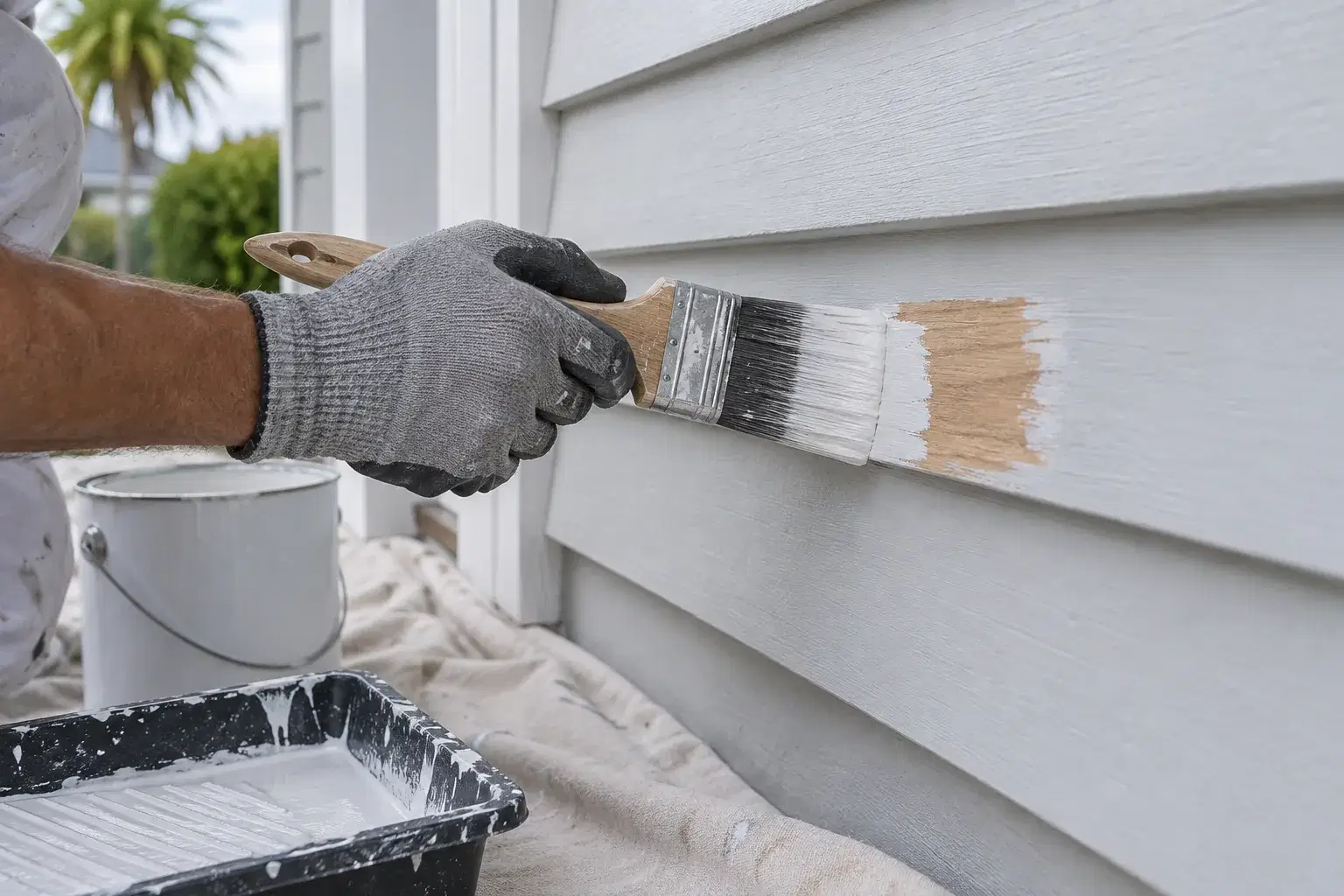
3. What Paint Brands and How Many Coats Will You Apply?
Not all paint is made the same. Premium trade paints cost more per bucket because they contain higher-grade resins and UV protectors that handle New Zealand’s intense sunlight.
Always ask two specific questions:
- What paint brand and product line will you use? Look for trusted New Zealand trade brands like Resene or Dulux (such as Dulux Weathershield or Resene Sonyx 101 for exterior cladding). Cheap, low-grade paint goes on thin, fades quickly, and wears out fast against Porirua’s coastal weather.
- How many coats are included? A durable paint system requires three coats on bare or repaired spots: one dedicated primer or sealer coat, followed by two full topcoats.
Some very cheap quotes look attractive because the painter plans to apply only one heavy coat. A single coat does not give enough film thickness to block water and UV rays. Make sure the exact number of coats is clearly written in your quote.
4. Do You Have Public Liability Insurance?
Accidents can happen on any job site. A ladder could slip and break a double-glazed window. Paint could spill across your carpet. Scaffolding could scratch your vehicle or bend your gutters.
Always ask: “Do you hold current Public Liability Insurance, and can you show me your policy certificate?”
A genuine painting business will gladly share their insurance certificate with you. This cover protects your property. If an uninsured contractor causes damage to your house, you might be left paying for repairs out of your own pocket.
On steep hillside properties around Whitby, Pukerua Bay, and Porirua Harbour, painters must also follow WorkSafe NZ rules for working at heights, using secure scaffolding or edge protection.
5. How Do You Test and Handle Old Lead Paint?
If your home dates from the 1980s or earlier—including older homes in Titahi Bay, Plimmerton, and parts of Tawa—treat existing paint as potentially lead-based until it has been assessed. Health New Zealand recommends presuming that buildings from this period have been painted with lead-based paint.
Lead paint is toxic for your family, children, pets, and neighbours. If a painter dry-sands an old house using an ordinary power sander, fine lead dust spreads through the air, falls into your garden soil, and enters your rooms through window seals.
Ask the painter:
- “Will you test my old paint for lead before you start sanding?”
- “What safety steps do you take if lead is detected?”
Ask a suitably trained professional to assess older coatings and explain the testing method and its limitations. If lead is suspected or confirmed, they should plan suitable containment, dust control, protective equipment, cleanup and waste disposal before disturbing the paint. Do not accept uncontrolled dry sanding. See Health New Zealand’s lead-based paint guidance for precautions.
6. Who Will Actually Do the Work on My Property?
Sometimes you meet a knowledgeable, friendly tradesperson who measures up your house and gives you a quote. But when the job starts, a completely different group of workers turns up whom you have never seen before.
Some companies sell the job and then pass the work to third-party subcontractors who rush through the work to make a quick margin.
Ask the contractor directly:
- “Will your own team complete the painting, or do you subcontract the job out?”
- “Who will be my main on-site contact person each day if I have questions?”
You deserve to know who is working on your property, inside your rooms, and around your family. A steady, polite team led by a dedicated supervisor ensures high standards and clear communication from start to finish.
7. What Guarantee Do You Give on Your Workmanship?
There are two separate warranties on a painting job, and it is helpful to know the difference:
- Manufacturer Paint Warranty: This comes from the paint company (like Dulux or Resene). It covers faults in the paint product itself, which is very rare.
- Workmanship Warranty: This comes directly from your painter. It covers their labour—ensuring the paint does not flake, crack, or bubble due to poor preparation or incorrect application.
Ask your painter what written workmanship warranty they offer. A reputable painter who prepares surfaces thoroughly will happily stand behind their workmanship for several years. For household services covered by the Consumer Guarantees Act, work must be carried out with reasonable care and skill. A written workmanship warranty sits alongside your applicable statutory rights.
Quick Checklist To Choose The Right Painter
| What to Check | Good Signs | Warning Signs (Red Flags) |
|---|---|---|
| The Quote | Written, itemised, clearly states GST | Verbal estimate, vague one-line note |
| Surface Prep | Soft washing, scraping, sanding, priming bare spots | “We can just paint straight over it” |
| Paint Materials | Proven brands (Resene, Dulux), 2+ topcoats | Unbranded trade buckets, only 1 coat |
| Insurance | Current Public Liability certificate available | No insurance, makes excuses |
| Lead Safety | Assesses older coatings, plans containment and dust control | Dry-sanding old villas with no sheets or masks |
| Payment Terms | Fair deposit, progress payments as stages finish | Demands full payment or large cash deposits upfront |
Get an Upfront, Honest Painting Quote in Porirua
Choosing the right painter does not have to be difficult. By asking these 7 simple questions, you can avoid rushed operators and partner with tradespeople who take pride in protecting your home.
Based in Porirua, Capital Painting Services provides professional residential painting and commercial painting across Porirua, Whitby, Titahi Bay, Plimmerton, and the wider Wellington region. We carry out free on-site assessments, discuss your goals, and deliver a detailed, fixed quote with no hidden extras and no shortcuts on prep work.


