
Professional House Painting Services in Papakowhai
Looking for house painters in Papakowhai? Capital Painting Services paints homes right across the suburb, from the shore road and Bowlers Wharf Lane to the school quarter and the Scottish river streets, Langwell Place and the mid slopes, Yarrow Place and the northern end, the upper hill streets, and down to Aotea Lagoon and the Police College at the southern entrance. We are based in Whitby, just over the inlet, and Papakowhai is one of our closest runs. This is a small, finished suburb on the eastern shore of Porirua Harbour: about 2,300 people in about 760 homes, a median income of $55,900 against $41,500 nationally with more than a fifth of adults earning over $100,000, and a population that has barely moved in twenty years. Everyone here owns a piece of one building story: a suburb first developed in the mid 1960s on one spine road, its streets named for Scottish rivers (Spey, Brora, Forth, Thurso, Yarrow, Naver, Tweed), under headlands where the kowhai trees that named it, yellow earth, still flower.
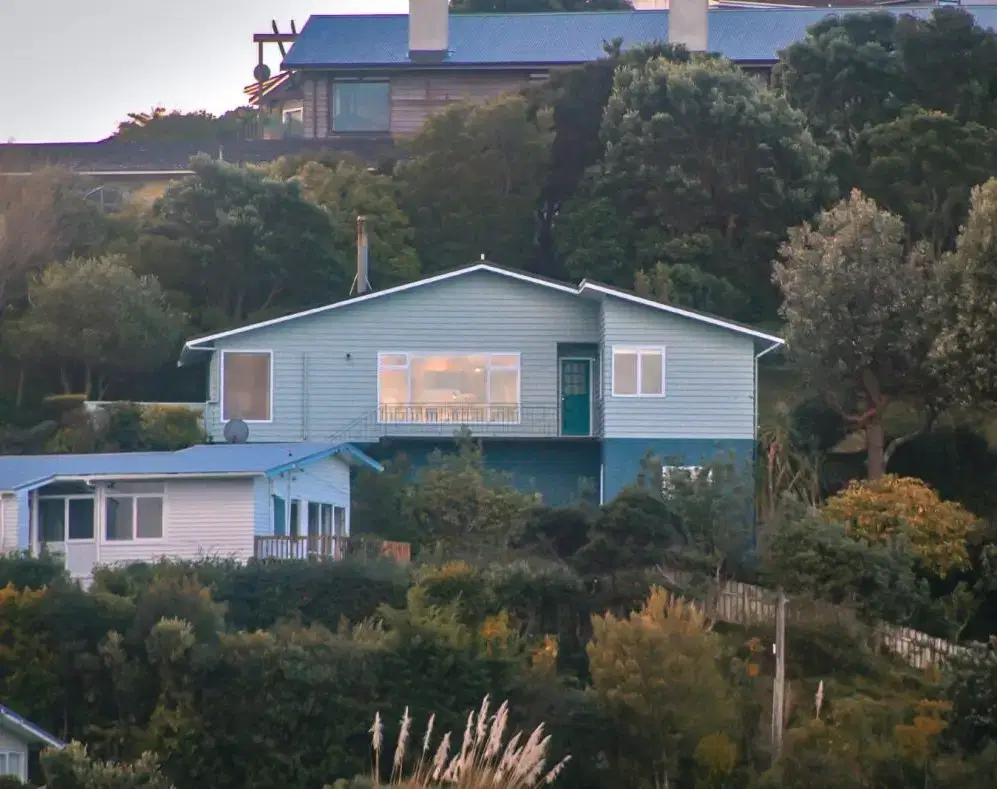
Papakowhai carries a distinction no other Porirua suburb can claim: the researchers came here. Beacon Pathway and BRANZ ran their Papakowhai Renovations project in these streets because the suburb is the classic hard case, a predominance of 1960s and 1970s pre-insulation housing, and they published what they found: split level homes “oriented to the view, not the sun”, skillion roofs, uninsulated concrete slabs, and monitored homes that were cold, damp or high energy consumers before renovation. The council records back the shape: fibrous cement walls in half the homes we sampled, iron roofs in most, tiles on the older shore road homes, floor areas running past footprints in the split level designs, and not one level contour in the sample. This page walks through what we paint, what it costs, the problems we fix, and how we work, street by street.
Interior Painting Papakowhai
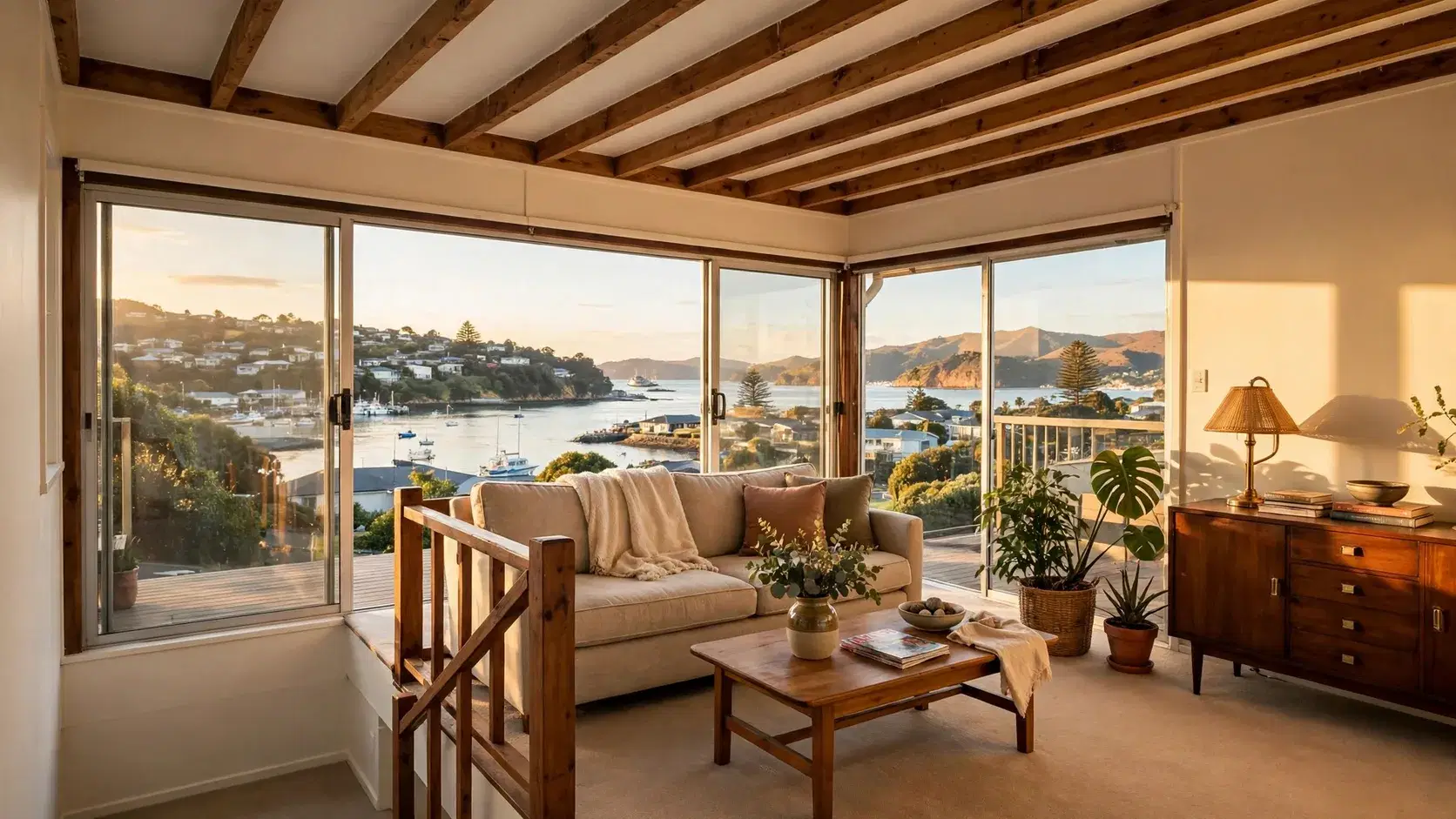
Interior painting in Papakowhai starts with the BRANZ findings, because they describe these interiors precisely. The monitored homes were built from the late 1960s to the end of the 1970s, single, split level and two storey, with era features the researchers listed like a painter’s checklist: skillion roofs, uninsulated concrete floor slabs, uninsulated concrete block walls and old aluminium window frames. Homes oriented to the view put their living rooms and big glass to the west, into the afternoon sun and the weather off the harbour, while the east facing rooms sit in the hill’s shade and stay cold, which is where the mould grows: bathrooms, laundries and the south and east bedrooms.
One question from owners of Papakowhai’s core stock comes up constantly: can you paint over a textured ceiling? The honest answer starts with a test, not a roller. Textured ceilings applied from the 1960s into the 1980s can contain asbestos, and this suburb’s biggest decades sit squarely in that window, so nobody scrapes, sands or disturbs one until it has been tested. If it tests clear, we paint it like any ceiling. If it does not, we talk through safe options such as leaving it undisturbed, or bringing in licensed removal before any repaint. The trim gets the same care: the era’s oil based enamel on doors, skirtings and window frames sanded and de-glossed so modern water based coats grip, because new paint over unsanded gloss enamel is the classic interior failure of exactly this housing era.
Exterior Painting Papakowhai
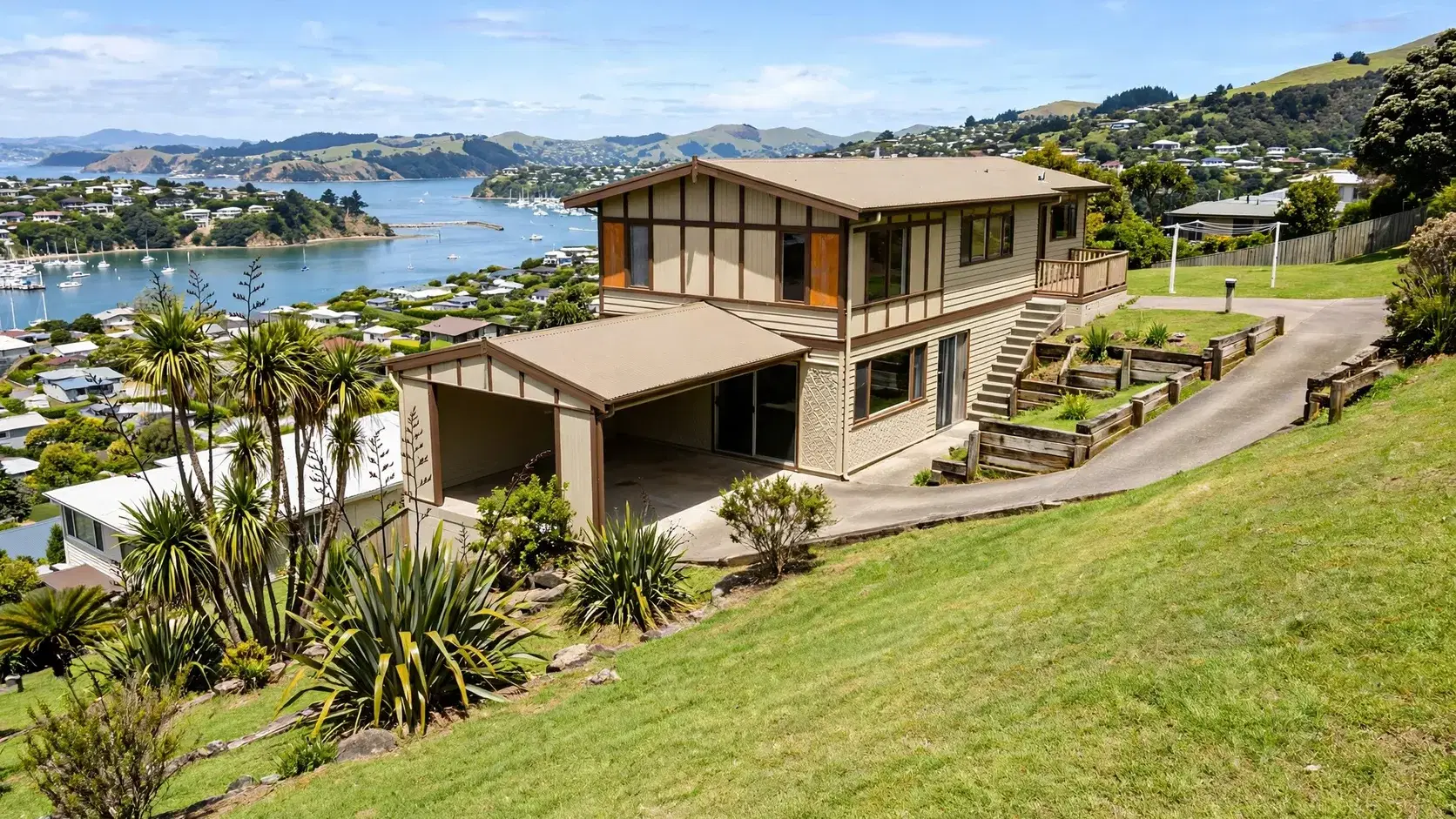
Exterior painting in Papakowhai is west shore painting. The suburb climbs the eastern shore of the harbour facing west over the water, so its view walls take the prevailing weather straight off the harbour plus the full afternoon sun, with New Zealand’s UV running about 40 percent higher than equivalent northern hemisphere latitudes, while the hill behind shades every street in the early morning and the east faces can stay damp into the afternoon. The shore streets sit inside the 500 metre high corrosion band the building standards draw around the sea: sheltered water, less spray than the open coast, but the salt is constant. Our exterior work is built for the combination: a proper wash down, scrape and sand back to sound paint, rot repairs, gap sealing, the right primer system, then two topcoats of premium acrylic matched to the wall, weather systems west, mould resistant systems east.
How long should an exterior paint job last here? On a well prepared Papakowhai home, seven to ten years is the honest range, with the west facing view walls at the shorter end and an annual wash down part of the deal anywhere in the salt band. The claddings run from the shore road’s timber and tile roofed survivors through the 1970s and 1980s fibrous cement layer to the later hill street homes, and the access runs uphill with them: every contour in the council sample slopes. Tell us your street and we will tell you honestly what your home needs.
Interior Plastering Papakowhai
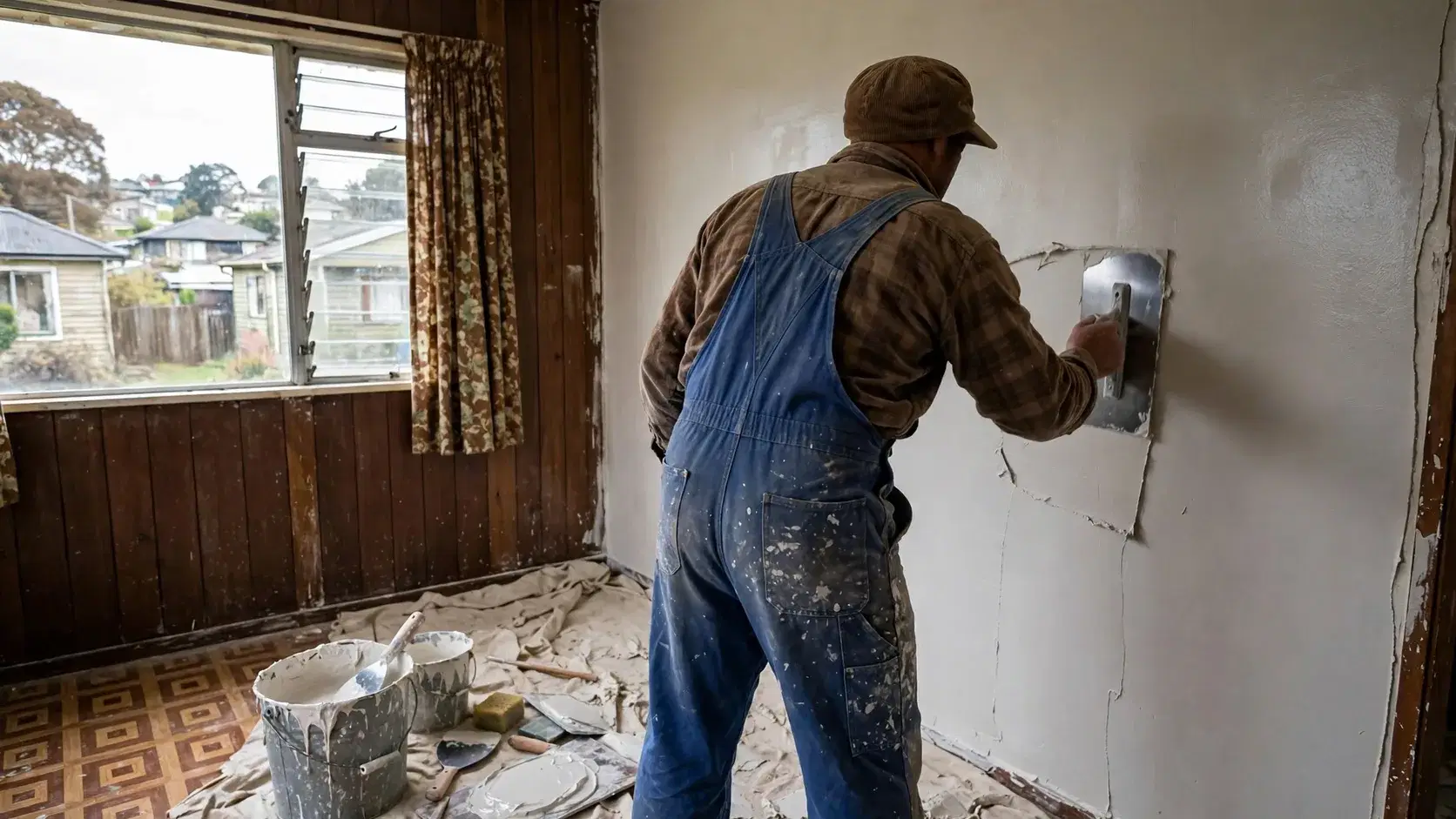
Interior plastering in Papakowhai follows the split level form BRANZ recorded. Homes built across levels move at the junctions where the levels meet, and settlement cracks across ceilings and along gib joins concentrate exactly there, in the suburb’s single, split level and two storey stock alike. The 1960s and 1970s linings have had fifty to sixty years of it, and the cross lease flats in the sample (Yarrow Place) bring their own repairs, while extensions and reclads on the hill streets need new work stopped to a paint ready standard.
Our plasterers repair cracks properly, cutting out and stopping rather than smearing filler over a moving crack, skim coat tired walls to a paint ready finish, and repair the water damaged plaster that shows up where a skillion roof junction or flashing has quietly leaked, a detail that matters in homes the researchers found cold and damp. Plastering and painting are quoted together, so the finish you see at the end is one team’s work, with no gap between the plasterer’s standard and the painter’s. If a wall has been patched repeatedly over five decades, we will tell you if a full skim is better value than one more patch.
Exterior Coatings Papakowhai
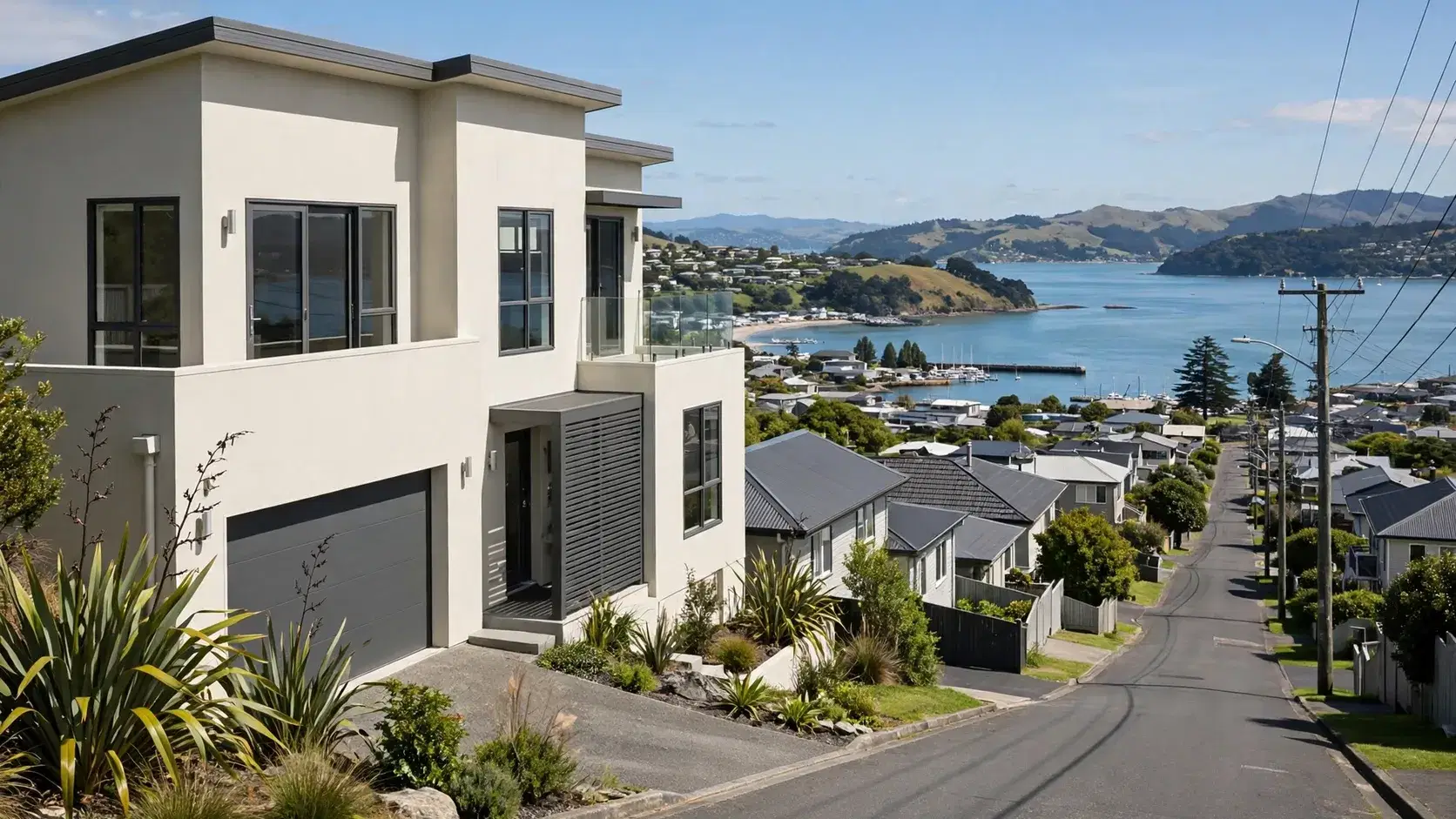
Exterior coatings in Papakowhai protect the homes paint alone cannot, and here they belong to the later layer: the 1980s homes and the reclads and replacements on the hill streets, where plaster and texture systems appear. Those systems live on their coating and their control joint sealants: once hairline cracks open and sealants tire, water gets behind the system, and the Wellington region’s building era made that repair bill famous. No monolithic record appeared in this suburb’s council sample, so we make no claims about how much of it is here; what we do is apply elastomeric and high build coating systems that bridge hairline cracks and flex with the building, with moisture checks before any recoating, wherever the system exists.
The suburb’s signature cladding gets its own honest conversation. Fibrous cement is in half the council sample here, 1970s Yarrow Place and 1980s Papakowhai Road and Langwell Place, and fibro is painted, not buried under heavy systems, with any damaged sheets identified before prep because of what the era’s product can contain. Timber, the shore road’s wall, is painted the same careful way. The system is matched to the cladding, not to a sales target.
Pressure Washing Papakowhai
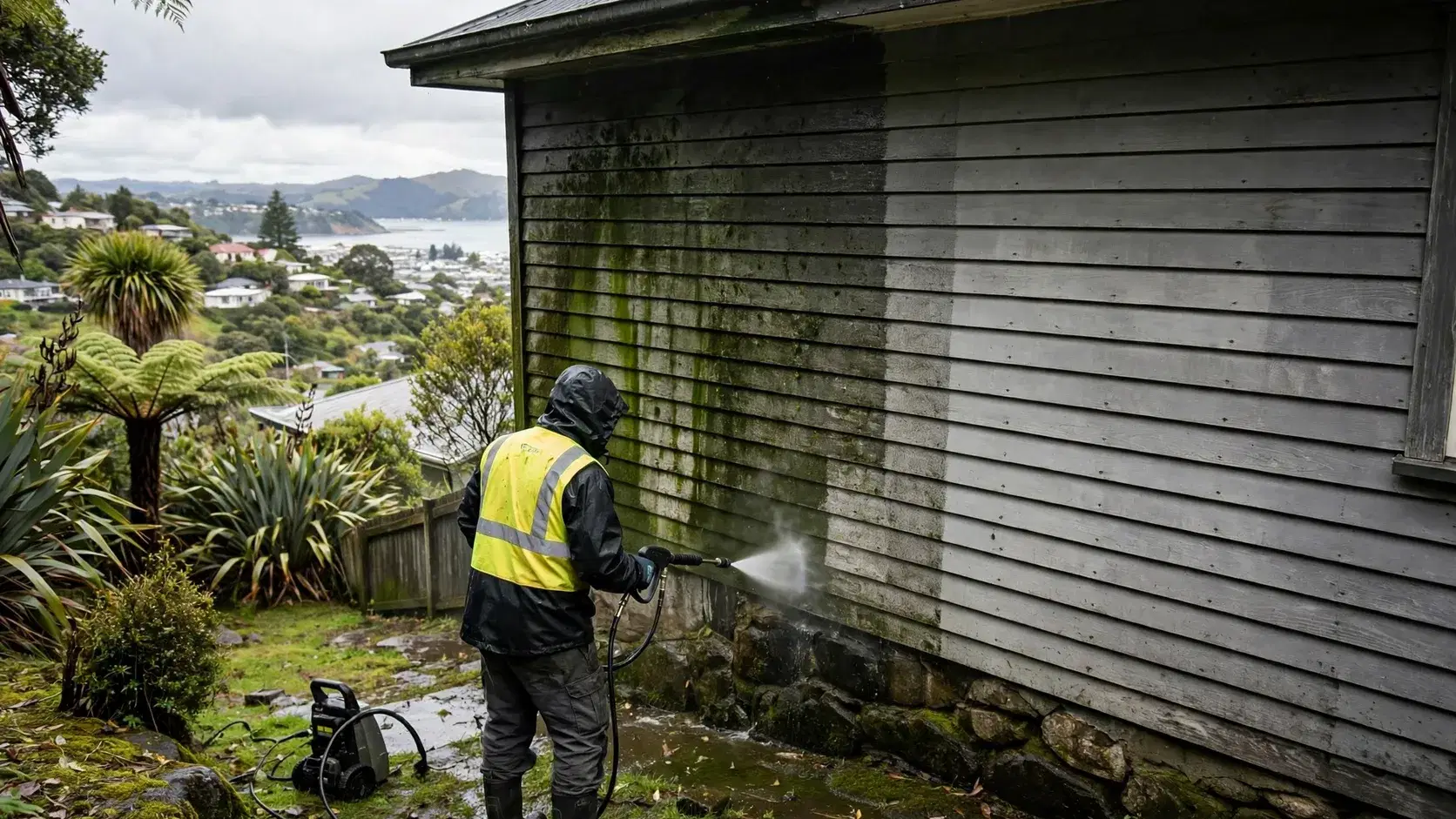
Pressure washing in Papakowhai does two jobs: it is the first step of a proper repaint, and it is a clean-up service in its own right for the mould, algae and grime that build up on cladding, decks, paths and driveways. The shaded faces need it most: the east and south walls under the hill that miss the morning sun entirely, the bush clad slopes, and the low shore ground by the lagoons. On the harbour shore the wash down also clears the salt that concentrates where rain does not reach, under eaves and behind downpipes, before it shortens the life of the paint above it.
Should you waterblast a house before painting it? Yes, a wash is part of proper prep, but the method matters. We soft wash where the surface calls for it, and one rule never bends: asbestos era materials are never waterblasted. In Papakowhai that means the fibrolite cladding and soffits in half the sampled stock of the suburb. Blasting them breaks the material up and spreads fibres, so those surfaces get tested first and handled the safe way. A clean that damages the house is not a clean at all.
Mould Removal Papakowhai
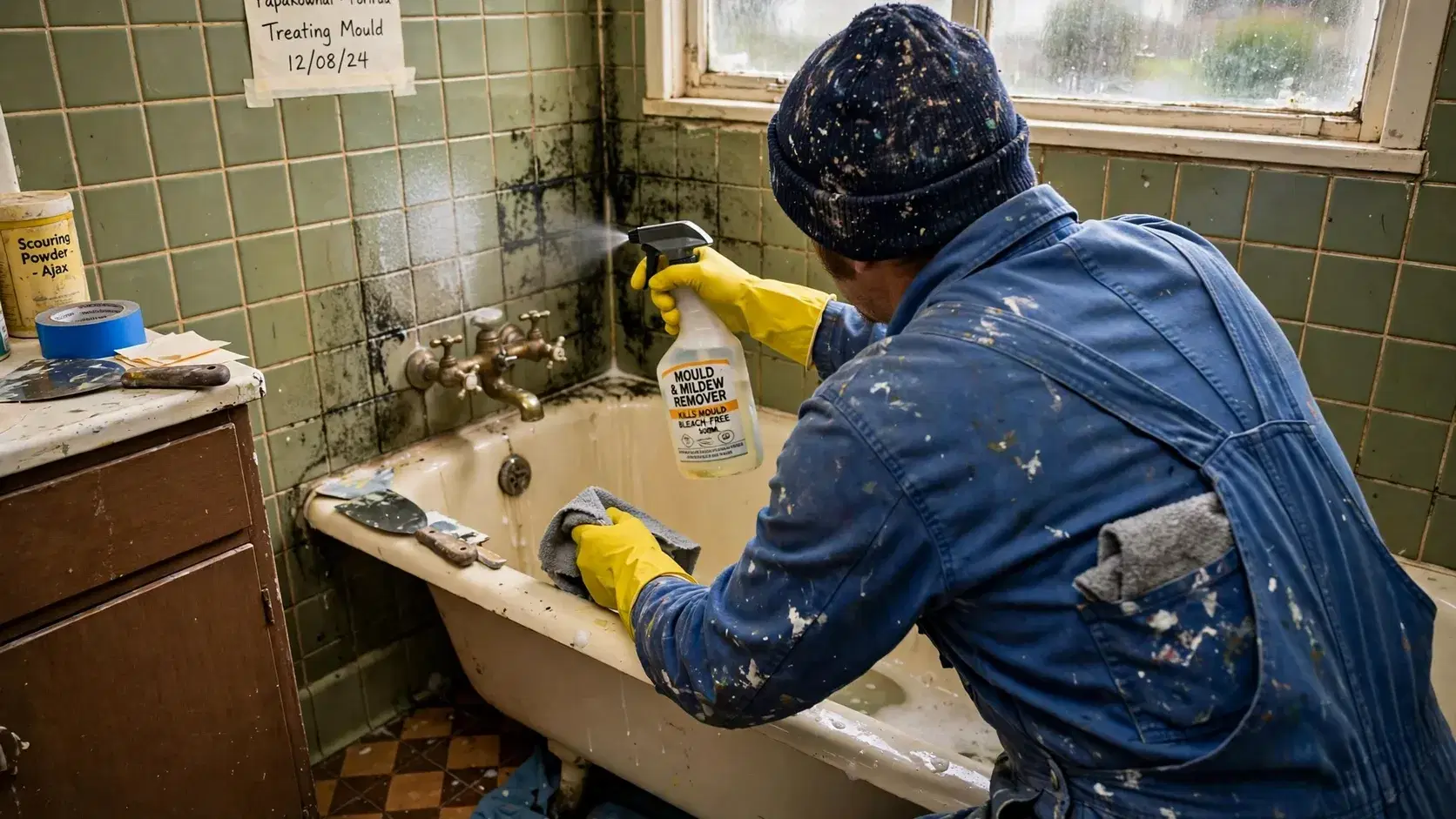
Mould removal in Papakowhai comes with research behind it. When BRANZ monitored ten homes in these streets before renovation, it found most of them were cold, damp or high energy consumers. There is no Papakowhai census mould percentage to quote, and we will not invent one; the monitored sample is the local evidence, and the mechanisms are the suburb’s own shape: pre-insulation construction, uninsulated concrete slabs, and homes oriented to the view rather than the sun, so the shaded east rooms stay cold and damp while the living rooms face the weather. Add the low shore ground by the lagoons and the bush shaded slopes, and mould in bathrooms, laundries and south and east bedrooms is this suburb’s steady background problem.
Our mould work kills the growth at the root rather than bleaching the surface, treats the affected cladding and trim inside and out, and then paints with mould resistant systems chosen for shaded harbour exposure. And we say the honest thing out loud, because this suburb’s owners have literally been studied on the point: paint fixes the growth and the finish, it is not insulation, and where cold and condensation are the cause, we will tell you what else the home needs. Kill the mould, deal with the cause where paint can, and coat it properly, and it stays away for years instead of months.
Butynol Coating Papakowhai
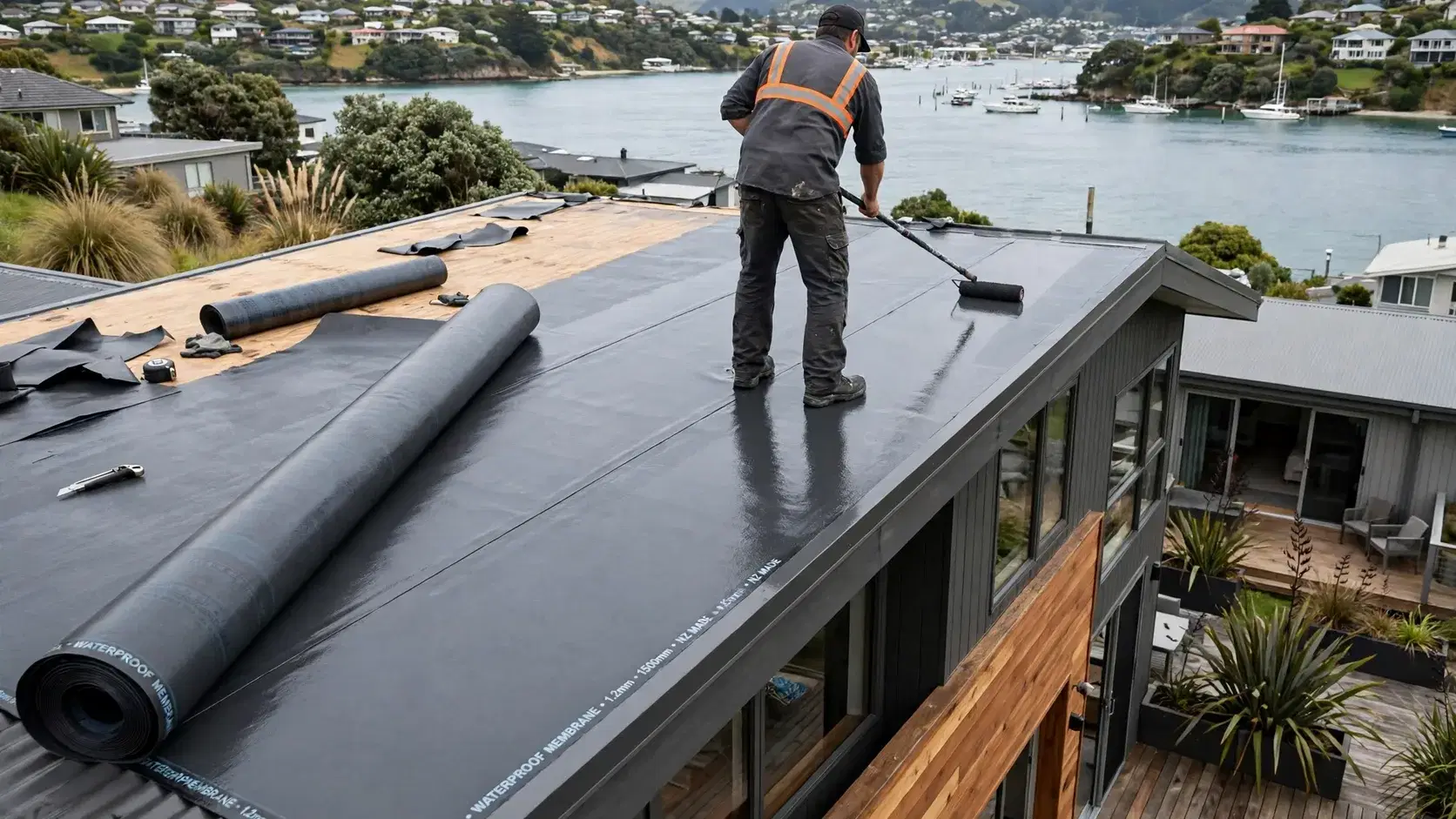
Butynol coating in Papakowhai protects the low slope and flat roofs that standard roof paint cannot save. The suburb’s signature roof form creates them: skillion roofs run through the BRANZ record of these homes, shallow pitches stepping down the split level designs, plus low slope sections over garages and living extensions on the sloping sections, and the flat roofed buildings at the suburb’s southern entrance around the Police College and the lagoon facilities. When the original membrane ages, seams lift and the surface perishes under the western sun, and patching buys months, not years.
We strip or overlay failing membranes depending on their condition, prepare the substrate properly, and apply Butynol waterproofing systems with the laps, upturns and detailing done to specification. A flat roof over a living space has no margin for shortcuts, because the leak you see inside is never directly under the hole. If your low slope roof is ponding water or the membrane is cracking, we will inspect it and tell you straight whether a recoat will hold or the substrate needs work first.
Roof Painting Papakowhai
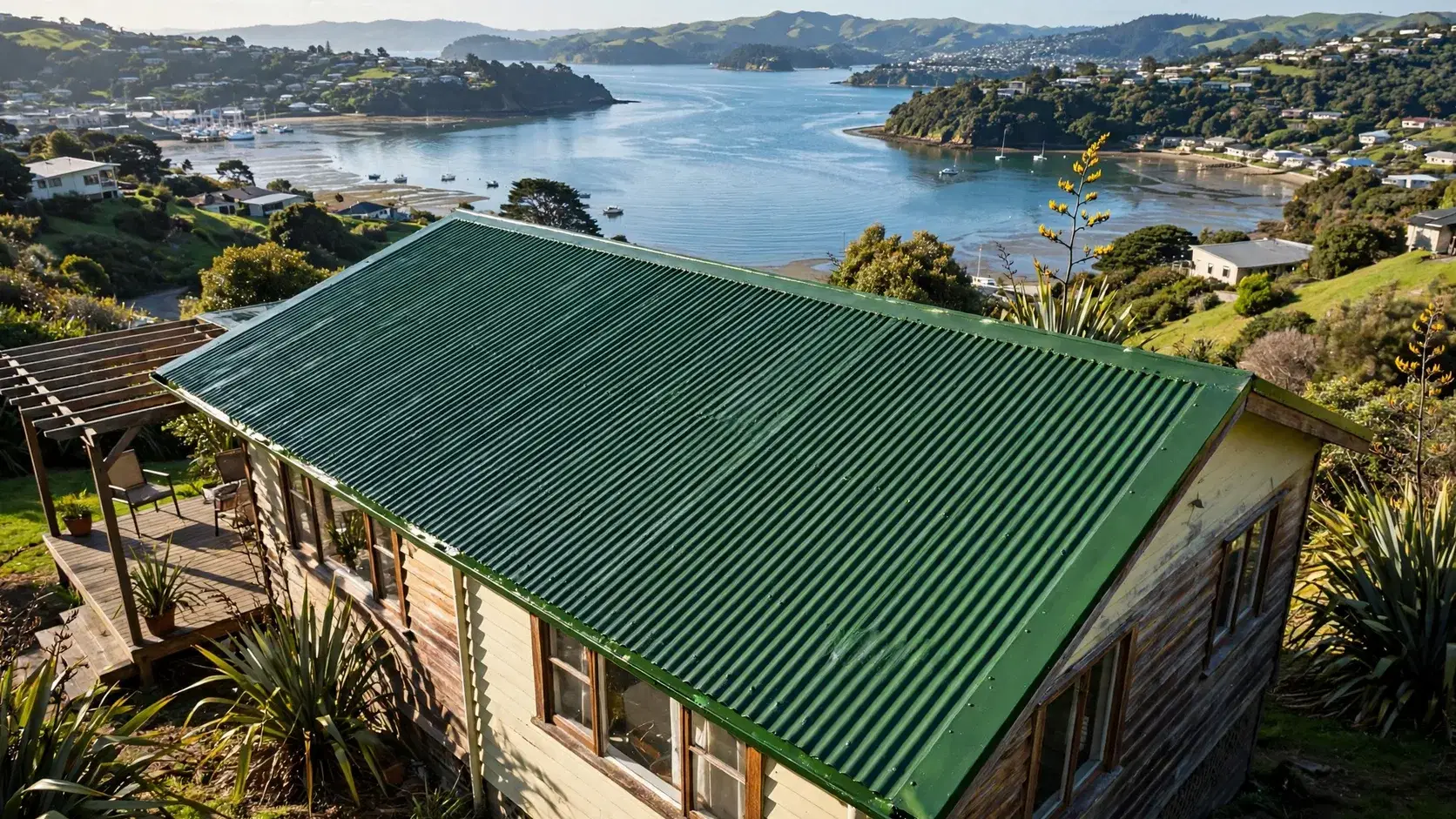
Roof painting in Papakowhai covers two roof types in a clear order. Iron, corrugated and long run steel, is the roof in four of the six council records we sampled, across the 1970s and 1980s layers, and iron roofs live on their coating: once the paint chalks and the galvanising gives up, rust starts at the laps and fixings, and salt air on a harbour shore shortens every interval. We wash, treat rust properly, prime with the right system or the new coat peels, and apply two coats of premium roof paint.
Tiles sit on the older shore road homes, both the 1930s survivor and the big 1960s executive record on Papakowhai Road are tile roofed, and tiles are not painted the way iron is: concrete tiles lose their surface coating and grow moss and lichen on the shaded pitches, and the conversation is about cleaning, bedding and pointing condition, and honest recoating advice. The split level forms add the third conversation: skillion and low slope sections that belong to the membrane world, not the paint world. So the first question on any Papakowhai roof quote is which roof, or which combination, your home actually has.
Residential Painting Papakowhai
Residential painting in Papakowhai is our core work: whole home repaints, inside and out, across a suburb of about 760 homes where the stock is one era deep and the owners are invested (suburb median values sit around $855,000 to $875,000). The patterns repeat by street. A shore road home gets lead aware prep (the first wave and the survivors are lead era), a tile or iron roof program, and salt band primers. A Langwell Place split level gets its fibrolite identified and tested, its level junctions repaired, and its high gables accessed properly. A Yarrow Place cross lease gets the same care at flat scale.
Two painting businesses are based in Papakowhai itself, and we will not pretend otherwise. What we offer is a full service team based just over the inlet in Whitby, in Papakowhai every week: fixed written quote, surfaces and gardens protected, prep done to the standard the cladding and the era need, premium coatings matched to the wall’s orientation, a tidy site every night, and a walk-through with you at the end. On a hill of big sections and bigger views, the standard is in the specification and the finish, and that is where we compete.
Commercial Painting Papakowhai
Commercial painting in Papakowhai is institutional scale at the suburb’s front door. The Royal New Zealand Police College stands on Papakowhai Road at the southern entrance, opened by Prince Charles on 1 April 1981, the central training institution for New Zealand Police recruits and home to the Police Museum. Beside it, Aotea Lagoon park, opened in March 1980 on the lagoons the 1961 railway causeway created, carries its buildings and facilities including the miniature railway, and Papakowhai School on Spey Place (opened 1976, roll about 500) serves the suburb’s streets. There is no shopping strip here; the suburb’s working buildings are its institutions, and they run on institutional rules: recruits keep training, the school keeps teaching, and the program fits around both.
We schedule commercial and institutional work in stages and outside operating hours where needed, keep access ways clear, and use durable coatings specified for high wear and easy cleaning. If you manage a facility in Papakowhai and the building is letting the organisation down, we will quote it free and plan the work around your operation, not ours.
Common Paint Problems We Fix in Papakowhai Homes
After years of painting around Porirua Harbour, we see the same failures again and again. If any of these sound familiar, you are not alone:
How Much Does House Painting Cost in Papakowhai?
The question everyone asks first: what will it cost to paint my house? The honest answer is that it depends on size, condition and access, and Papakowhai’s variables are bigger homes on bigger sections, split level access, and coastal prep. Here are realistic guide prices for Papakowhai homes:
| Job | Typical guide price |
|---|---|
| Full exterior repaint, 3 bedroom weatherboard home | $8,000 to $15,000 |
| Full interior repaint, 3 bedroom home | $6,000 to $11,000 |
| Roof painting, corrugated iron | $4,500 to $9,000 |
| Single room repaint | $800 to $1,500 |
These are guide prices to help you budget. Every home is different, and the only accurate figure is a written quote after we have walked the property. Regional guides put Porirua exteriors in a broad $6,500 to $15,000 band, with flat sections at the lower end; Papakowhai’s hillside stock sits at the other end of that band, for these reasons:
- Access on sloping sections. Every contour in the council sample slopes, and split level and two storey forms put high gables and level junctions a long way above falling ground, which means scaffold or elevated platforms where a flat site would take ladders. Published Wellington guides price scaffolding at $2,000 to $5,000 on top of the paint work. We organise the access as part of the quote.
- Size and sections. These are not small homes on small lots: floor areas over 200 square metres in the sample, sections past 1,200 square metres in half of it and one at 2,883. More wall, more trim, more roof, priced from the walk around.
- Preparation and testing. Fibrous cement in half the sampled stock means asbestos testing is a standard early step here, lead aware prep covers the first wave, and decades of layered paint on the older homes take time. Any quote that looks cheap usually got cheap by shrinking the prep. That is the corner that fails first.
- Exposure and paint system. West view walls need weather and UV systems, shaded east walls need mould resistant systems, and shore street homes need salt band primers. The right system costs a bit more up front and lasts years longer on this shore.
- Condition and repairs. Rot at level junctions and window joinery, rust treatment on iron roofs, crack repairs in texture coats: repairs found and fixed during prep are cheaper than failures found after the paint is on.
We give free, no obligation written quotes with the work broken down, so you can see exactly what the prep, access and coatings cost. No hidden extras halfway through the job. That is not how we do business.


What to Know Before Painting Papakowhai Homes
Papakowhai is one spine road and five worlds, all of it 1960s to 1980s at the core, all of it sloping, and all of it studied by the country’s building researchers. We are based in Whitby, just over the inlet, and we are painting somewhere in Papakowhai most working weeks. Here is the local knowledge that shapes how we quote and paint across the suburb.
The shore road and Bowlers Wharf Lane (5024) are the suburb’s spine and its oldest housing: Papakowhai Road running the suburb’s length, pre-subdivision survivors among the first wave (a 1930s home and a big 1960s executive home in the records, both wood walled and tile roofed on steep rise contours, the 1960s one carrying 208 square metres on a 2,883 square metre section), and at Bowlers Wharf Lane, Papakowhai Homestead, Heritage New Zealand Category 1, its rear portion dating to about 1848 and the Bowler family, the area’s first European settlers. Scheduled buildings deserve a check before colours or surfaces change; for every other shore road home, painting here is salt band, lead aware work at the harbour’s edge.
The school quarter and lower slopes (5024) are the suburb’s family heart: Spey Place, where Papakowhai School opened in 1976 for a suburb built in the decade before it, with Brora Crescent, Forth Place and Thurso Grove around it, the Scottish river street names at their densest. The homes are the main build decades in family form, timber and fibrous cement under iron roofs, on the suburb’s gentler lower contours, though gentle is relative here: nothing in Papakowhai is flat for long.
Langwell Place and the mid slopes (5024) are the suburb in representative form: a 1970s timber home at number 6 carrying 210 square metres of floor on a 140 square metre footprint, split level in built form, and a 1980s fibrous cement home at number 21 on a 1,238 square metre section. Big sections, split levels, fibro in the mix, iron overhead: a Papakowhai quote that does not mention testing, junctions and access has not walked these streets.
Yarrow Place and the northern end (5024) carry the 1970s layer toward Paremata: fibrous cement cross lease and family stock (25 Yarrow Place in the records, 122 square metres on a sloping section), the asbestos identification conversation in its most ordinary form. The suburb’s north end leans toward Paremata, in zone for Paremata School at the shore road’s north end, while its harbour looks across to the northern suburbs. Painting here is the suburb’s standard, applied carefully at the boundary.
Tweed Road and the upper hill streets (5024) are the higher, later streets: larger homes on steep contours, two storey and split level forms with the suburb’s longest views and its highest gables, the scaffold end of Papakowhai. The evidence stays qualitative, no suburb percentage for the form exists, but the pattern from BRANZ and the council records is consistent: the higher the street, the bigger the access conversation and the more the west walls earn their weather systems.
The southern entrance, Aotea Lagoon and the Police College (5024) is the suburb’s front door: the Whitford Brown Avenue junction, Aotea Lagoon park (opened 22 March 1980, its miniature railway an original feature) on the lagoons the 1961 railway causeway cut off from the sea, Papakowhai Reserve at the northern lagoon, and the Royal New Zealand Police College (opened by Prince Charles on 1 April 1981) with the Police Museum. This is the flat, reclaimed shore ground, institutional in scale, and the frame every visitor sees first: a suburb that begins with a lagoon, a college and a harbour view, and then climbs.
Wherever you are in Papakowhai, the pattern is the same: the era tells us the materials, the slope tells us the access, and the orientation tells us the exposure, view west, shade east, exactly as the researchers found it. That is the difference between a painter who works in Papakowhai and one who just drives through it. Call us for a free quote and we will come and read your house properly.
Our Step-by-Step Professional Painting Process
Free Consultation
We visit your Papakowhai home, from the shore road to the upper hill streets, look at the surfaces, slope and orientation, test older paint for lead where the era fits, flag anything that needs asbestos testing, and give you a written quote with the work broken down. No obligation, no pressure.
Careful Area Setup
We protect your floors, furniture, gardens and paths, set up safe access and scaffold on the sloping sections, and keep the site tidy and secure from day one.
Thorough Surface Preparation
We wash the surfaces (soft wash only on asbestos era materials, never a waterblast), scrape and sand back to sound paint, treat mould and rust, repair rot and cracks, and prime bare surfaces and repairs the same day they are exposed.
Premium Paint Application
Two coats of premium paint matched to your home’s orientation, weather and UV systems on the west view walls, mould resistant systems on the shaded east walls, in settled weather windows off the harbour.
Inspection & Full Clean-Up
We walk the whole job with you, fix any touch ups on the spot, remove all masking and rubbish, and leave your home cleaner than we found it, with the workmanship guaranteed.
Not in this suburb? We also paint homes across nearby Whitby, Paremata, Aotea, Titahi Bay, Plimmerton and Camborne, so get in touch for a free local quote.
Why Choose Us, Your Trusted Painting Company in Papakowhai
Capital Painting Services is a family owned and operated painting company based in Whitby, proudly serving Papakowhai, Porirua and the wider Wellington region. Led by Phil, we are passionate about helping homeowners and businesses protect and enhance their properties with high quality interior, exterior, and roof painting services, all backed by guaranteed workmanship.
Why do Papakowhai homeowners choose us?

Papakowhai Painting FAQs
Ready to Give Your Papakowhai Home the Paint Job It Deserves?
Ready to give your Papakowhai home the paint job it deserves? Whether it is a shore road original ready for its next twenty years, a Langwell Place split level that needs its junctions and gables done properly, or a hill street home whose west wall has taken one winter too many, we would love to help. Call us today for a free quote, and let’s make your place look its best.
Capital Painting Services: professional house painters in Papakowhai. Interior painting, exterior painting, roof painting, plastering, pressure washing and more. Family owned and operated, led by Phil, based in Whitby and working right across Papakowhai. Call 022 071 5878 for your free quote.