
Professional House Painting Services in Lower Hutt
Looking for house painters in Lower Hutt? Capital Painting Services paints homes and businesses right across the valley, from the Victorian villas behind Jackson Street in Petone to the salt sprayed baches and mansions along the eastern bays. We are based just over the hill in Whitby, about 25 to 30 minutes away via SH58, and Lower Hutt is one of our core working areas. It is not one housing market, it is at least six of them sharing a postcode range: 1920s garden suburb homes in Woburn, whole suburbs of 1940s and 1950s state houses in Naenae, Taita and Epuni, steep hill homes in Maungaraki and Normandale, and a city of its own over the hill in Wainuiomata. More than 110,000 people call Hutt City home, and every one of those housing worlds needs a different painting approach.
The Hutt’s weather writes its own rulebook too. The valley is sheltered and warmer than Wellington city, which gives painters a longer, calmer exterior season, but winter frosts bite hard here, cold air pools on the valley floor, Wainuiomata is one of the wettest spots in the region, and the harbour bays take salt air that shortens a paint job’s life. Add pre-1970 lead paint in the older suburbs and asbestos era materials in the state housing stock, and painting a Hutt home properly is a local knowledge job. This page walks through what we paint, what it costs, the problems we fix, and how we work, suburb by suburb.
Interior Painting Lower Hutt
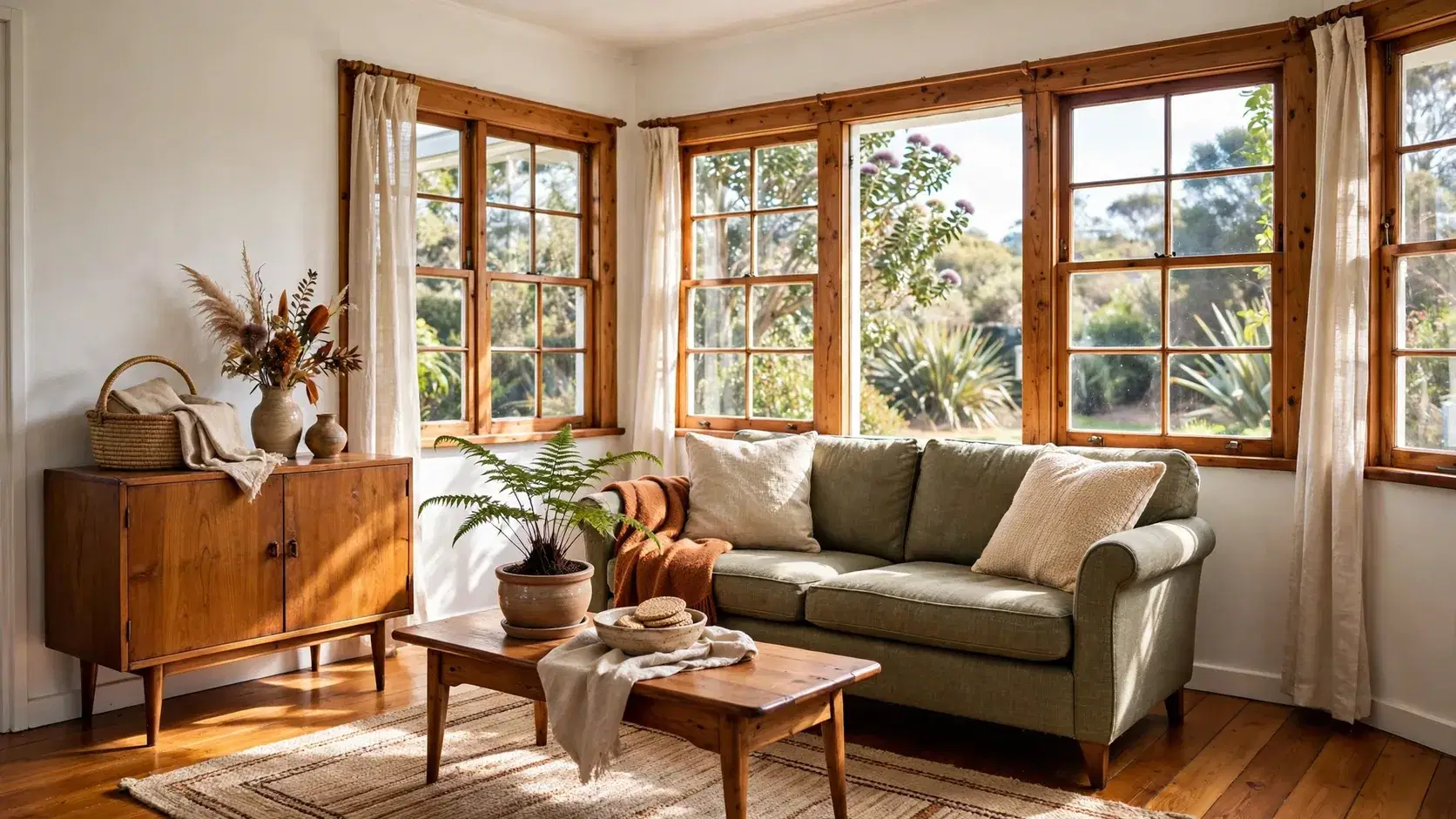
Interior painting in Lower Hutt covers a wider spread of houses than almost anywhere else in the region. In Petone we repaint villa interiors with high studs, ornate ceiling roses and old timber joinery that needs careful prep before a brush touches it. In Woburn the character homes have native timber features worth protecting while we work. In Naenae, Taita and Epuni the classic state house interior is honest and hard wearing, often with a textured ceiling from the era when those homes were built, and in Wainuiomata and the newer Avalon infill the work is modern gib board and family living spaces that need durable, washable finishes.
One question from owners of 1950s and 1960s Hutt homes comes up constantly: can you paint over a textured ceiling? The honest answer starts with a test, not a roller. Textured ceilings from before the mid 1980s can contain asbestos, so nobody scrapes, sands or disturbs one until it has been tested. If it tests clear, we can paint it like any ceiling. If it does not, we talk through safe options such as leaving it undisturbed and painting only where the surface allows, or bringing in licensed removal before any repaint. What we never do is guess. The same care goes into every interior: floors and furniture masked, cracks and old plaster repaired, water stains sealed, and low odour modern paints so the house stays liveable while we work.
Exterior Painting Lower Hutt
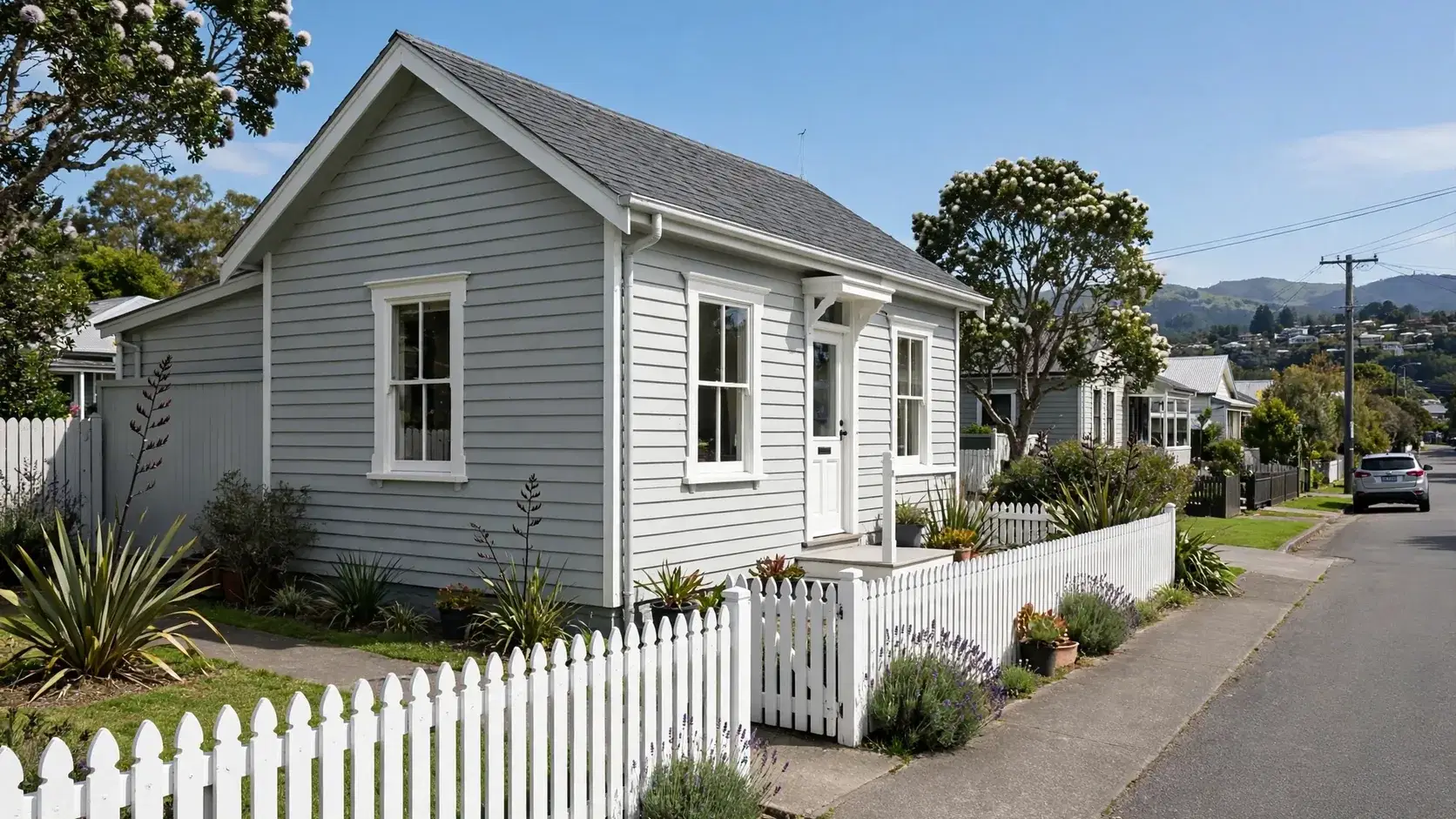
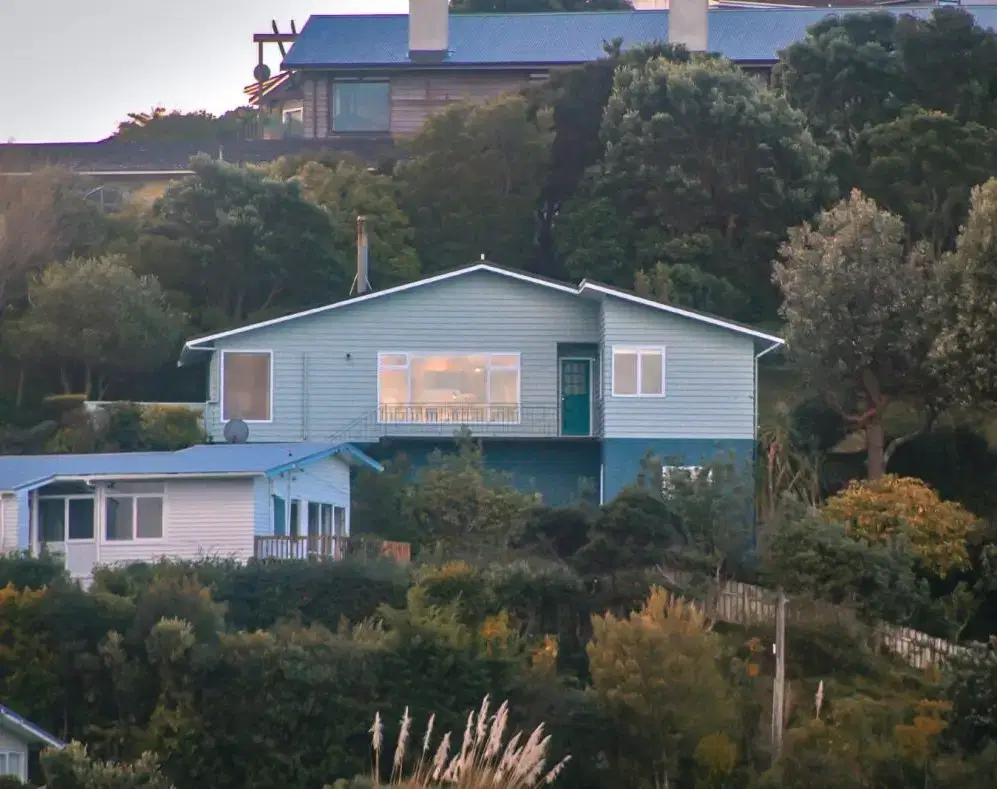
Exterior painting in Lower Hutt is mostly weatherboard painting. From Petone’s 1900s cottages to the thousands of state era homes through the valley and the weatherboard streets of Wainuiomata, timber boards are the city’s skin, and they live or die on preparation. Our exterior work runs wash, scrape and sand back to sound paint, rot repairs, gap sealing, a coat of quality primer on bare timber, then two topcoats of premium acrylic chosen for the exposure the wall actually gets.
The valley helps and hinders. Sheltered from Wellington’s worst wind and warmer in summer, Lower Hutt gives paint longer to cure properly, but on calm clear nights from May to September frost settles on the valley floor, and a winter exterior here starts late in the morning once frost and dew have cleared. How often should you repaint a Hutt exterior? Inland, a well prepared job lasts 7 to 10 years. Along the eastern bays and the Petone foreshore, salt air cuts that to 5 to 7 years, which is why seaward walls there get coastal thinking, not valley thinking. Tell us your suburb and we will tell you honestly which cycle your house is on.
Interior Plastering Lower Hutt
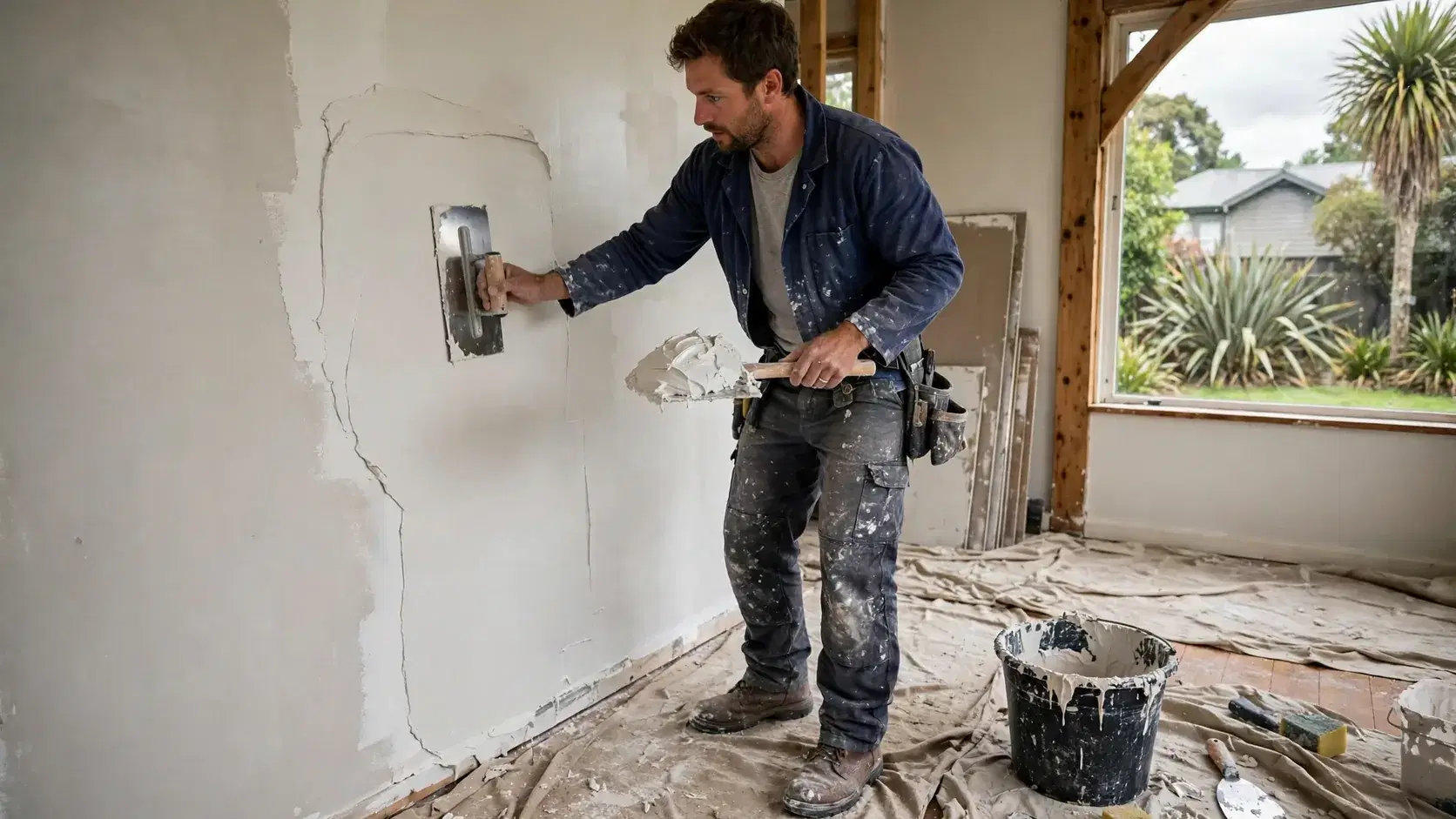
Interior plastering in Lower Hutt is where the city’s building history shows through the walls. The 1940s and 1950s state suburbs were built fast and well, but their original plaster and fibrous plaster ceilings have now had seventy years of the house moving with the seasons, and settlement cracks across ceilings and around door frames are the classic Naenae, Taita and Epuni repair. In Petone and Woburn the older homes carry lath and plaster and early gib that cracks along joins and hairlines out from window corners.
Our plasterers repair cracks properly, cutting out and stopping rather than smearing filler over a moving crack, skim coat tired walls to a paint ready finish, stop new gib in renovations and infill builds, and repair water damaged plaster in the valley floor homes where damp gets in. Plastering and painting are quoted together, so the finish you see at the end is one team’s work, with no gap between the plasterer’s standard and the painter’s. If a wall has been patched five times in five decades, we will tell you if a full skim is better value than one more patch.
Exterior Coatings Lower Hutt
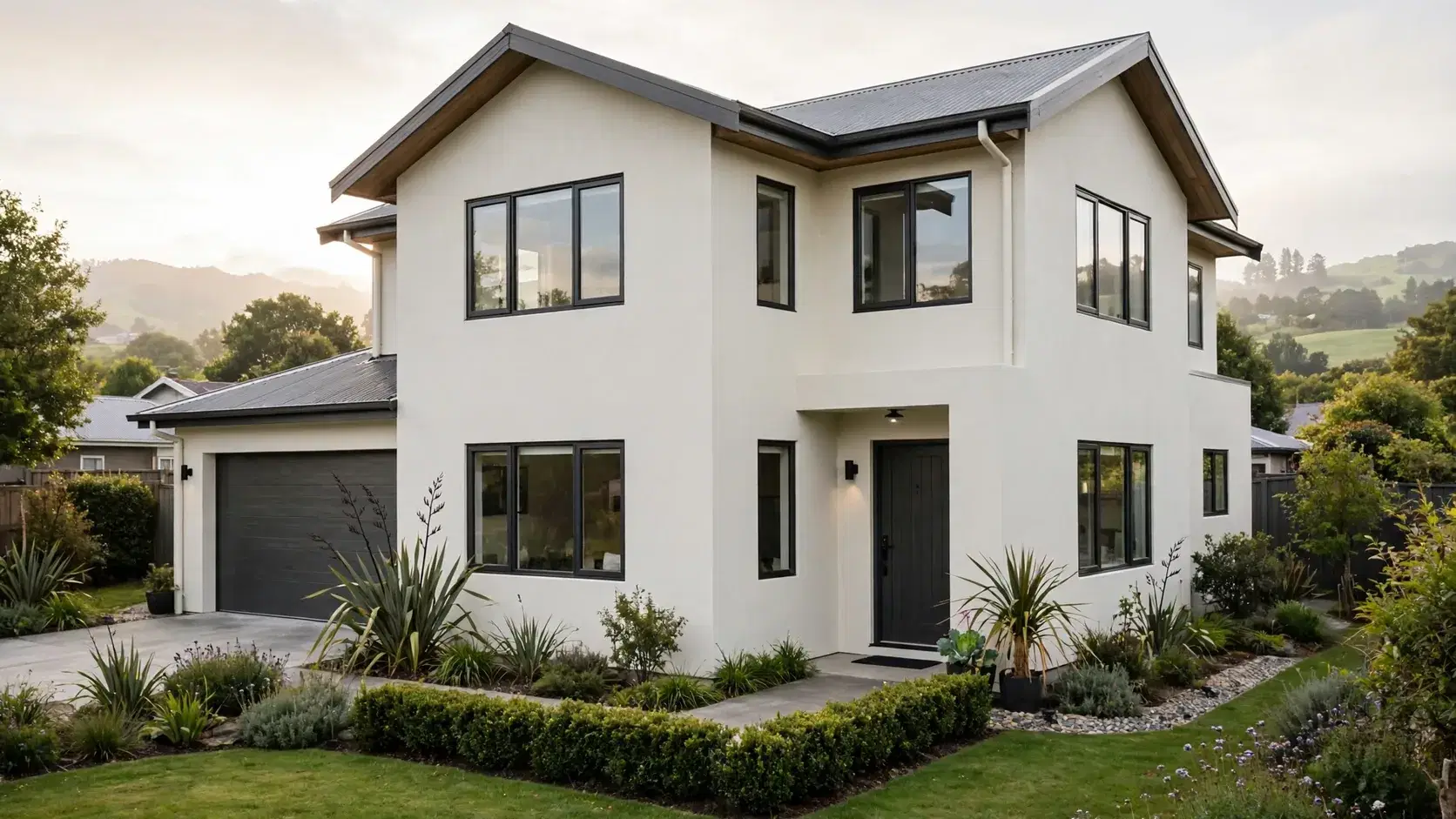
Exterior coatings in Lower Hutt are the specialist systems that protect the homes paint alone cannot. The city has plenty of stucco, from 1920s Woburn character homes to state era builds, and a generation of 1990s and 2000s plaster and monolithic homes in suburbs like Avalon, Kelson and Maungaraki. Those claddings live on their coating: once hairline cracks open up, water gets behind the system and the repair bill grows teeth. We apply elastomeric and high build coating systems that bridge hairline cracks, flex with the building, and shed the valley’s rain, which runs to around 1,300 millimetres a year on the valley floor.
Brick homes are a different conversation, and we have it honestly. Woburn and the brick state suburbs do not need their walls coated, and we will not sell you a wall coating a brick house does not need. On brick homes the coating work is the trims, eaves, soffits, joinery, gutters and roof, the timber and metal edges that actually weather. Whether your home is stucco in Boulcott, monolithic in Avalon or brick in Woburn, the coating system is matched to the cladding, not to a sales target.
Pressure Washing Lower Hutt
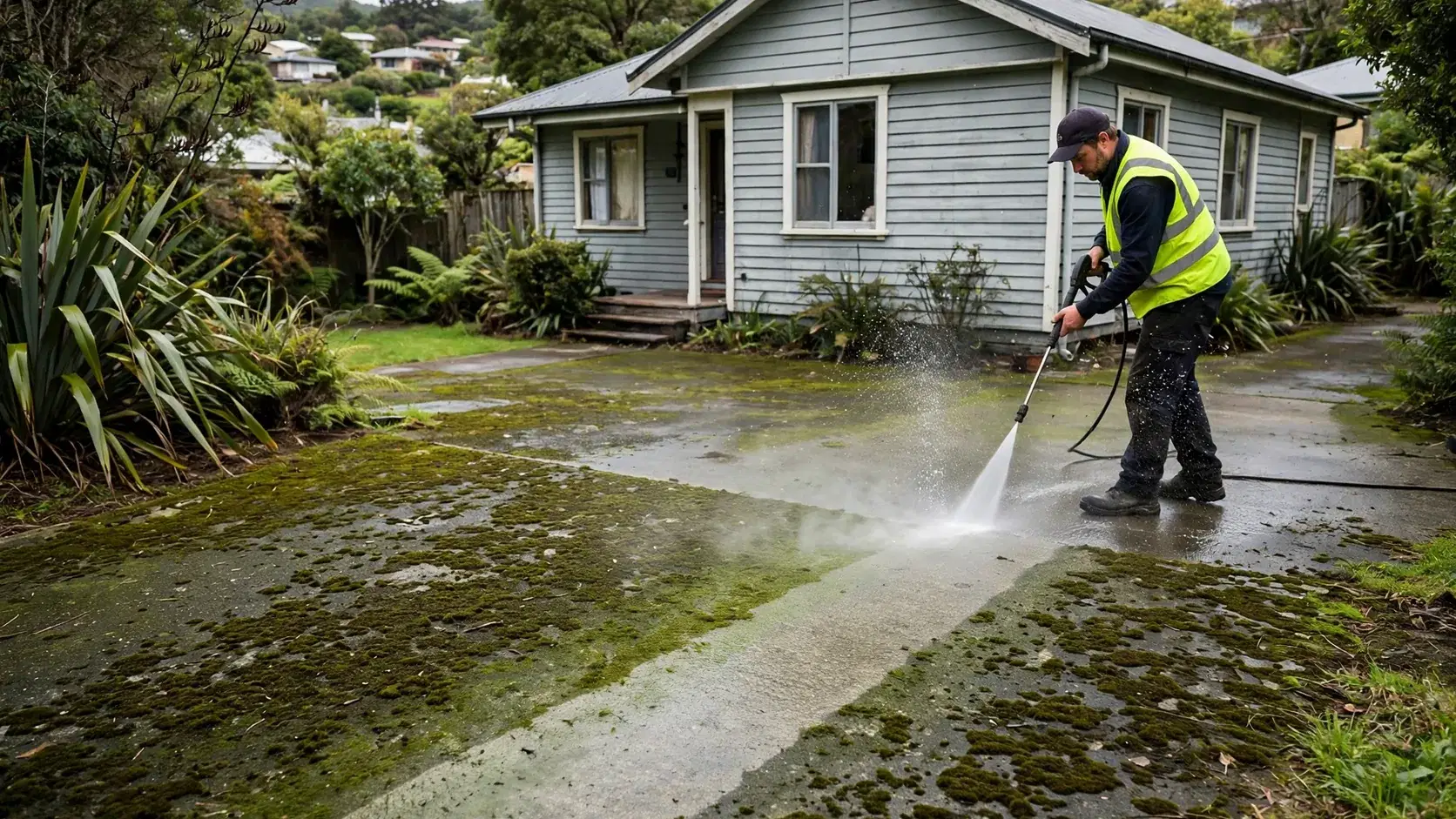
Pressure washing in Lower Hutt earns its keep, because valley damp grows things. Shaded driveways, paths and south facing walls across Alicetown, Moera and the river flats turn green through winter, moss works into the laps of roofs in Wainuiomata, and decks in the hill suburbs stay wet for weeks. Our washing service covers houses before painting, roofs, driveways, paths, decks and fences, with detergents that kill the growth at the root instead of just blasting the colour off it.
Should you waterblast a house before painting it? Yes, a wash is the first step of every exterior we paint, but with one hard rule for this city: never waterblast asbestos cement. Fibrolite cladding, soffits and old roofing on 1940s to 1980s Hutt homes must never be hit with high pressure, because blasting can release asbestos fibres. Homes of that era get a gentle soft wash and hand cleaning instead, and anything suspect gets tested first. A wash that creates a health problem is not preparation, it is damage, and any painter working the state suburbs should be able to tell you the same.
Mould Removal Lower Hutt
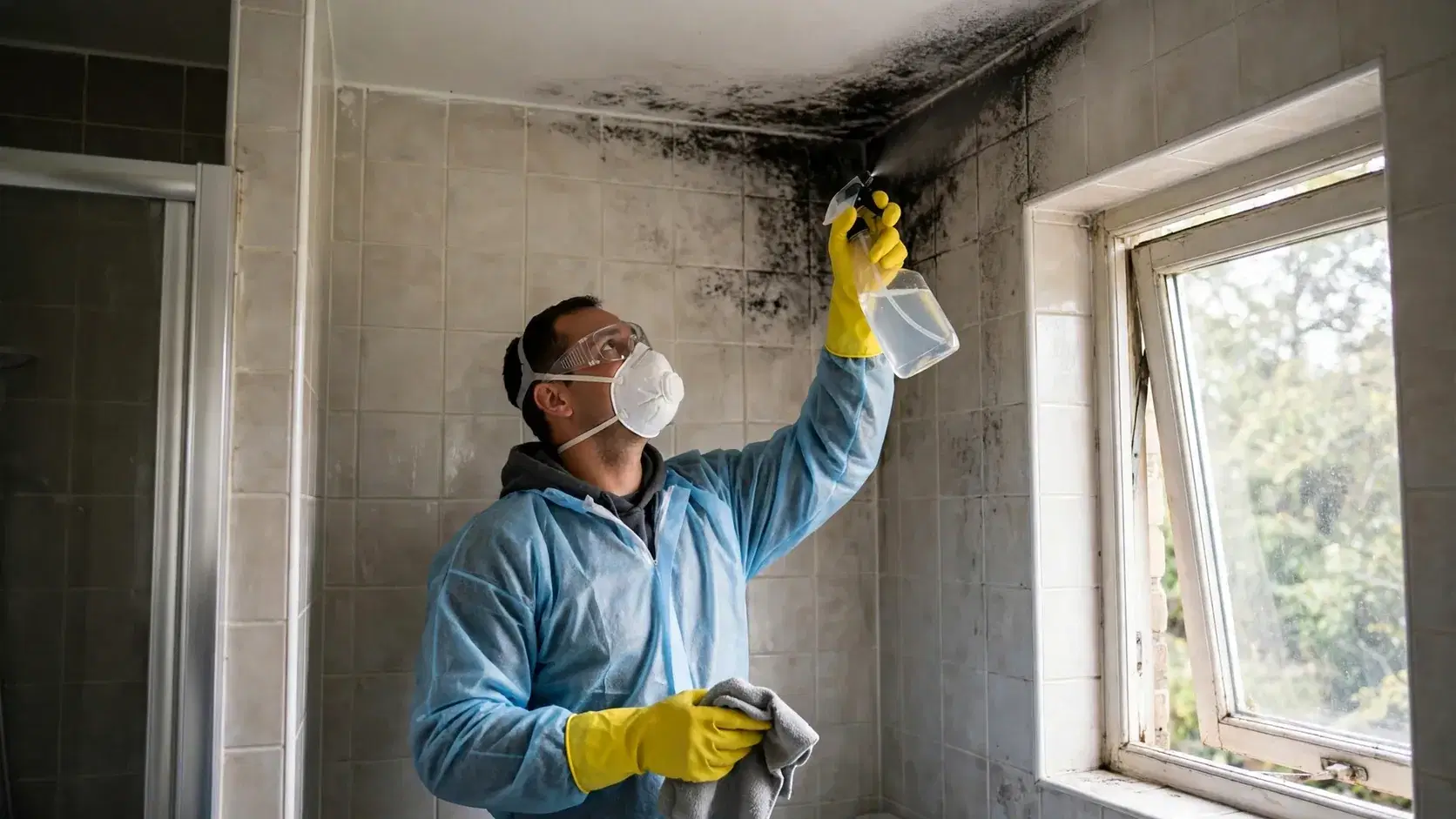
Mould removal in Lower Hutt follows the damp. The valley floor suburbs near the Hutt River, Alicetown, Moera, Avalon and the Waiwhetu flats, sit where cold air and moisture collect, and Wainuiomata cops around 1,780 millimetres of rain a year in its own wetter valley. South facing walls that never see winter sun, shaded sections under the western hills, and bathrooms in older state homes with tired ventilation are where mould moves in and keeps coming back.
Our mould service treats the cause before anyone paints. We kill the mould with proper treatments rather than painting over it, track down where the moisture is coming from, whether that is a failed coating, a leaking spouting or a wall that never dries, and then repaint with mould resistant systems in the rooms and walls that need them. Why does mould keep coming back after cleaning? Because the spores were killed on the surface while the damp that feeds them stayed in the wall. Fix the moisture and prep properly, and the mould story ends. Paint over it, and you will be reading this section again in two winters.
Butynol Coating Lower Hutt
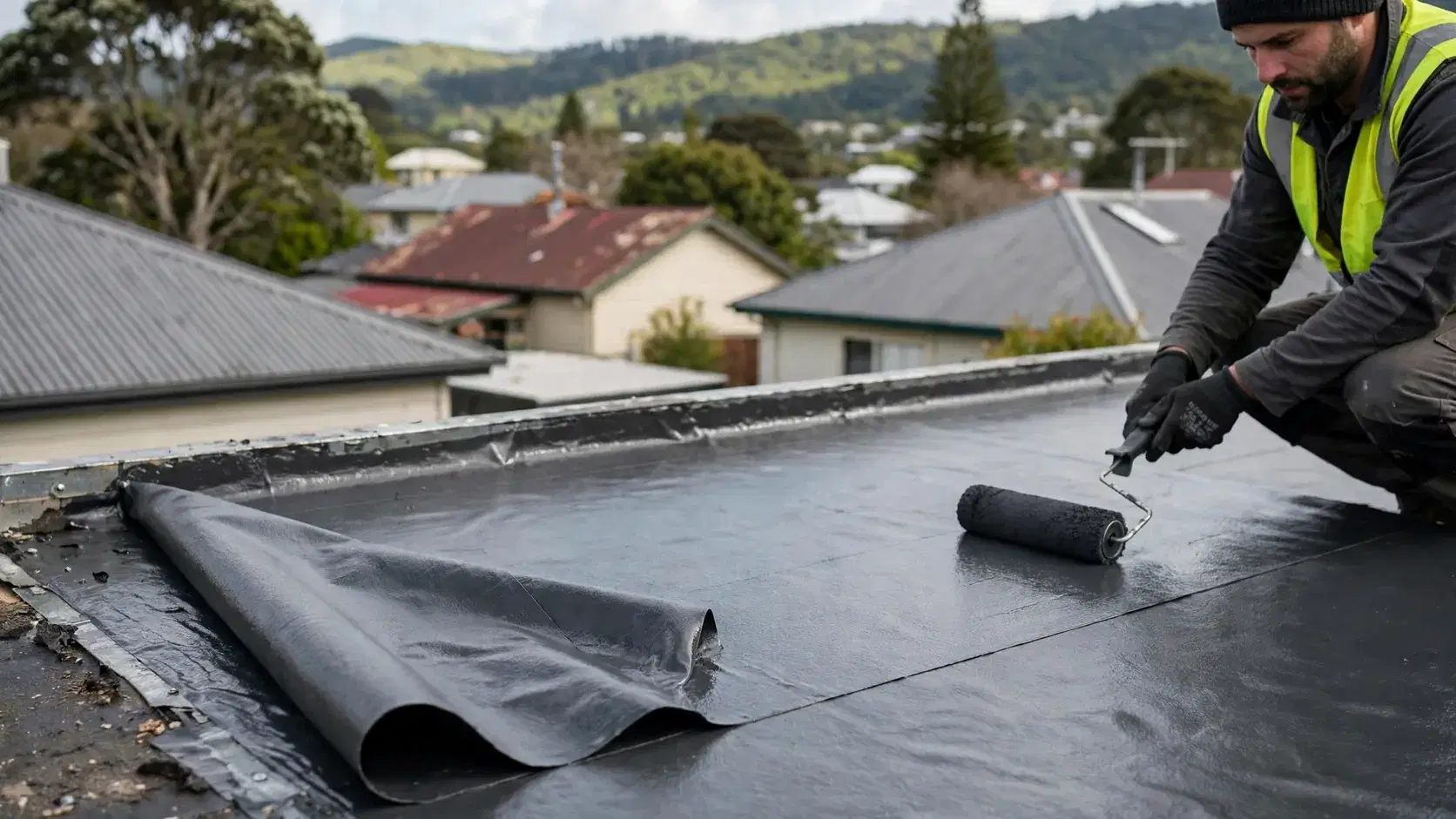
Butynol coating in Lower Hutt protects the flat and low pitch roofs the city is full of. The 1960s and 1970s building booms left flat roofed additions, garages and carports across Wainuiomata, the state suburbs and the hill suburbs, and the original membranes on many of them are at the end of their life. Butynol, a butyl rubber membrane, is the standard answer for these roofs in New Zealand, and recoating or renewing it before it splits and leaks is far cheaper than repairing the ceiling and framing under a failed one.
Our butynol work covers inspection, repairs to laps and flashings, and full membrane coating systems that keep these roofs watertight for years. Flat roofs fail quietly, ponding water finds one cracked lap and the first sign inside is a ceiling stain, so if your Wainuiomata or Naenae addition has a flat roof you have never looked at, it is worth an inspection while the fix is still small. We will tell you honestly whether it needs a recoat now, or just monitoring.
Roof Painting Lower Hutt
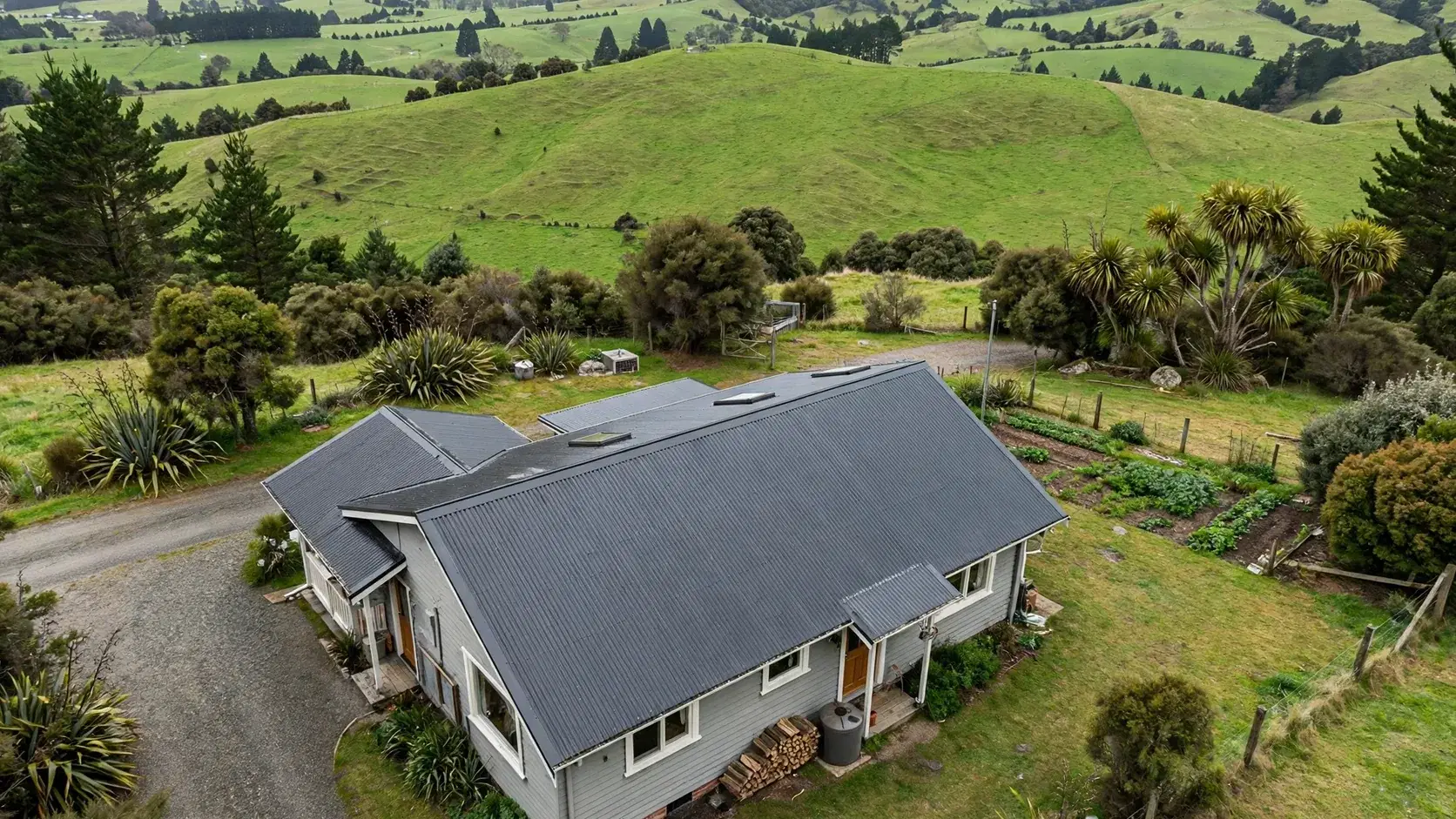
Roof painting in Lower Hutt mostly means corrugated iron, the roof the city grew up under, from Petone cottages to state homes to Wainuiomata’s streets. Iron roofs here die the same way everywhere, surface rust at the laps and fixings, faded and chalked coatings, and moss in the shaded laps, but the bays and the Petone foreshore speed the rust up with salt air. Our roof work runs from a full wash and rust treatment through to primers and two topcoats of specialist roof paint, with flashings and ridges checked while we are up there.
The other Hutt roof story is the 1970s to 1990s homes in the hill suburbs and Wainuiomata with decramastic and concrete tile roofs. Can a decramastic roof be painted? Yes, once the moss is treated and the loose stone chip is dealt with, a specialist coating system restores and protects it, and concrete tiles take a roof coating the same way after cleaning and pointing repairs. A repaint cycle of 10 to 15 years is normal for a coated roof, and it is a fraction of the cost of re-roofing. If your roof is genuinely past coating, we will say so rather than paint over rust and wish you luck.
Residential Painting Lower Hutt
Residential painting in Lower Hutt is the whole house work most of our Hutt customers book: full interior and exterior repaints for owner occupiers, rental refreshes between tenancies in the city’s big rental suburbs like Naenae, Taita and Wainuiomata, pre-sale makeovers in Petone and Woburn where first impressions price the house, and staged work for families doing the house a side at a time. Whatever the job, it gets the same prep standard, because a quick coat over failed paint is the most expensive paint job there is.
We plan residential work around your life. That means honest timeframes, tidy sites, kids and pets worked around, and a foreman you can actually talk to. For landlords and property managers we offer consistent pricing across portfolios, quick turnarounds between tenancies and photos of the finished work. From a single bedroom in Stokes Valley to a full villa restoration in Petone, residential painting is our bread and butter, and the Hutt is one of the places we do it most.
Commercial Painting Lower Hutt
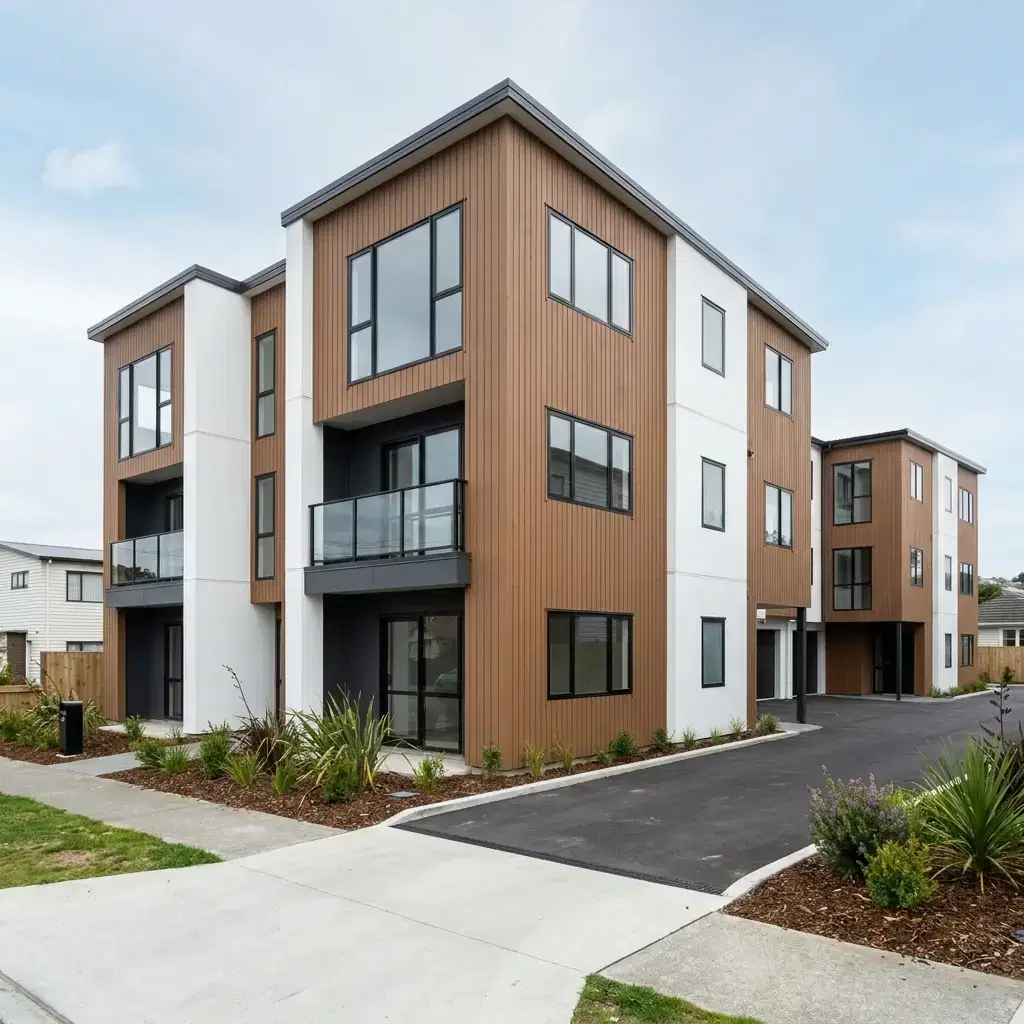
Commercial painting in Lower Hutt is anchored in Seaview and Gracefield, the city’s industrial heartland, where warehouses, workshops and office blocks need coatings that handle a working environment, including large low pitch iron roofs that take a beating from the harbour weather. Add Jackson Street in Petone, with more than 220 businesses trading along a heritage main street, the shops of Hillary Court in Naenae, and offices and civic buildings through Hutt Central, and the city’s commercial painting is as varied as its housing.
Commercial work is planned around your operation. We paint after hours and on weekends where the business needs it, stage the work so you keep trading, and use the durable commercial systems that suit warehouses, retail and hospitality rather than house paint in a bigger tin. Body corporates and property managers across the valley also use us for multi-unit repaints and maintenance programmes. If your building is the face of your business in Lower Hutt, we will keep it looking like it.
Common Paint Problems We Fix in Lower Hutt Homes
After years of painting across the Hutt Valley, we see the same failures again and again. If any of these sound familiar, you are not alone:
How Much Does House Painting Cost in Lower Hutt?
The question everyone asks first: what will it cost to paint my house? The honest answer is that it depends on size, condition and access, and Lower Hutt adds a few cost drivers of its own. Here are realistic guide prices for Hutt homes:
| Job | Typical guide price |
|---|---|
| Full exterior repaint, 3 bedroom weatherboard home | $8,000 to $15,000 |
| Full interior repaint, 3 bedroom home | $6,000 to $11,000 |
| Roof painting, corrugated iron | $4,500 to $9,000 |
| Single room repaint | $800 to $1,500 |
These are guide prices to help you budget. Every home is different, and the only accurate figure is a written quote after we have walked the property. What changes the price?
- Preparation. This is the big one, often half the job or more on an older Hutt home. Lead aware prep on pre-1970s paint in Petone and the early state suburbs, asbestos testing where the era fits, rot repairs and decades of layered paint all take time, and any quote that looks cheap usually got cheap by shrinking the prep. That is the corner that fails first.
- Scaffolding and access. The hill suburbs are the classic case. A two storey drop at the back of a house in Maungaraki, Normandale or Belmont needs proper scaffold or edge protection, which local scaffold pricing puts anywhere from $800 for a small single storey setup to $3,500 or more for larger two storey work, plus hire time. We organise the scaffolding with our suppliers, you do not have to arrange it yourself.
- Height and size. Two storey character homes in Petone and Woburn, split level hill houses and big family homes in Wainuiomata simply have more wall, more trim and more ladder and scaffold work than a single storey flat section home.
- Exposure and paint system. Eastern bays homes need marine grade systems and shorter repaint cycles, valley floor homes need mould resistant thinking, and plaster clad homes may need elastomeric coatings. The right system costs a bit more up front and lasts years longer.
- Old materials testing and handling. If your pre-1990 home tests positive for lead paint or asbestos containing materials, controlled methods, containment and proper disposal add time and cost. It is money that has to be spent for the job to be safe and legal.
We give free, no obligation written quotes with the work broken down, so you can see exactly what the prep, access and coatings cost. No hidden extras halfway through the job. That is not how we do business.


What to Know About Painting Lower Hutt Homes
Lower Hutt is a city of neighbourhoods that barely resemble each other, and painting here well means knowing which one you are standing in. We are based just over the hill in Whitby, and the run in via SH58 and SH2 puts us in the Hutt most working weeks, everywhere from Petone to Eastbourne. Here is the local knowledge that shapes how we quote and paint across the city.
Petone and Korokoro (5012) hold the oldest housing in the city, settlers arrived here in 1840, and the streets behind Jackson Street are full of Victorian and Edwardian weatherboard villas and cottages. Jackson Street itself is a protected heritage precinct, the only one in the Wellington region, so on a listed or pre-1930s home, check with Hutt City Council before changing exterior colours. The paint story here is lead aware prep, rot repairs and iron roofs, done carefully on homes that have stood for over a century.
The central valley floor (5010 and 5011) runs from Alicetown and Melling through Hutt Central to Waiwhetu, Waterloo and Epuni. Woburn is its character jewel, a 1920s garden suburb of brick, stucco and weatherboard homes where the paint work is mostly trims, eaves, joinery and roofs rather than full wall repaints. The flat suburbs sit where the valley’s cold air pools, so winter frost and damp are the recurring themes, and mould resistant prep matters more here than on the slopes.
The state suburbs (5011 and 5019) are Naenae, Epuni, Taita, Avalon, Fairfield and Stokes Valley, where the Epuni to Taita state housing scheme was the most ambitious in the country, built on garden city lines with curvilinear streets. Naenae was a planned community: its centre follows Ernst Plischke’s 1943 plans, and Hillary Court, opened in 1954, was New Zealand’s first pedestrianised shopping mall. The homes are sound weatherboard and brick builds now carrying seventy years of paint layers, fibrolite in the wet areas and textured ceilings inside, so era aware prep and testing are the job here.
The western hills (5010) are Maungaraki, Normandale, Belmont, Kelson, Tirohanga and Harbour View, where the sections steepen, the views open over the harbour, and the homes are split level and multi level builds from the 1960s onward. Painting here is an access job before it is a paint job: steep driveways, tall gable ends over drops, and scaffold planned properly. The ridge lines also take the valley’s wind, so coatings get specified for exposure, not for the sheltered floor below.
Wainuiomata (5014) is a city within the city, around 20,000 people in its own valley over the hill, famous in the 1950s as Nappy Valley when young families filled its new streets. It is one of the wettest parts of the region at around 1,780 millimetres of rain a year, and its weatherboard and brick homes from the 1950s to the 1970s are all hitting repaint age together, alongside modern infill. Mould, moss and damp prep lead the work list here, and we schedule Wainuiomata runs as their own trips so the travel never lands in your quote as a surprise.
The eastern bays (5013) run from Point Howard through Lowry Bay, York Bay and Days Bay to Eastbourne, a mix of older baches and cottages, character homes and high value modern builds looking straight down the harbour. These sheltered, north facing slopes are the mildest, most frost free corner of the city, and the paint enemy here is not cold, it is salt and sun. Seaward faces weather fastest, repaint cycles shorten to 5 to 7 years, and marine grade prep and coatings are the standard we quote to.
Wherever you are in the Hutt, the pattern is the same: the suburb tells us the housing era, the era tells us the materials, and the materials tell us the prep. That is the difference between a painter who works in Lower Hutt and one who just drives through it. Call us for a free quote and we will come and read your house properly.
Our Step-by-Step Professional Painting Process
Free Consultation
We visit your Lower Hutt home, from Petone to Eastbourne, look at the surfaces and access, test older paint for lead where the era fits, flag anything that needs asbestos testing, and give you a written quote with the work broken down. No obligation, no pressure.
Careful Area Setup
We protect your floors, furniture, gardens and paths, set up safe access and scaffold on the hill suburbs, and keep the site tidy and secure from day one.
Thorough Surface Preparation
We wash the surfaces (soft wash only on asbestos era materials, never a waterblast), scrape and sand back to sound paint, treat mould and rust, repair rot and cracks, and prime bare timber and repairs the same day they are exposed.
Premium Paint Application
Two coats of premium paint matched to your suburb’s exposure, marine grade thinking for the bays, mould resistant systems on the damp valley floor, and winter starts timed around the valley frost so paint never goes on a frozen or dew wet surface.
Inspection & Full Clean-Up
We walk the whole job with you, fix any touch ups on the spot, remove all masking and rubbish, and leave your home cleaner than we found it, with the workmanship guaranteed.
Not in this suburb? We also paint homes across nearby Wellington, Upper Hutt, Johnsonville, Tawa, Whitby and Paraparaumu, so get in touch for a free local quote.
Why Choose Us, Your Trusted Painting Company in Lower Hutt
Capital Painting Services is a family owned and operated painting company based in Whitby, proudly serving Lower Hutt, Porirua and the wider Wellington region. Led by Phil, we are passionate about helping homeowners and businesses protect and enhance their properties with high quality interior, exterior, and roof painting services, all backed by guaranteed workmanship.
Why do Lower Hutt homeowners choose us?

Frequently Asked Questions
Ready to Give Your Lower Hutt Home the Paint Job It Deserves?
Ready to give your Lower Hutt home the paint job it deserves? Whether it is a Petone villa with a century of paint history, a Naenae state home ready for its next sixty years, or a bayside place the salt air has been chewing on, we would love to help. Call us today for a free quote, and let’s make your place look its best.
Capital Painting Services: professional house painters in Lower Hutt. Interior painting, exterior painting, roof painting, plastering, pressure washing and more. Family owned and operated, led by Phil, based in Whitby and working right across Lower Hutt. Call 022 071 5878 for your free quote.