
Professional House Painting Services in Johnsonville
Looking for house painters in Johnsonville? Capital Painting Services paints homes and businesses right across Wellington’s northern suburbs, from the state house streets of Johnsonville itself to Churton Park, Paparangi, the high ridges of Broadmeadows, the new growth corridor of Grenada Village and Woodridge, and out into the Ohariu Valley. We are based in Whitby, an easy run down SH1 through Tawa, and Johnsonville is a regular run for our team. This is not one housing market either. The electric train built the first version of this suburb in 1938, Beazley Homes built Paparangi in the 1960s, Churton Park grew in two waves thirty years apart, and the newest streets are still being built. Johnsonville alone is home to more than 11,500 people, with Churton Park adding about 7,800 more, and every one of those building booms needs a different painting approach.
The exposure writes the second rulebook. Broadmeadows has the highest streets in Wellington City, with homes more than 300 metres up taking the full force of the wind and driving rain, while the Johnsonville basin floor and the Ohariu Valley sit sheltered and damp. The census tells the damp story suburb by suburb: 28 percent of Broadmeadows homes and 23 percent of Johnsonville homes report damp, against a national figure of 18 percent. Add lead paint in the state house and 1960s stock, asbestos era materials through Churton Park, and around 1,320 millimetres of rain a year, and painting a Johnsonville home properly is a local knowledge job. This page walks through what we paint, what it costs, the problems we fix, and how we work, suburb by suburb.
Interior Painting Johnsonville
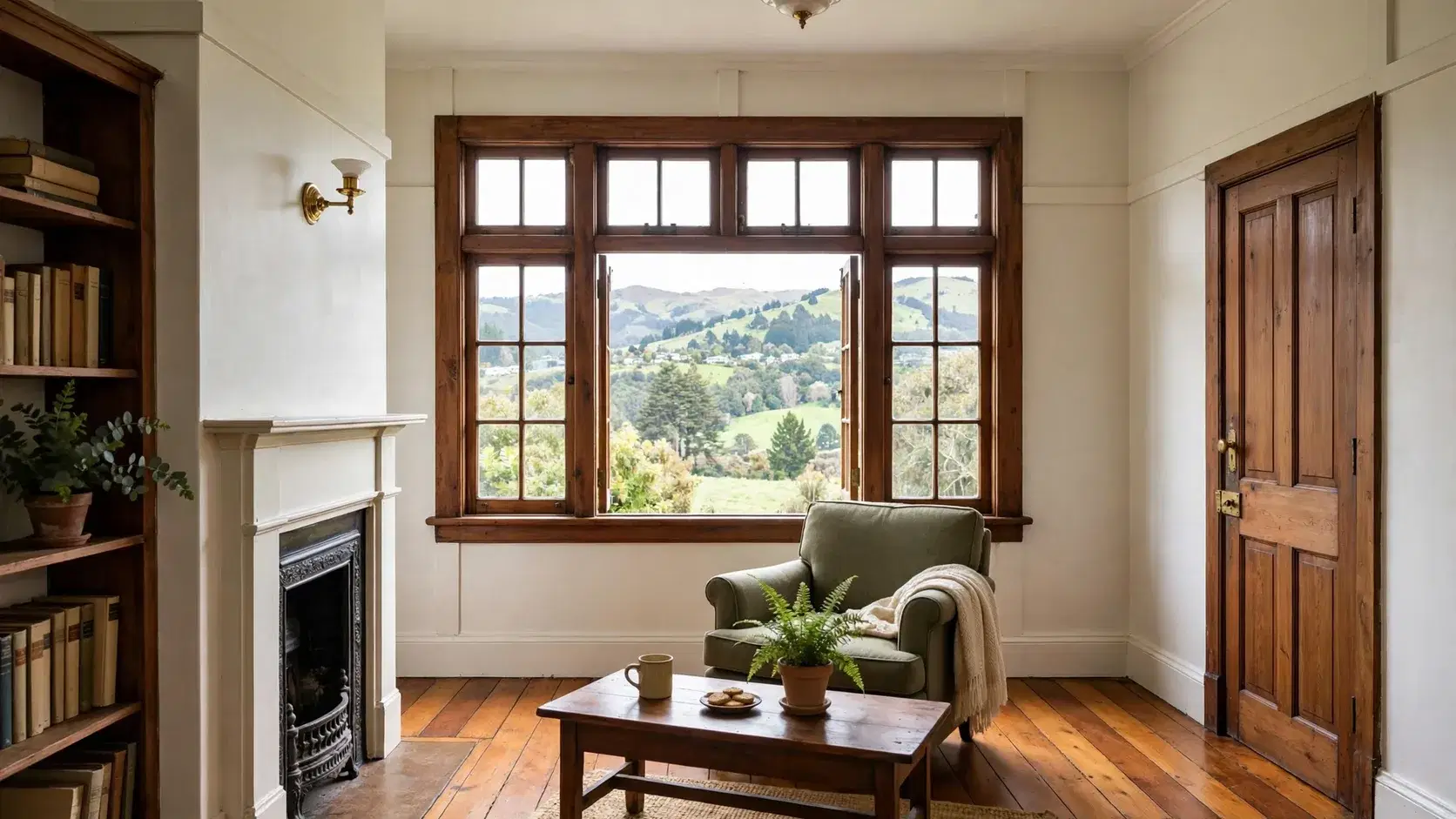
Interior painting in Johnsonville spans the suburb’s four building booms. In the state house streets between Broderick Road and Fraser Avenue we repaint 1940s and 1950s interiors with original timber joinery and doors that carry decades of old oil based enamel. In Paparangi the classic 1960s interior is gib and timber trim, and in Churton Park the work runs from the 1970s and 1980s core, textured ceilings included, to the big open plan 2000s subdivisions in Stebbings Valley and Amesbury.
One question from owners of older Johnsonville homes comes up constantly: can you paint water based paint over the old enamel on doors and trim? Not straight over glossy old enamel, no. The new coat cannot grip and it peels, sometimes within months. The proper sequence is to sand and de-gloss the enamel, spot prime where it has worn through, and then coat. The same care goes into every interior: the textured ceilings in 1970s and 1980s homes get tested before anyone disturbs them, because ceilings of that era can contain asbestos, floors and furniture are masked, cracks are repaired, and low odour modern paints keep the house liveable while we work.
Exterior Painting Johnsonville
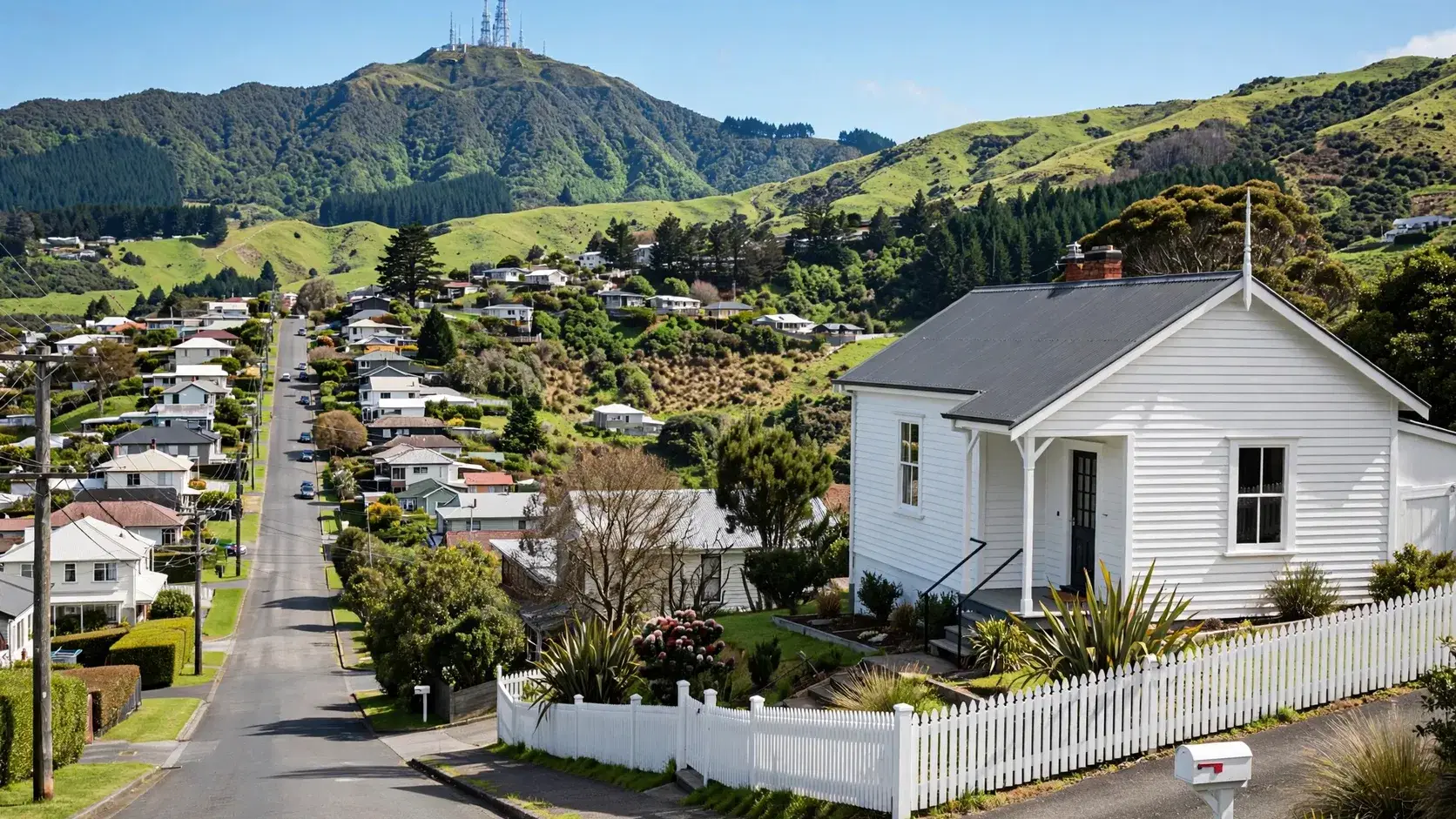
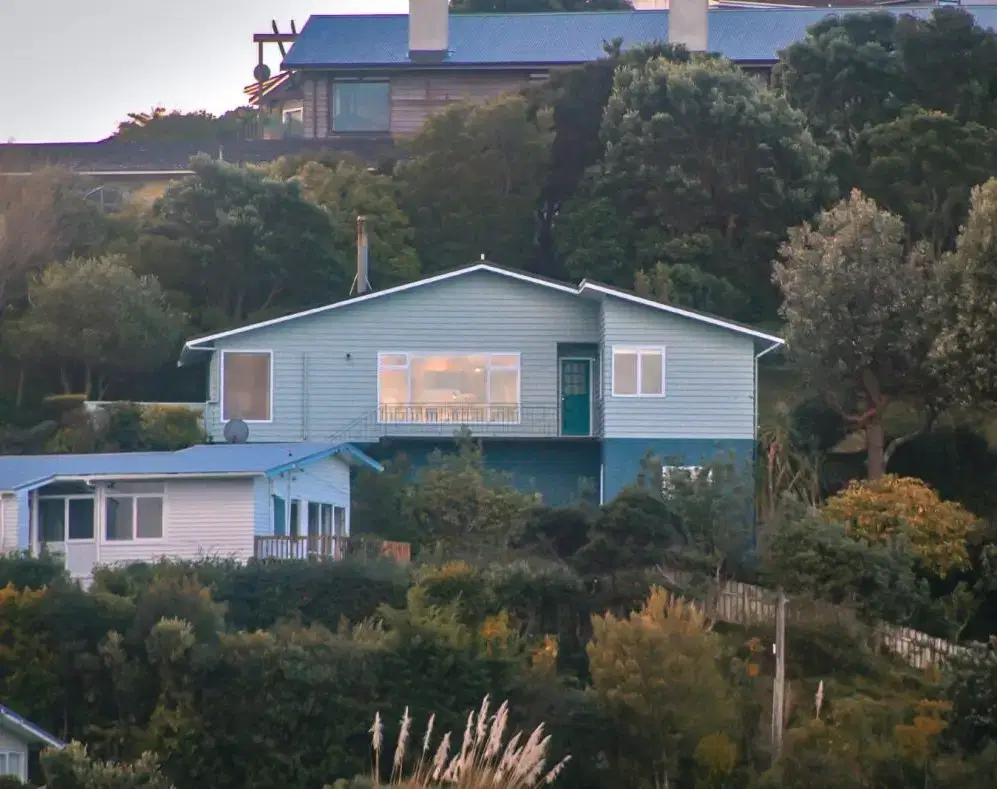
Exterior painting in Johnsonville is mostly weatherboard painting, and the suburb’s defining stock is the state house. From 1938, when the railway was electrified, 329 state houses went up between Broderick Road and Fraser Avenue, the first of them in Bould Street, and post-war private building filled the slopes around them for thirty years. Our exterior work on these homes runs wash, scrape and sand back to sound paint, rot repairs, gap sealing, primer on bare timber, then two topcoats of premium acrylic chosen for the exposure the wall actually gets.
Exposure is the Johnsonville variable. A sheltered basin floor home and a Broadmeadows ridge home live in different climates: wind driven rain finds every failed joint on the ridges, and exposed faces weather years faster than the sheltered walls of the same house. How long should an exterior paint job last here? Five to ten years is the honest range, with exposed ridge homes at the short end and sheltered streets at the long end. Tell us your street and we will tell you which end your house sits on.
Interior Plastering Johnsonville
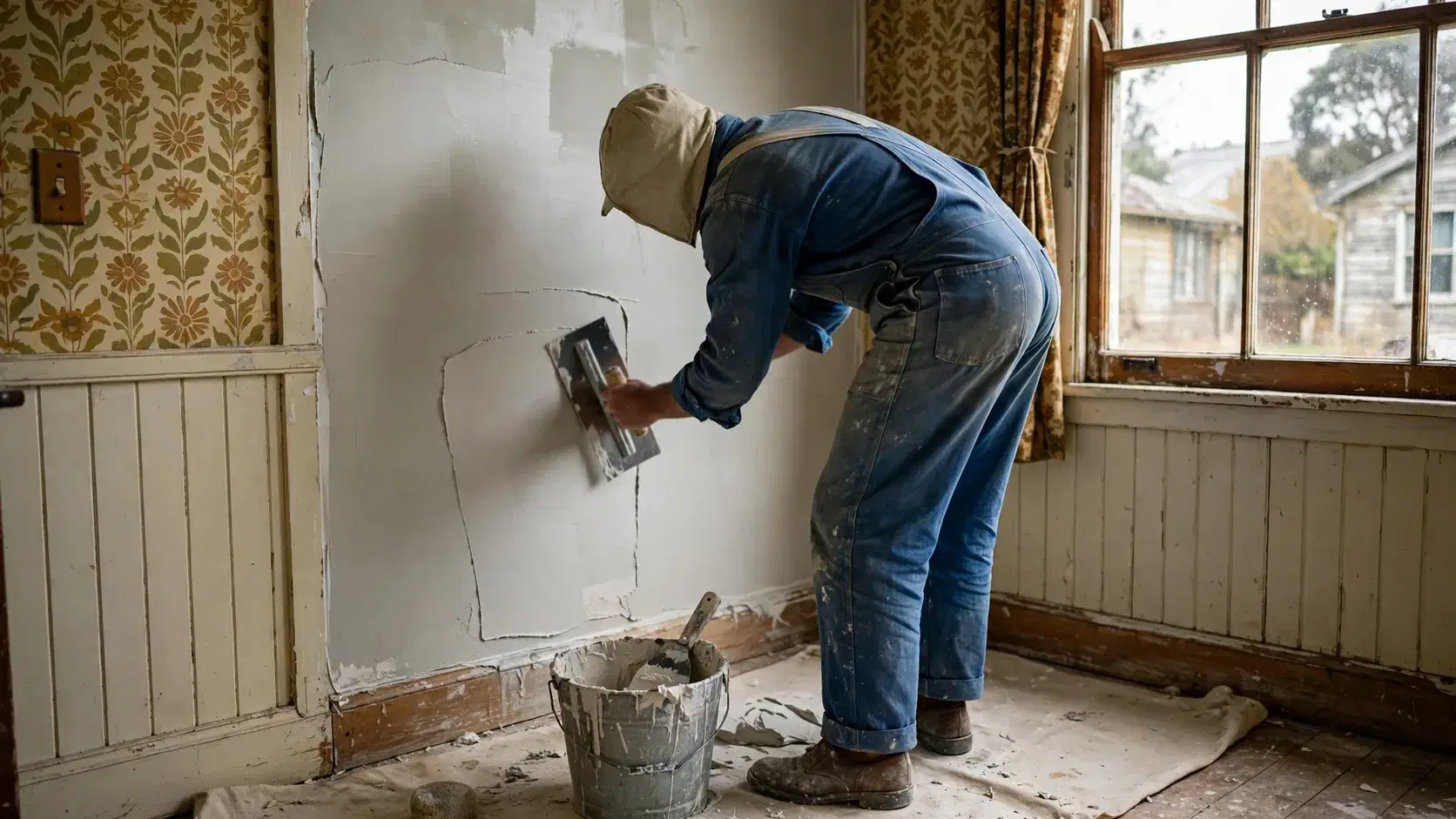
Interior plastering in Johnsonville is where the building booms show through the walls. The state houses were built fast and well, but their original plaster and fibrous plaster ceilings have now had seventy to eighty years of the house moving with the seasons and the earthquakes, and settlement cracks across ceilings and around door frames are the classic repair. In Paparangi’s early 1960s homes the cracks run along gib joins, and in Churton Park’s subdivisions the work is stopping new gib in renovations and repairing the knocks of family life.
Our plasterers repair cracks properly, cutting out and stopping rather than smearing filler over a moving crack, skim coat tired walls to a paint ready finish, and repair water damaged plaster where a roof or flashing has quietly leaked, a common find on the damp side of the suburb. Plastering and painting are quoted together, so the finish you see at the end is one team’s work, with no gap between the plasterer’s standard and the painter’s. If a wall has been patched five times in five decades, we will tell you if a full skim is better value than one more patch.
Exterior Coatings Johnsonville
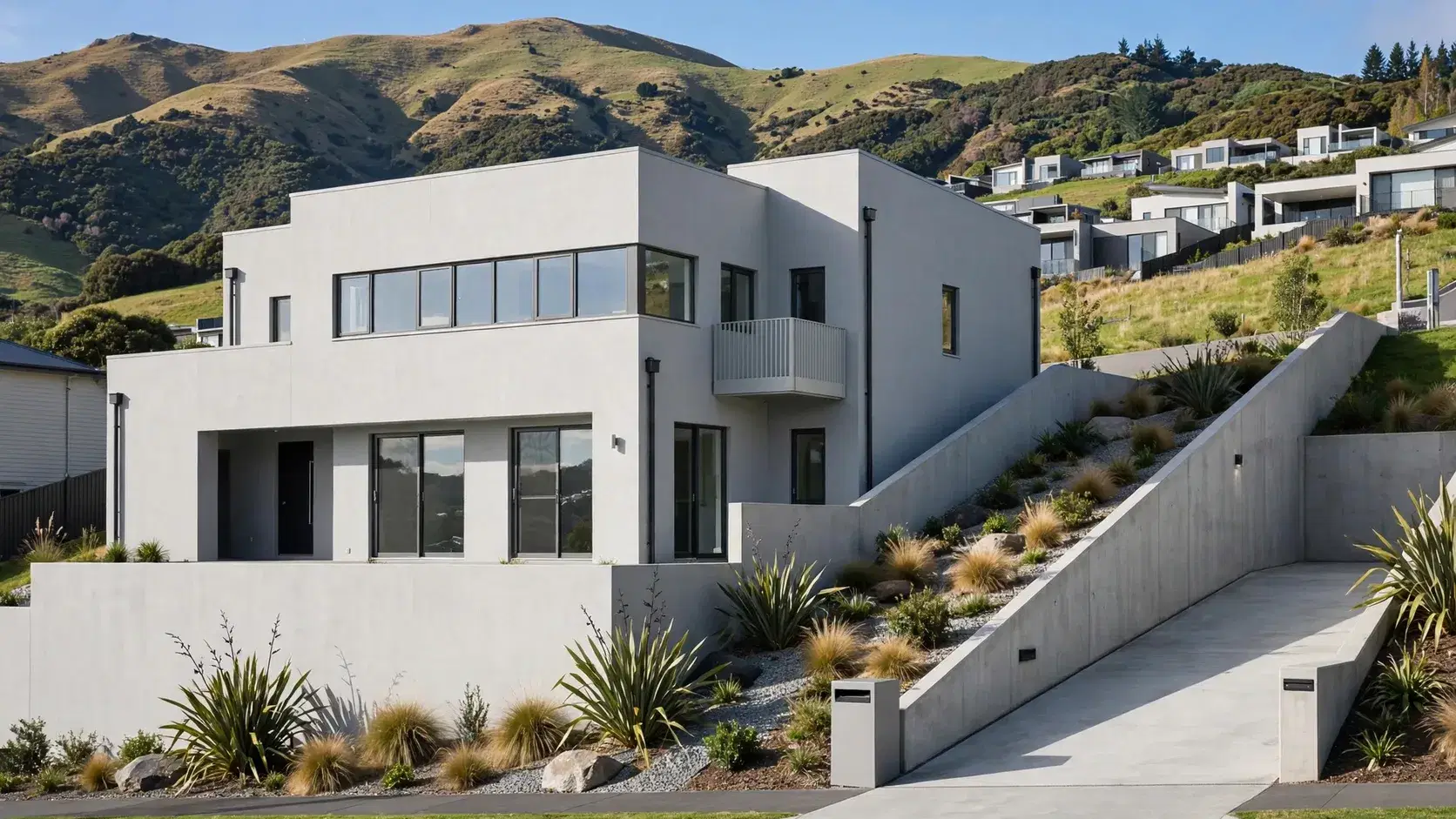
Exterior coatings in Johnsonville are the specialist systems that protect the homes paint alone cannot. The newer subdivisions carry them: monolithic and texture coated homes through 1990s and 2000s Churton Park and the Grenada Village and Woodridge growth corridor. Those claddings live on their coating and their control joint sealants: once hairline cracks open and sealants tire, wind driven rain gets behind the system and the repair bill grows teeth. We apply elastomeric and high build coating systems that bridge hairline cracks, flex with the building, and reseal the joints as part of the job.
The older claddings get honest conversations too. Stucco and roughcast post-war homes need coating systems matched to a hard, brittle surface. Cedar weatherboard homes, which show up in 1980s Churton Park, are a stain cycle, not a paint job: dark cedar stains on exposed Wellington faces need recoating every two to three summers, and greyed, neglected cedar needs restoration before any new stain will hold. And brick homes do not need their walls coated at all; on brick homes the work is the trims, eaves, soffits, joinery, gutters and roof. The system is matched to the cladding, not to a sales target.
Pressure Washing Johnsonville
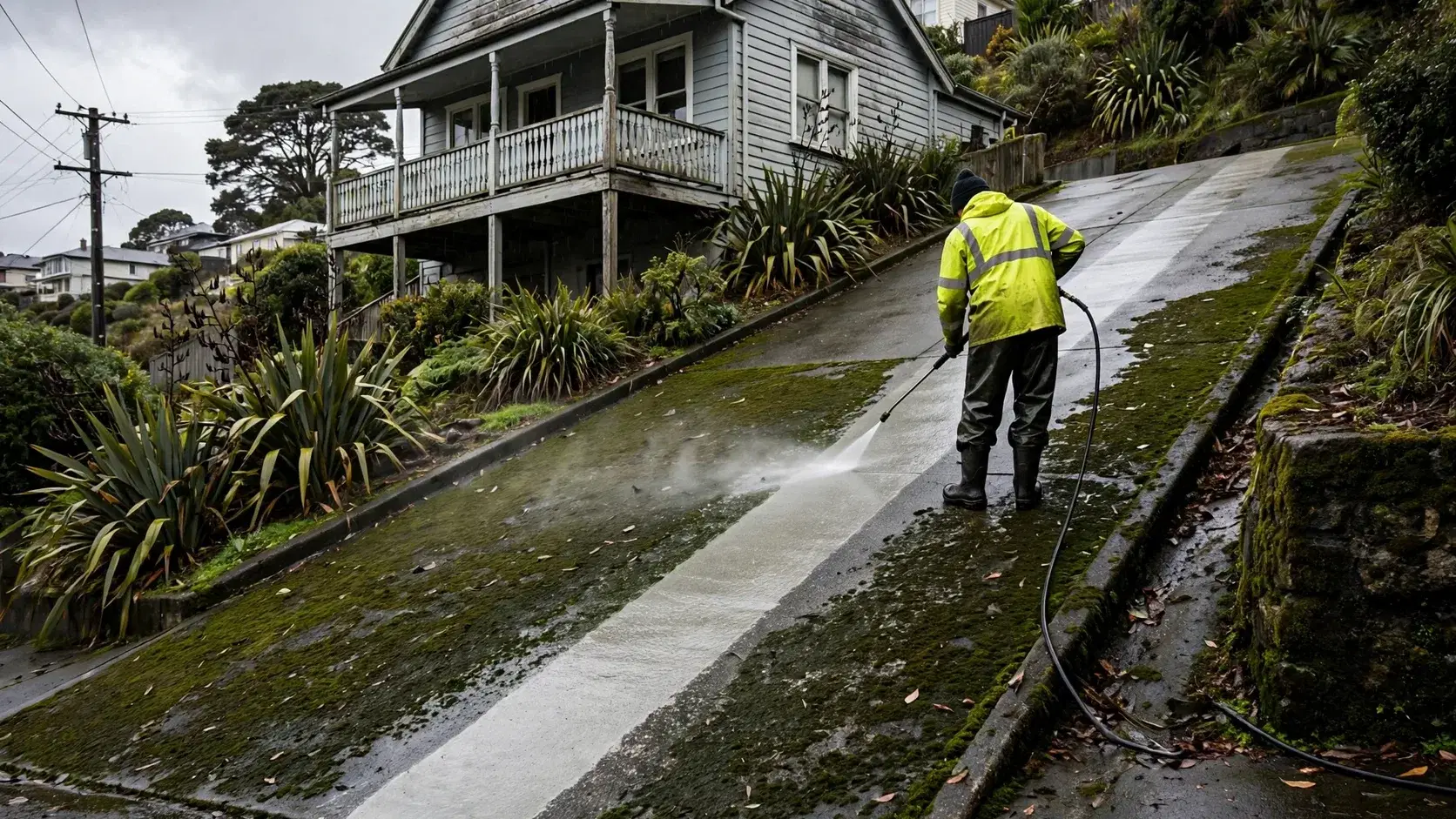
Pressure washing in Johnsonville does two jobs: it is the first step of a proper repaint, and it is a clean-up service in its own right for the mould, algae and grime that build up on cladding, decks, paths and driveways. The shaded streets need it most. Gullies under the green belt, south facing slopes in Broadmeadows and bush edged sections in Ohariu and around the base of Mt Kaukau stay damp through winter, and the green film grows on everything that stands still.
Should you waterblast a house before painting it? Yes, a wash is part of proper prep, but the method matters. We soft wash where the surface calls for it, and one rule never bends: asbestos era materials, fibrolite cladding, soffits and old textured surfaces, are never waterblasted. Blasting them breaks the material up and spreads fibres, so those surfaces get tested first and handled the safe way. Churton Park’s 1980s homes are commonly fibrous cement walled, so this is a live local rule, not fine print. A clean that damages the house or endangers the family is not a clean at all.
Mould Removal Johnsonville
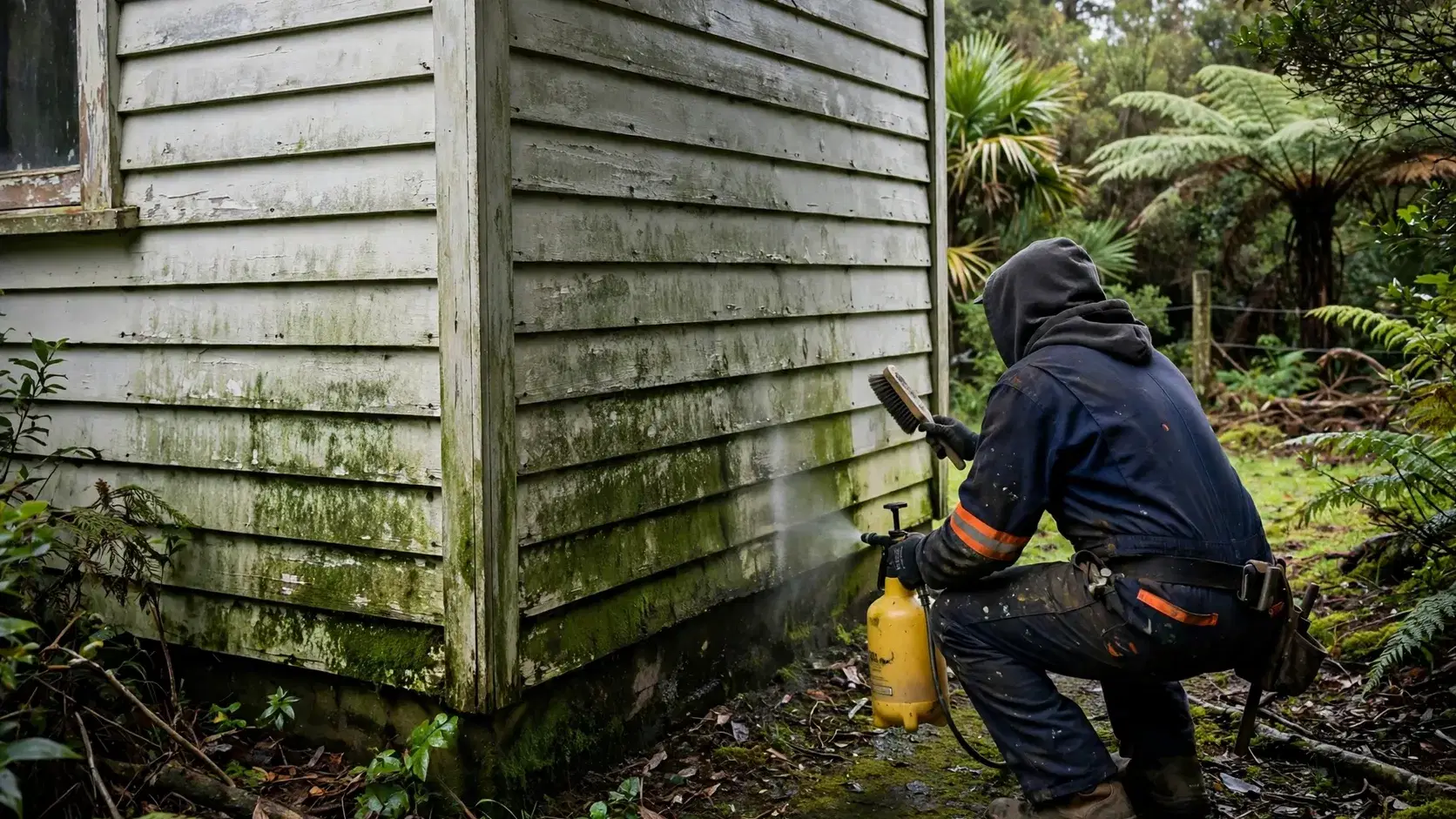
Mould removal in Johnsonville starts with the census, because this is one of the few places in the country where the problem is measured suburb by suburb. At the 2023 Census, 28 percent of Broadmeadows homes and 23 percent of Johnsonville homes reported damp always or sometimes, against 18 percent nationally, and 17 to 18 percent reported mould larger than an A4 sheet, against 14 percent nationally. Churton Park is the dry exception at 12 percent damp and 9 percent mould. Wellington’s air averages over 80 percent humidity, the shaded gullies and south facing slopes never fully dry, and the mould follows the map exactly.
Our mould work kills the growth at the root rather than bleaching the surface, treats the affected cladding and trim, and then paints with mould resistant systems chosen for shaded, damp exposure. We will also tell you honestly what is feeding it: a leaking gutter, a shaded wall that never sees sun, ventilation that needs improving. Kill the mould, fix the cause, and coat it properly, and the green film stays away for years instead of months.
Butynol Coating Johnsonville
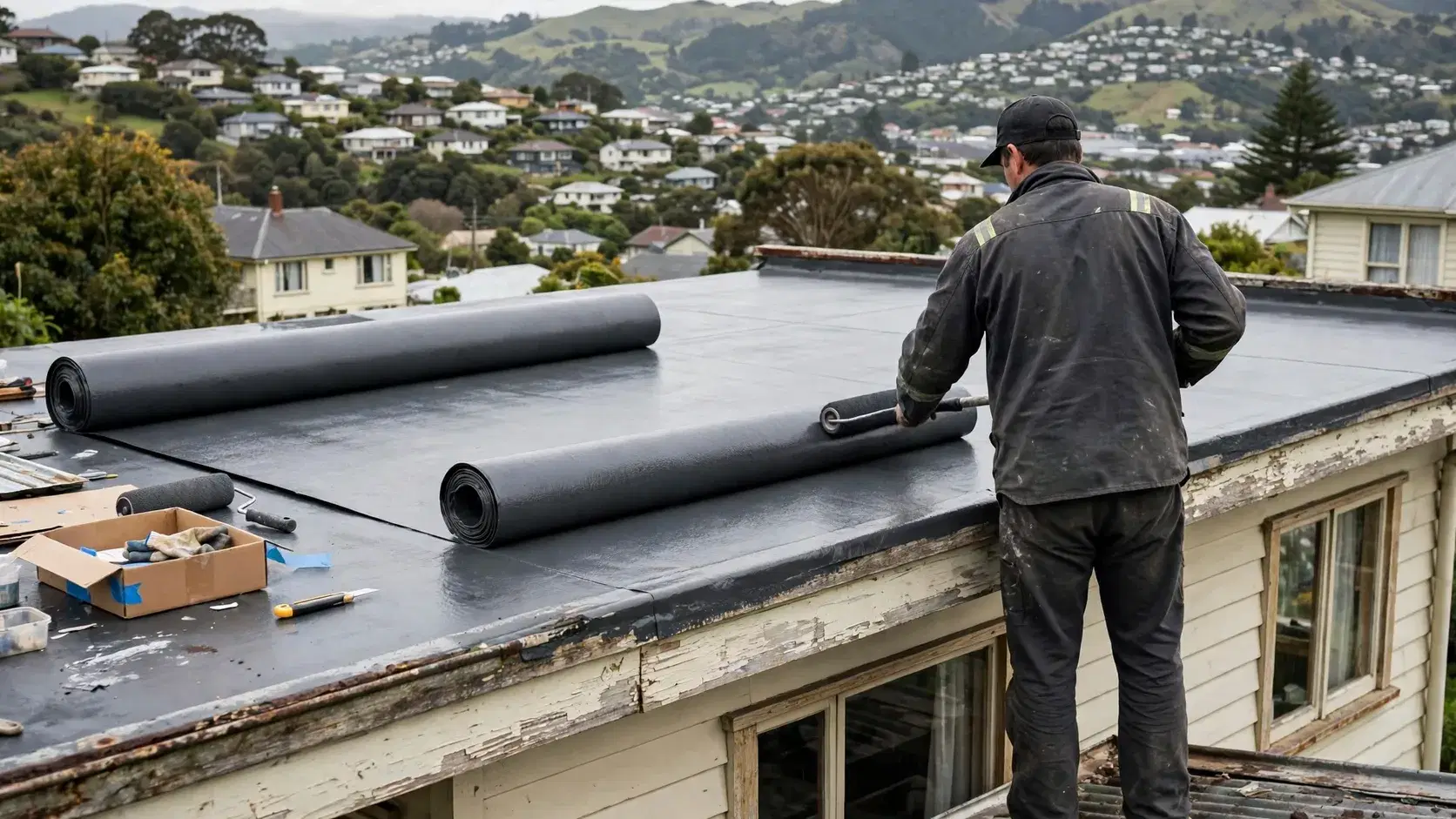
Butynol coating in Johnsonville protects the low slope and flat roofs that standard roof paint cannot save. The building booms left the suburb plenty of them: low pitch additions and carports on state era and 1960s homes, flat roofed sections on mid-century houses in Paparangi, and commercial and retail roofs around the town centre and the mall. When the original membrane ages, seams lift and the surface perishes under Wellington’s UV, patching buys months, not years.
We strip or overlay failing membranes depending on their condition, prepare the substrate properly, and apply Butynol waterproofing systems with the laps, upturns and detailing done to specification. A flat roof over a living space has no margin for shortcuts, because the leak you see inside is never directly under the hole. If your low slope roof is ponding water or the membrane is cracking, we will inspect it and tell you straight whether a recoat will hold or the substrate needs work first.
Roof Painting Johnsonville
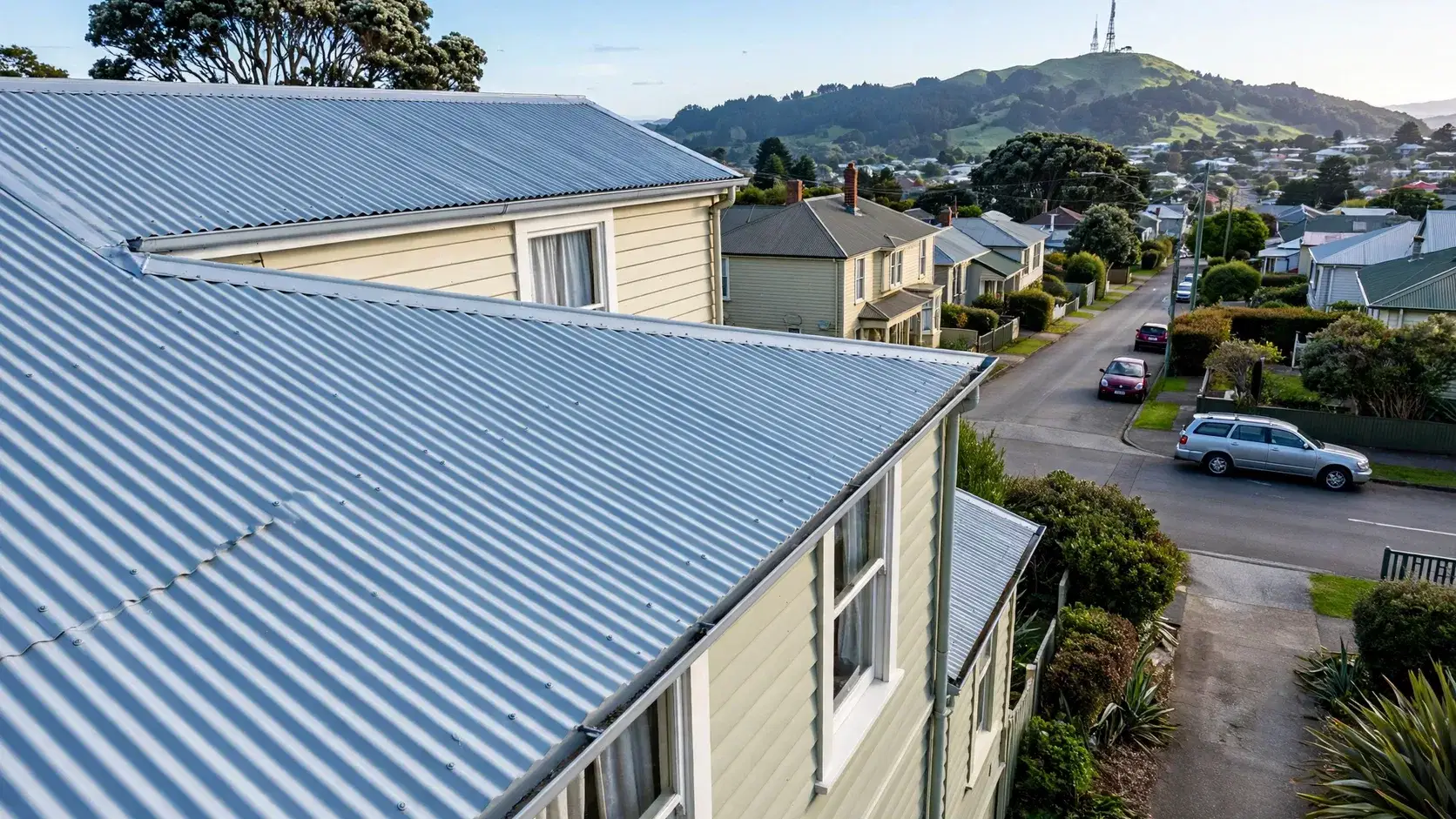
Roof painting in Johnsonville covers everything from corrugated iron on the state house streets to the tile roofs of Churton Park. Iron roofs live on their coating: once the paint chalks and the galvanising gives up, rust starts at the laps and fixings and works quietly until a winter storm finds it. We wash, treat rust properly, prime and apply two coats of premium roof paint. On the exposed ridges that work matters double, because wind driven rain tests every lap and flashing on the roof just as it does on the walls.
The tile roofs are the suburb’s other roof story. Tile and tile profile roofs run through the Churton Park samples from the 1970s onward, and the pressed tile and Decramastic style coatings of the 1980s and 1990s now chip and oxidise. Recoating them needs the right primer system or the new coat peels, which is why a specialist roof coating, applied after cleaning, pointing checks and moss treatment, restores the weatherproofing for a fraction of a re-roof. Moss in the shaded laps is the gully streets’ constant. Tell us your roof type and suburb and we will tell you which system it needs.
Residential Painting Johnsonville
Residential painting in Johnsonville is our core work: whole home repaints, inside and out, across the northern suburbs. The pattern repeats across the booms. A Broderick Road state house gets lead aware exterior prep and a full repaint in modern colours. A Paparangi 1960s home gets its trim de-glossed properly and its first full interior repaint in twenty years. A Churton Park 2000s home gets its monolithic cladding checked, resealed and recoated before the cracks let water in. A Broadmeadows ridge home gets a coating system chosen for the highest streets in the city.
We run residential jobs as one tidy program: fixed written quote, surfaces protected, prep done properly, premium coatings matched to the street’s exposure, and a walk-through with you at the end. Most of our Johnsonville work comes from referrals and repeat customers across the northern suburbs, and we work hard to keep it that way. Whether it is a single room in Paparangi or a full exterior on a lifestyle block in Ohariu Valley, the standard does not change.
Commercial Painting Johnsonville
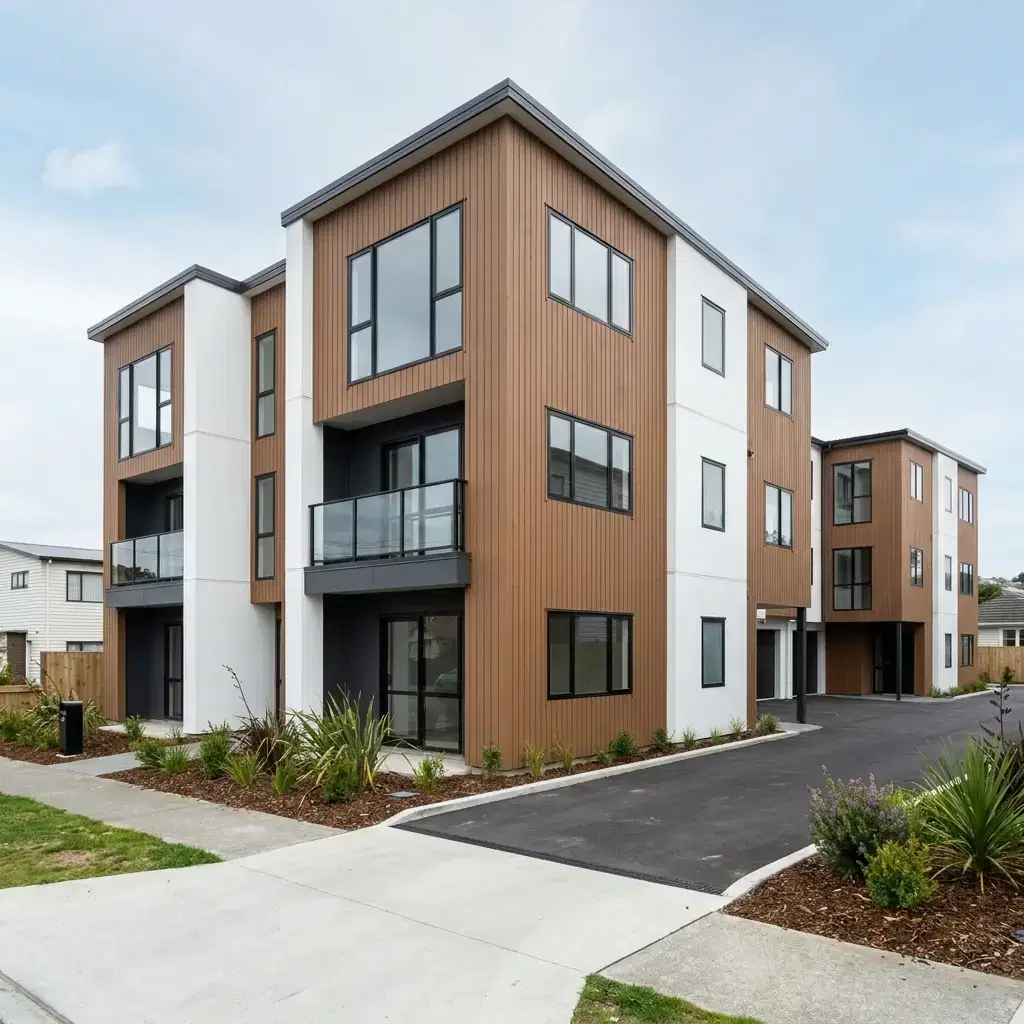
Commercial painting in Johnsonville covers the working buildings of the northern suburbs’ service town: the Johnsonville Shopping Centre precinct on Broderick Road, the region’s first mall when it opened in 1969, the Moorefield Road shops and offices, the buildings around the Waitohi hub and the station, and school and community buildings from Onslow College to the valley floor. Commercial work runs on different rules from house painting: the business keeps trading, the public keeps walking past, and the program has to fit around both.
We schedule commercial jobs in stages and outside trading hours where needed, keep access ways and signage clear, and use durable commercial coatings specified for high wear and easy cleaning. Warehouses and industrial buildings get the same prep discipline as homes, because a coating that fails over a working business costs far more than the paint job. If you run a business in Johnsonville and the building is letting the brand down, we will quote it free and plan the work around your trading, not ours.
Common Paint Problems We Fix in Johnsonville Homes
After years of painting across the northern suburbs, we see the same failures again and again. If any of these sound familiar, you are not alone:
How Much Does House Painting Cost in Johnsonville?
The question everyone asks first: what will it cost to paint my house? The honest answer is that it depends on size, condition and access, and Johnsonville adds a few cost drivers of its own. Here are realistic guide prices for Johnsonville homes:
| Job | Typical guide price |
|---|---|
| Full exterior repaint, 3 bedroom weatherboard home | $8,000 to $15,000 |
| Full interior repaint, 3 bedroom home | $6,000 to $11,000 |
| Roof painting, corrugated iron | $4,500 to $9,000 |
| Single room repaint | $800 to $1,500 |
These are guide prices to help you budget, and they line up with the ranges published by painting firms here in the northern suburbs. Every home is different, and the only accurate figure is a written quote after we have walked the property. What changes the price?
- Preparation. This is the big one, often half the job or more on an older Johnsonville home. Lead aware prep on pre-1970s paint in the state house streets and Paparangi, asbestos testing where the Churton Park era fits, rot repairs and decades of layered paint all take time, and any quote that looks cheap usually got cheap by shrinking the prep. That is the corner that fails first.
- Scaffolding and access. Steep sections are the Johnsonville story: Broadmeadows’ high streets, slopes climbing out of the basin, and two storey homes on Churton Park’s rises. Published national guides put scaffold on a two storey home anywhere from $800 to $2,500 or more on top of the paint work. We organise the scaffolding with our suppliers as part of the quote, you do not have to arrange it yourself.
- Height and size. Two storey ridge homes, big 2000s family homes in Stebbings Valley, and farmhouses with outbuildings in Ohariu Valley simply have more wall, more trim and more access work than a single storey basin floor home.
- Exposure and paint system. Ridge homes need systems that handle wind driven rain, shaded gully homes need mould resistant systems, and plaster clad homes may need elastomeric coatings. The right system costs a bit more up front and lasts years longer.
- Old materials testing and handling. If your pre-1990 home tests positive for lead paint or asbestos containing materials, controlled methods, containment and proper disposal add time and cost. It is money that has to be spent for the job to be safe and legal.
We give free, no obligation written quotes with the work broken down, so you can see exactly what the prep, access and coatings cost. No hidden extras halfway through the job. That is not how we do business.


What to Know About Painting Johnsonville Homes
Johnsonville is a service town of neighbourhoods built in four distinct booms, stretched over ridges and a basin floor, and painting here well means knowing which boom and which hillside you are standing in. We are based in Whitby, down SH1 through Tawa, and we are painting somewhere in the northern suburbs most working weeks, everywhere from Bould Street to the Ohariu Valley. Here is the local knowledge that shapes how we quote and paint across the area.
Johnsonville town and the state house streets (6037) are the suburb’s foundation: a clearing in heavy bush from 1841, named for Frank Johnson, and then, from 1938, the electric train suburb. The 329 state houses between Broderick Road and Fraser Avenue, the first in Bould Street, are classic first Labour Government weatherboard homes with timber joinery and iron roofs, and they anchor the repaint market here: lead era paint, honest timber, and sections that climb out of the basin. The town they serve is anchored by the mall, the Waitohi hub and the station, and its oldest survivor, the Daisy Hill Farm House on Truscott Avenue from about 1860, is one of the few remaining farmhouses of its type in Wellington.
Churton Park (6037) is two suburbs in paint terms. Established in the 1970s on farmland, its core around Churton Drive and Westchester Drive is 1970s and 1980s housing, commonly fibrous cement walled on the council records, under tile and iron roofs, with cedar weatherboard in the mix. Around it, the 1990s and 2000s subdivisions of Stebbings Valley and Amesbury hold the majority of the suburb’s stock, big modern homes whose original coatings are now reaching end of life. Churton Park also posts the driest census numbers on this page, 12 percent damp against Johnsonville’s 23, which shows in the prep: less mould, more coating checks.
Paparangi (6037) is the compact 1960s suburb between Johnsonville and Newlands, built by Beazley Homes at about 100 houses a year in the early 1960s, with streets named for the developer’s children: Cara Crescent, Mark Avenue, Lynda Avenue. A whole suburb from one volume builder in one decade means one set of materials and one set of watchpoints: lead era paint, early asbestos materials, and weatherboard and fibrolite cladding at repaint age together.
Broadmeadows (6035 and 6037) is the exposure suburb: under a square kilometre of steeply sloping streets, the highest in Wellington City, with homes more than 300 metres above the sea and green belt on three sides. It also posts the worst damp and mould figures on this page, 28 percent damp and 17 percent mould, because altitude and shade are a hard combination. Access planning is the whole job here: steep sections, scaffold on at least one face, and coating systems chosen for the top of the city.
Grenada Village, Woodridge and Glenside (6037) are the northern growth corridor, grouped by the council as a high growth area. Grenada Village names its streets for the Caribbean, Havana Rise, Trinidad Crescent, Guadeloupe Crescent, and Glenside was once “The Halfway” between Wellington and Porirua, which is exactly the drive our crews make. The stock is the newest on this page: modern claddings, monolithic and texture coated finishes among them, now reaching the age where first full repaints and coating checks fall due.
Ohariu Valley (6037) is the rural tail: 414 people across 4,680 hectares of farms, lifestyle blocks and bush gullies west of Johnsonville. The work is farmhouses, lifestyle homes and outbuildings rather than subdivisions, on a sheltered valley floor that stays damp under the bush edges. Long driveways mean the access and gear get planned before the truck leaves Whitby.
Wherever you are in the northern suburbs, the pattern is the same: the suburb tells us the building boom, the boom tells us the materials, and the materials and the hillside tell us the prep. That is the difference between a painter who works in Johnsonville and one who just drives through it. Call us for a free quote and we will come and read your house properly.
Our Step-by-Step Professional Painting Process
Free Consultation
We visit your Johnsonville home, from the basin floor to the Broadmeadows ridges, look at the surfaces and access, test older paint for lead where the era fits, flag anything that needs asbestos testing, and give you a written quote with the work broken down. No obligation, no pressure.
Careful Area Setup
We protect your floors, furniture, gardens and paths, set up safe access and scaffold on the steep sections, and keep the site tidy and secure from day one.
Thorough Surface Preparation
We wash the surfaces (soft wash only on asbestos era materials, never a waterblast), scrape and sand back to sound paint, treat mould and rust, repair rot and cracks, and prime bare timber and repairs the same day they are exposed.
Premium Paint Application
Two coats of premium paint matched to your hillside’s exposure, flexible coatings on the wind driven ridges, mould resistant systems in the shaded gullies, and winter exterior work planned so fresh paint is dry before the cold evening air settles.
Inspection & Full Clean-Up
We walk the whole job with you, fix any touch ups on the spot, remove all masking and rubbish, and leave your home cleaner than we found it, with the workmanship guaranteed.
Not in this suburb? We also paint homes across nearby Wellington, Tawa, Whitby, Newlands, Lower Hutt and Upper Hutt, so get in touch for a free local quote.
Why Choose Us, Your Trusted Painting Company in Johnsonville
Capital Painting Services is a family owned and operated painting company based in Whitby, proudly serving Johnsonville, Porirua and the wider Wellington region. Led by Phil, we are passionate about helping homeowners and businesses protect and enhance their properties with high quality interior, exterior, and roof painting services, all backed by guaranteed workmanship.
Why do Johnsonville homeowners choose us?

FAQs
Ready to Give Your Johnsonville Home the Paint Job It Deserves?
Ready to give your Johnsonville home the paint job it deserves? Whether it is a Broderick Road state house with eighty years of northern suburbs history, a Paparangi 1960s home ready for its next twenty years, or a Broadmeadows ridge house that takes the weather for the whole street, we would love to help. Call us today for a free quote, and let’s make your place look its best.
Capital Painting Services: professional house painters in Johnsonville. Interior painting, exterior painting, roof painting, plastering, pressure washing and more. Family owned and operated, led by Phil, based in Whitby and working right across Johnsonville. Call 022 071 5878 for your free quote.