
Professional House Painting Services in Paekakariki
Looking for house painters in Paekakariki? Capital Painting Services paints homes right across the village, from the beachfront, Beach Road and The Parade to the village core around the station, Wellington Road and the southern hill streets, Ames Street, Tilley Road and Smith Street, and the northern edge toward Queen Elizabeth Park. We are based in Whitby, up SH59 through Pukerua Bay, and we are in Paekakariki every week. This is the southern gateway to the Kapiti Coast, a small town of 1,674 people in 690 homes at the 2023 Census, squeezed onto a narrow strip of coastal plain between the Tasman Sea and the Akatarawa Ranges, which is why the highway and the railway run side by side through the middle of it. Its population has been essentially flat for two decades, 1,602 people in 2006 and 1,674 in 2023, so like its neighbours this is a pure repaint market: a settled, older, strikingly educated village (median age 47.1, and 43.9 percent of adults hold a bachelor’s degree or higher) maintaining the homes it already has.
Paekakariki is a railway town before it is anything else, and its repaint story follows the line. The railway opened on 3 November 1886, the town grew rapidly around the refreshment rooms and the locomotive depot that changed engines for the hill south, and the council describes the early settlement as a growing holiday resort of holiday homes and seaside cottages. OneRoof puts the majority of the village’s housing stock in 1950 to 1959, with the earliest homes dating to 1900 to 1909, and a council record sample of 14 homes shows the materials street by street: iron roofs on 11 of the 14, wood walls on 9, a fibrous cement roof on a 1910s Wellington Road home, fibrous cement walls on a 1930s Ames Street home, one roughcast house from the 1940s, and two Wellington Road sections recorded as a steep rise. The exposure is the same story as the geography: a thin village with no harbour shelter, where the Zone D salt band covers the beachfront and reaches most of the core. This page walks through what we paint, what it costs, what actually fails on this coast, and how we work, street by street.
Interior Painting Paekakariki
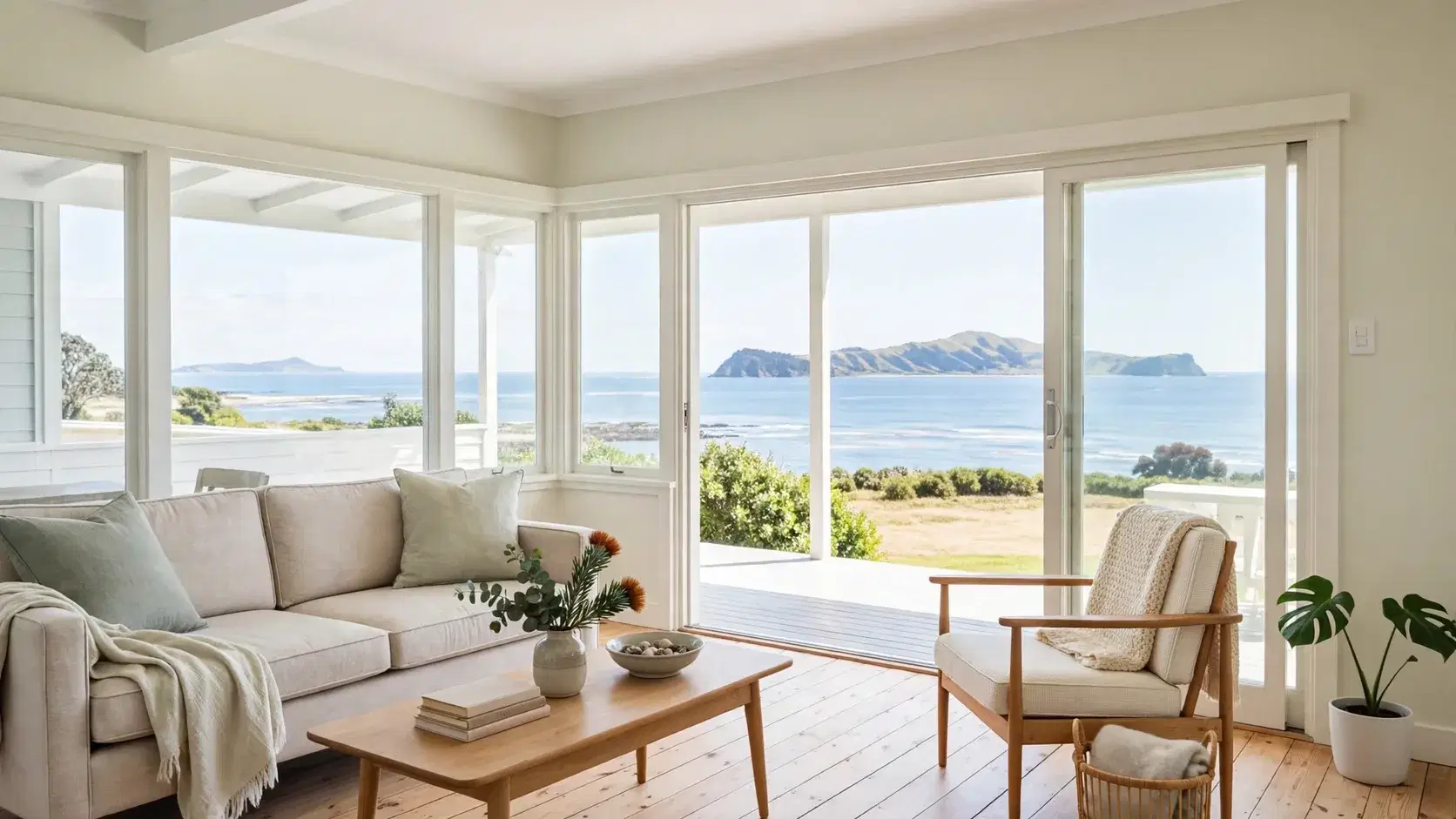
Interior painting in Paekakariki is early and mid century interior work. The village’s biggest building decade was the 1950s, over a shore and railway layer that runs back to 1900, so the typical interior program here is a weatherboard era home whose rooms carry the full paint history of the place: old oil based enamel on doors, skirtings and window frames, later water based coats over the top of it, and textured ceilings from the decades when those coatings could contain asbestos. The enamel question decides trim work in this village: water based enamel over unsanded gloss enamel fails, so the prep is a proper sand and the right undercoat before any new finish goes on.
The textured ceiling question is its twin. Textured ceiling coatings containing asbestos were applied in New Zealand from the 1960s into the 1980s, and in a village whose stock runs from the 1900s through every decade since, a stippled ceiling gets identified before it is scraped, skimmed or removed. Where the ceiling is sound and staying, the interior program is the classic one: wash, fill and stop the cracks and settlement lines that a century of coastal weather and hill foot movement leaves in older linings, sand the trim back properly, then two coats of modern low odour paint. These are full time family homes in a commuter and creative village (the station bookshop is run by a local writer and publisher, which tells you something about the place), lived in while we work, so sequencing and tidy staging are part of the quote, not an afterthought.
Exterior Painting Paekakariki
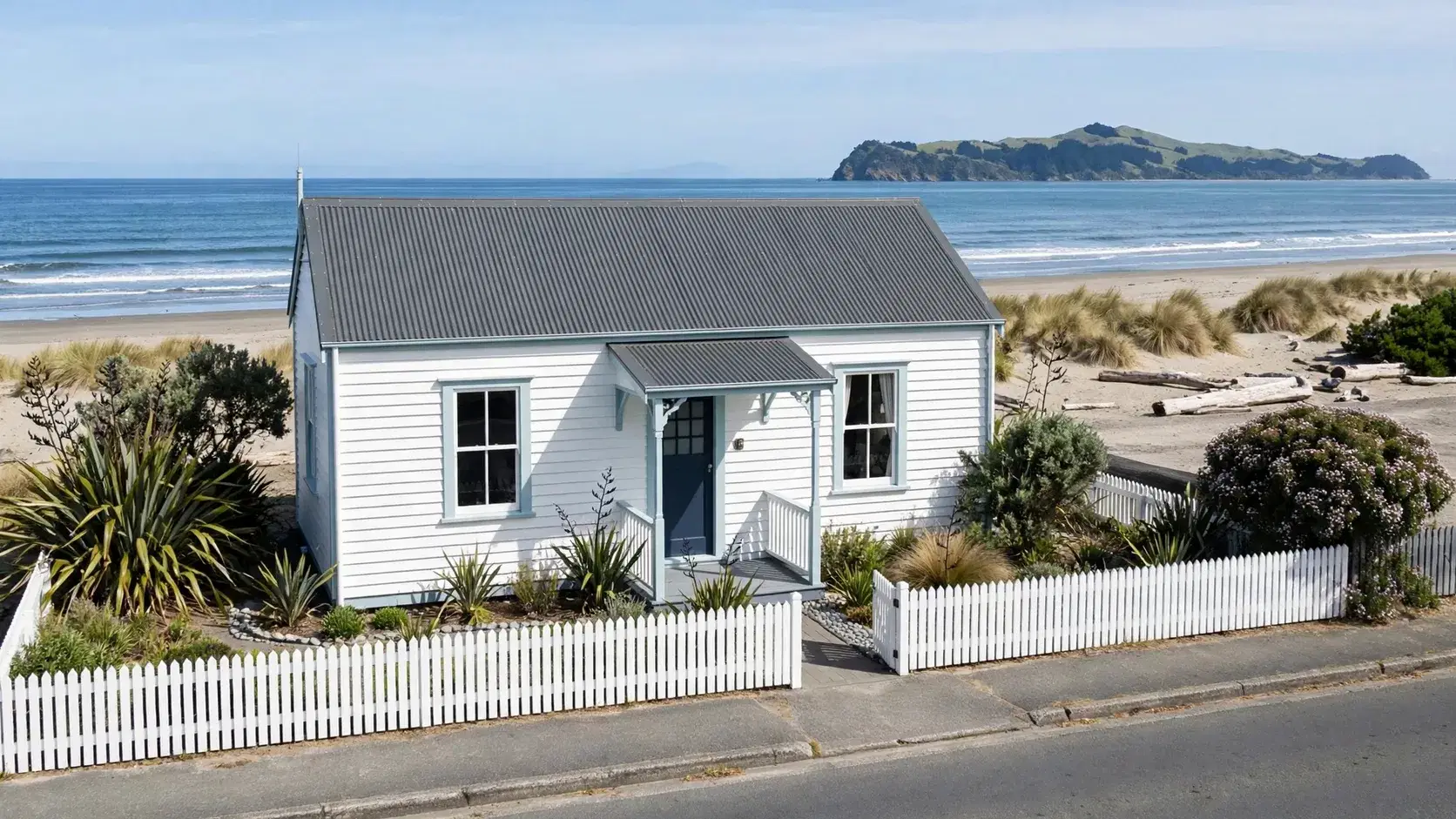
Exterior painting in Paekakariki is open coast painting on a narrow strip, and it starts with salt. Any site within 500 metres of the sea sits in the NZS 3604 Zone D high corrosion band, and because the village is a thin strip between the sea and the hills, that band covers the beachfront outright and reaches most of the village core and the lower hill streets: nearly every exterior job in Paekakariki is a coastal job. Salt spray drives rust on iron roofs and fixings and rot in timber, and it concentrates in the unwashed areas, under eaves and behind downpipes, so an exterior program here begins with a proper wash down, because coating over salt is coating over the thing that will lift the new paint from underneath.
The second exposure is wind through the gap. The same narrowing of the plain that squeezes the highway and railway through the village funnels the weather through it, the Escarpment Track above lists high winds among its hazards, and wind driven rain works the weather faces first: joints, cladding laps and sealants open up and tired coatings lift at their edges. The claddings are the village’s long century in materials, weatherboard first (9 of 14 in the council sample), mixed materials through the early decades, fibrous cement in the 1930s layer, and one roughcast texture home from the 1940s. On fibrous cement of that era, identification comes before any sanding or scraping, and on the pre 1970 homes, which here means most of the village, lead paint is presumed and tested, with containment and wet methods as the standard handling. Industry guidance puts coastal repaint cycles at five to seven years against seven to ten generally, and a wash, identify, prepare, prime, two coat program is how a Paekakariki home gets the long end of that range.
Interior Plastering Paekakariki
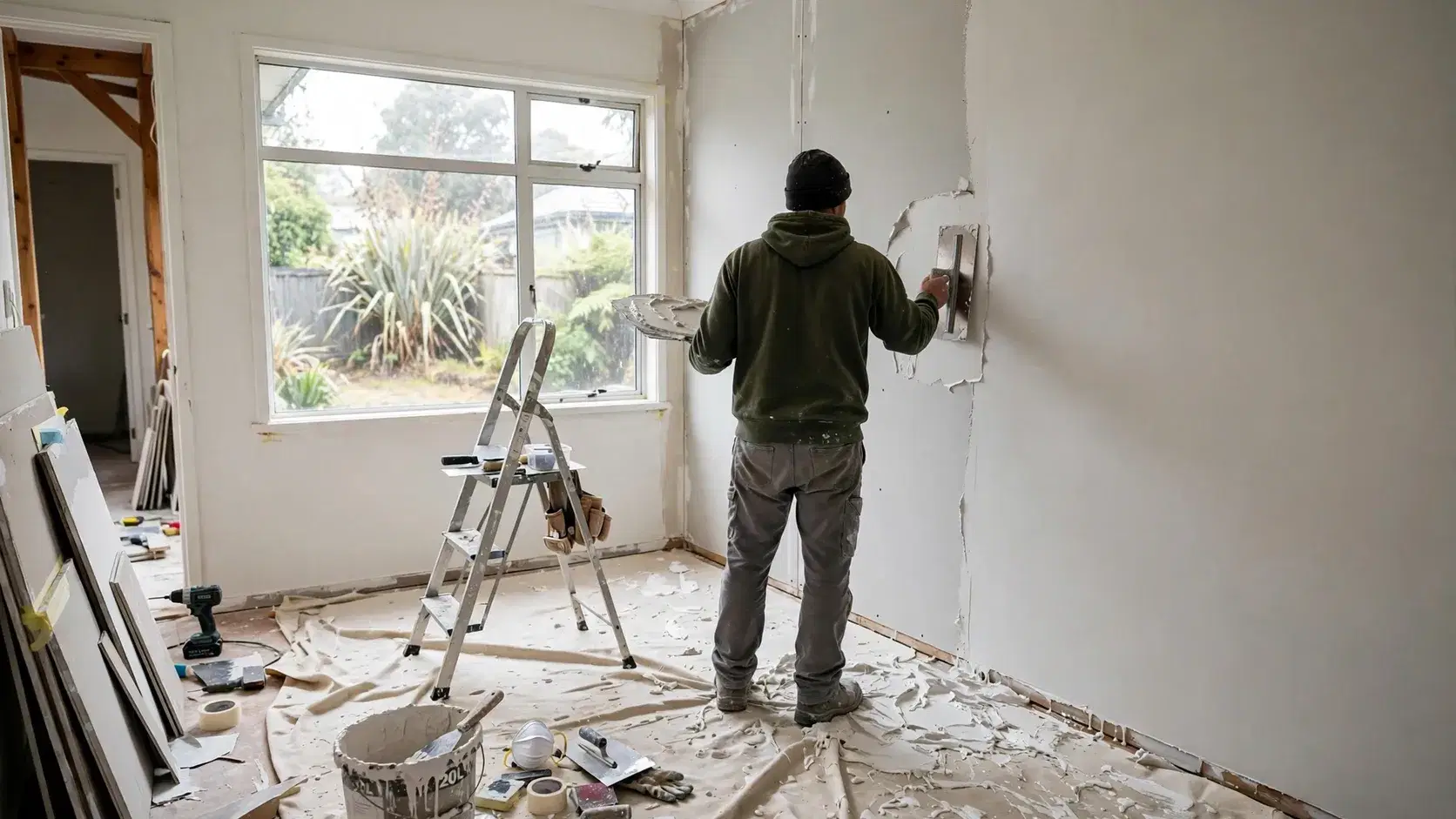
Interior plastering in Paekakariki is the surface reset behind most good interior repaints here. The stock runs from 1900s cottages to the 1950s majority and beyond, and a century of coastal living shows in the linings: cracks along ceiling joins and around window frames, popped fixings, the wavy walls that layers of wallpaper and paint leave behind, and hill foot homes whose steep sections have moved a little with every decade. A proper stop, skim where the surface needs it, and sand program is what turns a repaint from a colour change into a finish that looks straight in the hard light off the sea.
The one discipline this village adds is the textured ceiling question, the same one as next door: ceilings coated between the 1960s and the 1980s can contain asbestos, so a stippled or textured ceiling is identified before it is skimmed, scraped or removed, and the plastering program is planned around the answer. Where repairs have broken an older textured or roughcast style internal finish, we patch and blend to match the surrounding surface so the repair disappears under paint. Plastering is quoted as its own line in the breakdown, so you can see exactly what the surface work costs before the painting starts.
Exterior Coatings Paekakariki
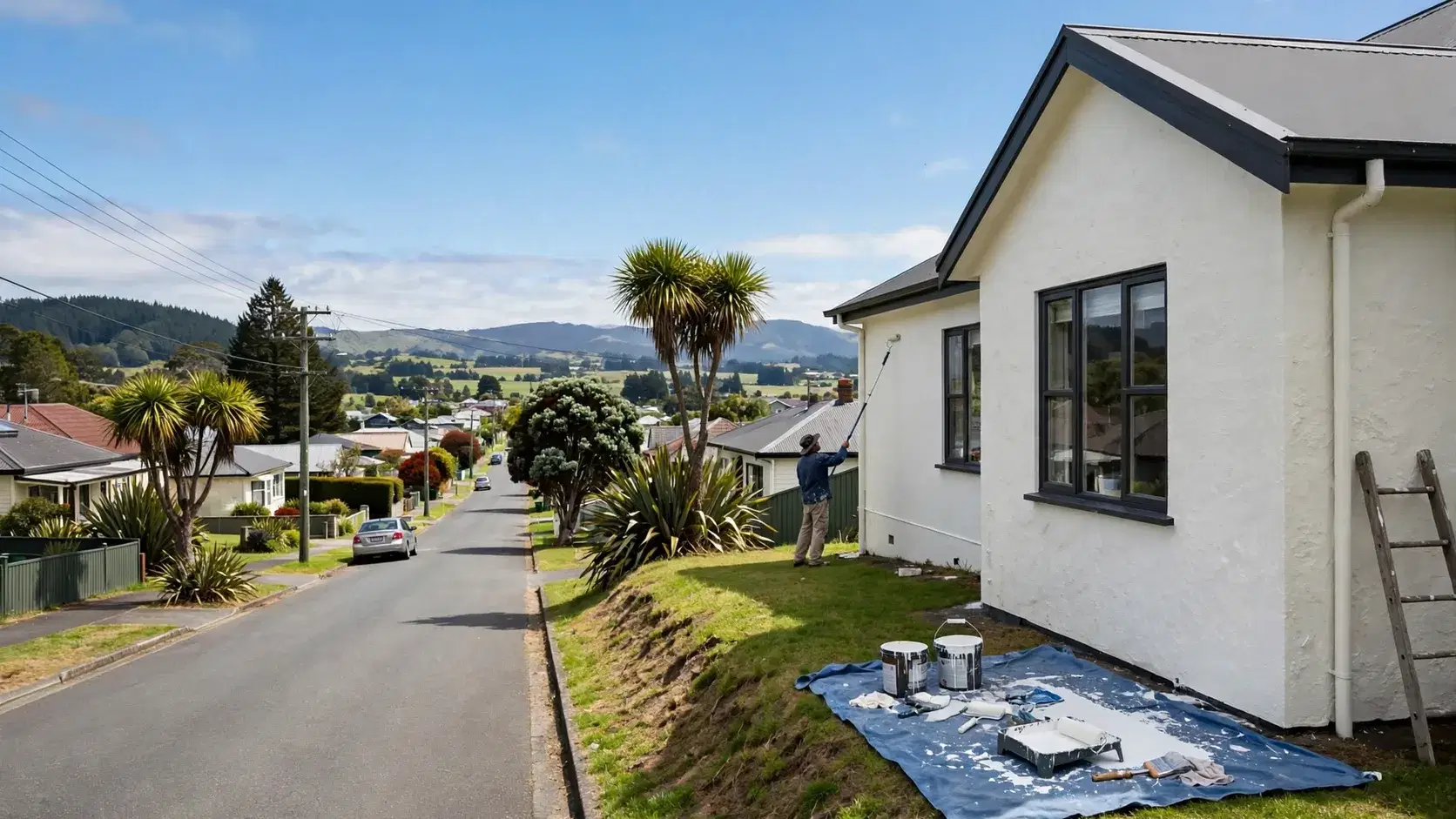
Exterior coatings in Paekakariki means the texture coated and roughcast homes, a small but real layer of the village’s stock: the council sample’s 1940s home at 7 Ames Street is recorded as roughcast, the category that covers stucco and modern texture coat finishes, and plaster and texture systems appear across the wider Kapiti stock. These homes do not have a paint film so much as a coating system, and the system lives on two things: the coating itself and the sealants in its control joints and around its windows. Hairline cracks and tired sealants are the recoat trigger, because once water gets behind a texture system on an open coast, the failure spreads under a surface that still looks sound from the street.
Our recoat program for a texture home is a system program: moisture checks first, cracks assessed and repaired with compatible fillers, sealants cut out and renewed, then a full elastomeric or high build recoat that bridges hairline cracks and flexes with the building. What these homes must not get is a cosmetic coat of ordinary paint over tired sealants, which seals the problem in and shortens the system’s life. Paekakariki adds the wind factor: driven rain through the village gap finds every failed joint on the weather faces, so the sealant condition is checked face by face and quoted in the breakdown where you can see it.
Pressure Washing Paekakariki
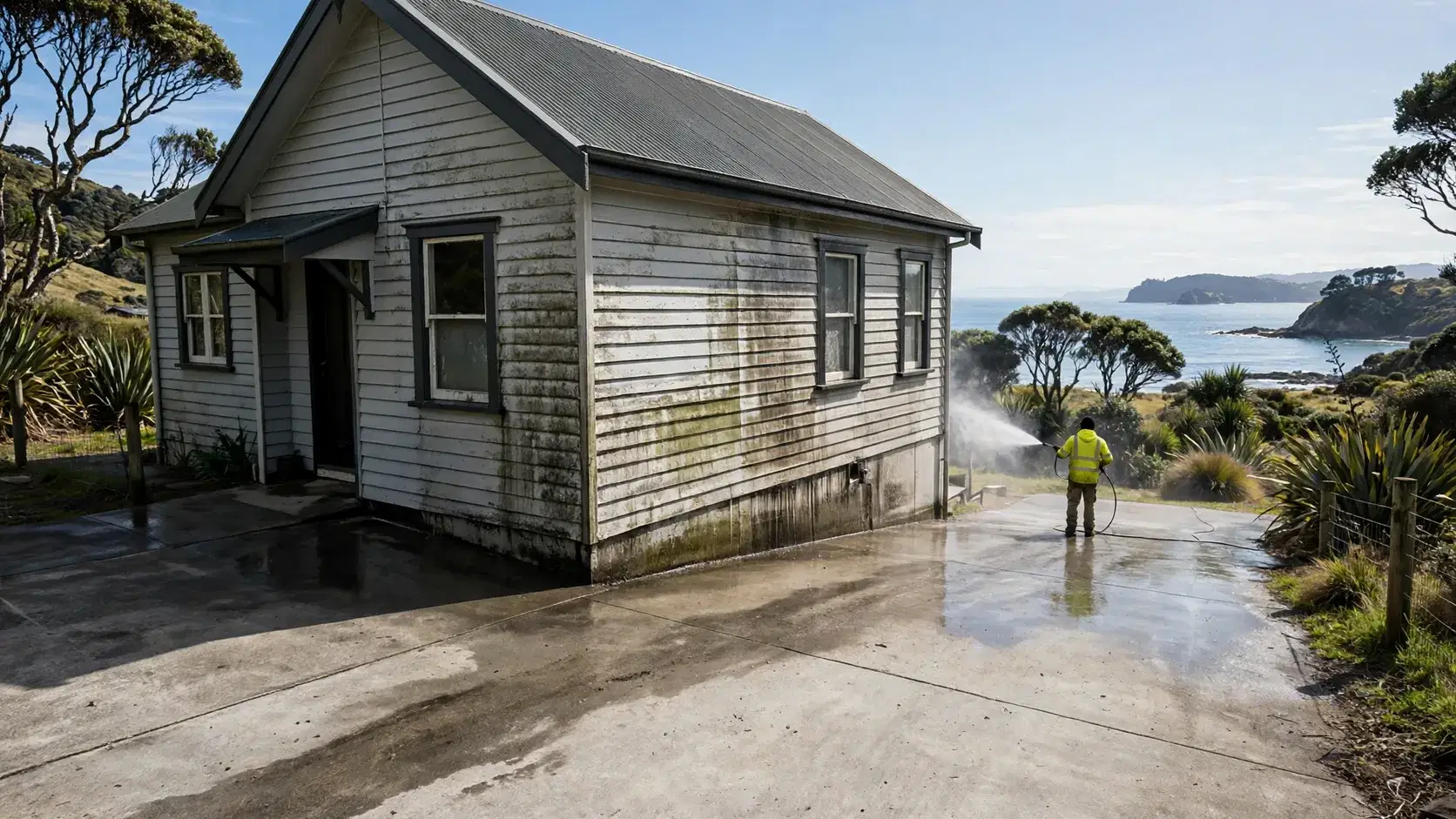
Pressure washing in Paekakariki does two jobs, and the first is salt. On a Zone D coastline the wash down is not cosmetic prep, it is the step that removes the salt load sitting on every surface, including the unwashed areas under eaves and behind downpipes where salt concentrates and where coatings fail first. Every exterior repaint we quote here starts with a wash, and the iron roofs that dominate the village (11 of 14 homes in the council sample) get the same treatment before any roof coating is discussed, because salt laden roof surfaces are where new coatings let go.
The second job is the green growth on the shaded faces. The village adds hill shade to sea air: south facing walls that dry slowly, the bush and hill foot streets under the Akatarawa foothills, and the ground around the Wainui Stream mouth at the northern end all stay damp longer than the sunny shore streets. Algae and moss hold moisture against the coating and shorten its life, so paths, decks, driveways and the shaded walls themselves are washed and treated as part of regular maintenance, not just before a repaint. One caution this village’s materials demand: the fibrous cement in the early stock, including the fibrous cement roof on Wellington Road, is never water blasted or dry scraped before it is identified. Asbestos era cement gets a soft wash and a safe plan, or it does not get touched.
Mould Removal Paekakariki
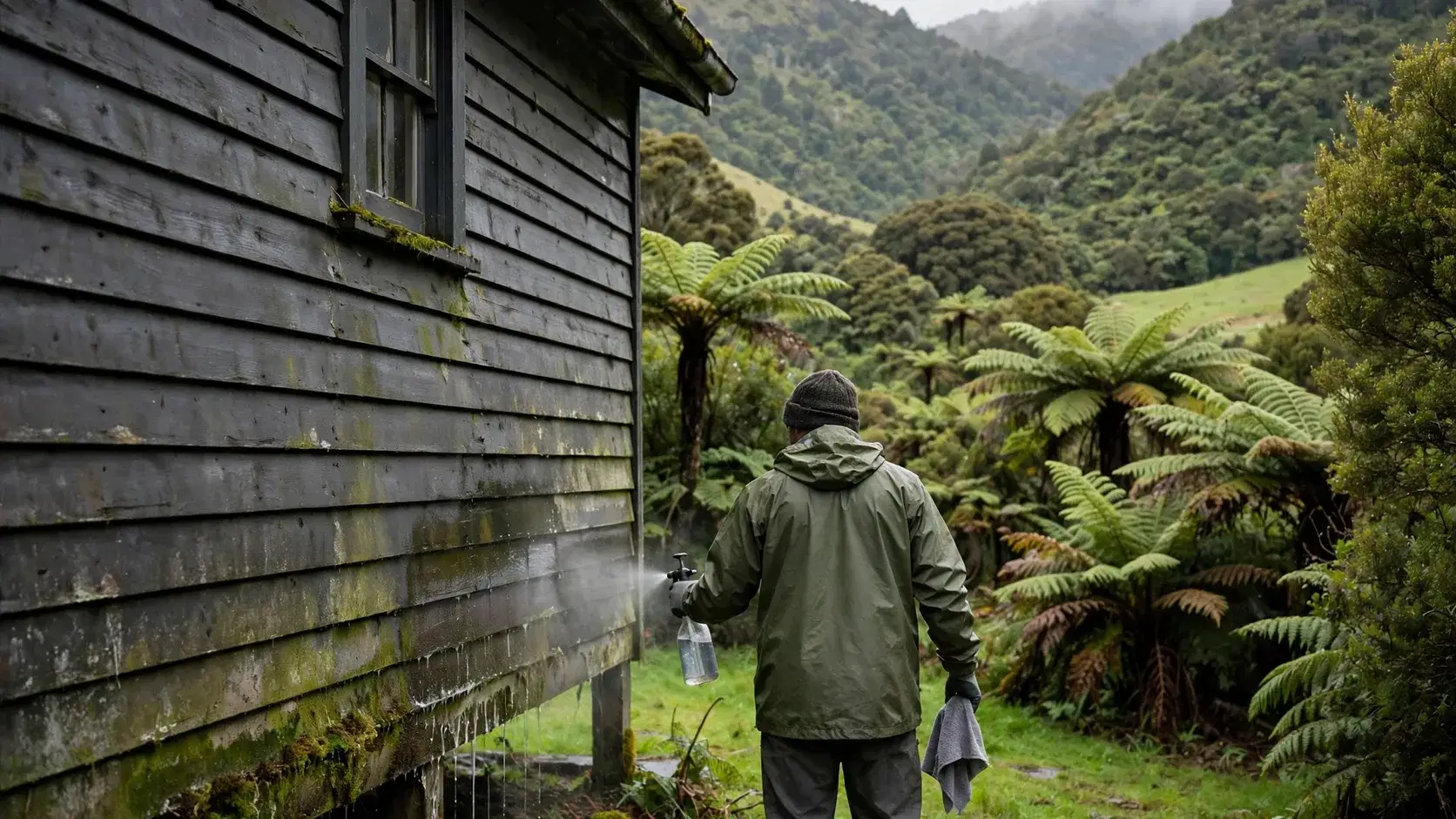
Mould removal in Paekakariki starts with an honest limit: no census damp or mould percentage has been published for this village, so this page will not invent one. The labelled national comparison is 18.1 percent of New Zealand homes damp and 14.0 percent with mould larger than an A4 sheet of paper, and the village’s risk is written in its geography instead of its statistics. A settlement on a narrow coastal strip gets wind driven rain on its western faces and long shade on its southern ones: south facing walls, the hill foot streets under the Akatarawa foothills that lose the sun early, and the unwashed salt coast faces where grime and growth hold moisture against the paint film.
Inside, the pattern follows the stock: 1950s majority homes with the era’s ventilation habits, bathrooms and laundries that have steamed for decades, and the cold corners of south facing bedrooms in the older cottages. Our mould work treats the growth properly, kills it at the surface, addresses the moisture habit or ventilation gap that fed it where that is paintable scope, and recoats with mould resistant systems in the wet rooms and on the shaded exterior faces. Where mould is a symptom of a bigger moisture problem, a leak, a failed sealant line, a shaded wall that never dries, we say so plainly and point you at the cause before we sell you the coating, because paint over an active moisture problem is money spent twice.
Butynol Coating Paekakariki
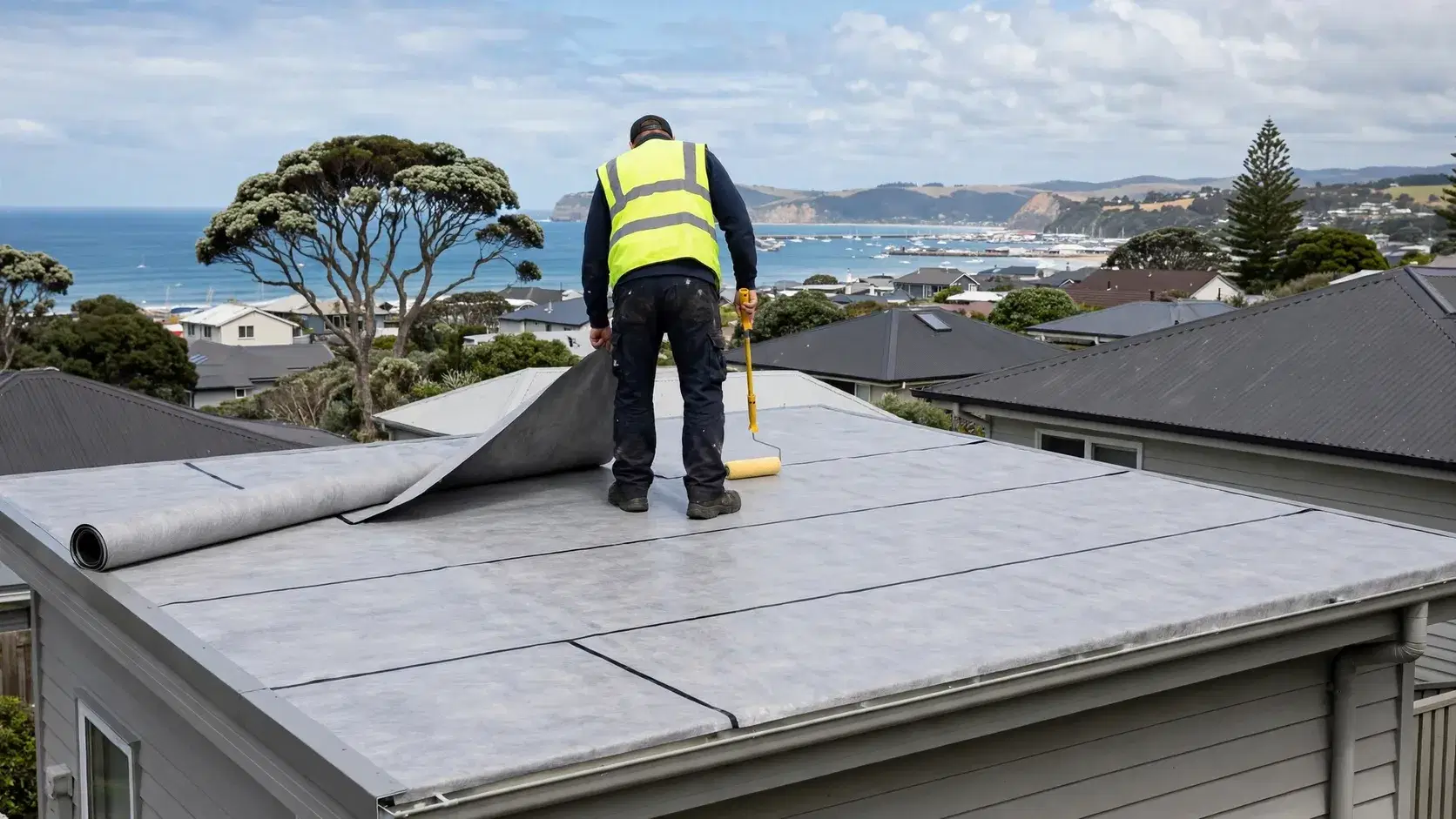
Butynol coating in Paekakariki is about the flat and low slope pieces of roof that sit between the village’s pitched iron roofs. Iron dominates here, 11 of 14 homes in the council sample, but a century of building on a narrow strip has left the usual collection of low slope additions: garage and carport roofs, lean to sections over later extensions, entrance canopies, and the flat roofed pieces of the split level forms on the hill streets, where floor area exceeds the footprint in 3 of the 14 samples. Those sections cannot shed water the way a pitched roof does, and on this coast they take wind driven rain almost horizontally, off a surf beach heavy enough to have swamped a landing craft in a 1943 training exercise.
Butynol membrane is the durable answer for those pieces: a sheet membrane system, fully bonded and lapped, that handles ponding water and foot traffic in a way paint films cannot. Our work covers repairs and recoating of existing membrane roofs and new membrane on low slope sections as part of a wider repaint, with the junctions into the pitched roof and the wall flashings detailed properly, because membranes fail at their edges and outlets, not in the middle of the sheet. If your Paekakariki home has a flat section that has been patched with whatever came to hand over the years, a quote visit will tell you honestly whether it wants a repair, a recoat or a fresh membrane, and the answer goes in the written breakdown.
Roof Painting Paekakariki
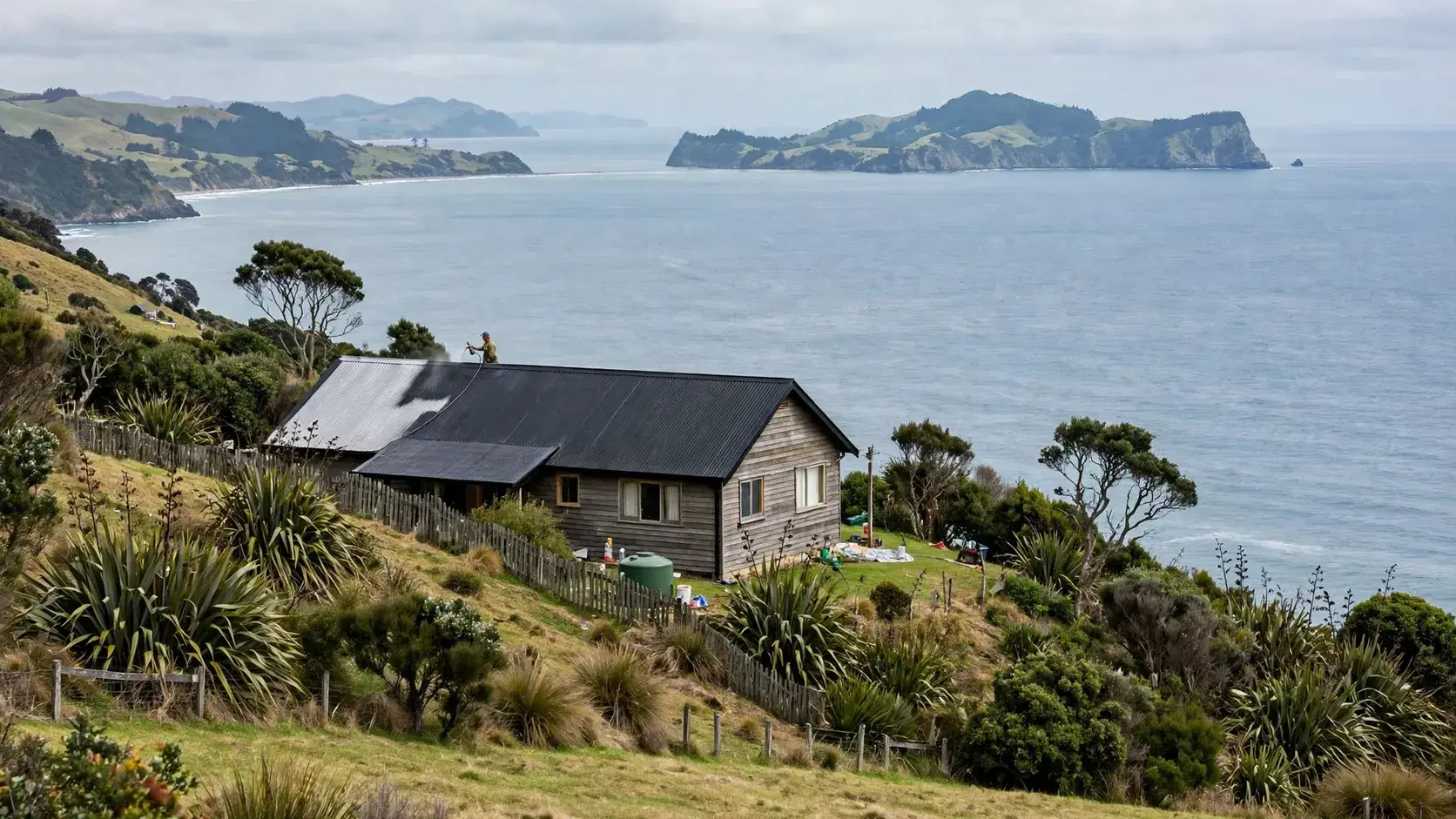
Roof painting in Paekakariki is iron roof work, mostly. The council sample puts iron on 11 of 14 homes across every era, from the 1910s houses on Wellington Road and Ocean Road to the 1970s weatherboard on Ames Street, so this village’s roof story is the corrugated and long run iron cycle: galvanised surfaces whose coatings have chalked and thinned under 2,064 hours of sunshine a year on the Kapiti Coast normals and constant salt air, surface rust starting at laps, fixings and the unwashed areas under overhangs. Tiles appear on only two sampled homes, the 1960s house on Tilley Road and the 1990s build on Ames Street, and the sample’s one fibrous cement roof, on the 1910s home at 64 Wellington Road, sets its own rule: a fibrous cement roof of that era falls inside the asbestos cement dating, so it is identified first and never water blasted, dry scraped or coated over as if it were iron.
A roof recoat here is a system, not a coat: wash down to clear the salt load, treat rust and corrosion back to sound metal, spot prime and then apply the primer and topcoat system the surface needs, because the right primer system is what decides whether a recoat stays on or peels in sheets within a few seasons. The hill streets add access to the job: two sampled Wellington Road homes sit on a recorded steep rise, and high roof work over falling ground is organised by us and priced inside the quote. On a coast where industry guidance puts repaint cycles at five to seven years, the roofs done as a system are the ones that reach the long end of the range.
Residential Painting Paekakariki
Residential painting in Paekakariki is the whole village program in one service: interiors, exteriors and roofs for a small, settled town whose housing was built in railway layers and is now maintained rather than replaced. The population has been flat for twenty years, so there is no growth wave here, just 690 households, most of them in homes built between the 1900s and the 1970s, in a village with the incomes to maintain them (median income $45,700 against $41,500 nationally) and an unusually educated eye for quality (43.9 percent of adults hold a degree or higher). The work that pattern produces is full program work: a Wellington Road home getting its exterior, its steep section access and its interior trim in one planned sequence, an Ames Street house carrying four different decades of construction getting each surface on its own specification, a beachfront cottage whose salt load sets the prep standard.
Because the village is small and proud of itself (a creative community with a 12 artist collective on Beach Road and a station bookshop run by a local publisher), the way a painter works here is visible. Our residential jobs run on the same standard as everywhere we work: a written fixed quote with the prep, access and coatings broken down, the asbestos and lead identification done honestly on the early and mid century stock, the wash down treated as a coastal discipline rather than an extra, and the site left tidy in streets where the neighbours all know whose van it was. Residential painting in this village is maintenance of a finite, much loved housing stock, and it deserves to be done as a system rather than a spruce up.
Commercial Painting Paekākāriki
Commercial painting in Paekakariki is village scale work with a heritage edge: the cafe strip on Beach Road, the village shops and hall, the school opened in 1886, and the station precinct itself, where the station building is Heritage NZ Category 2 and the signal box and water vats are Category 1. Those buildings are the village’s public face, they sit in the same Zone D salt band and the same gap wind as the houses around them, and the heritage ones carry a practical rule we work to: repainting like for like is maintenance, and character buildings deserve a check before colours or surfaces change, because a listed precinct is not the place for surprises.
Our commercial work here runs the same way as our residential work, with the additions committees and owners actually ask about: a written scope and fixed price that a school board or a hall committee can minute, staging that keeps a cafe trading or a hall usable while we work, and coatings specified for open coast exposure rather than for the brochure. We are based in Whitby and in the village every week, so a small commercial job in Paekakariki gets the same crew and the same standard as a full house repaint, not whoever was spare. If your building’s coating is at the chalking, rusting or peeling stage, a quote visit will give you a program and a price you can plan a budget around.
Common Paint Problems We Fix in Paekakariki Homes
Every village has its own failure list, and Paekakariki’s is written by its century of railway age stock and its position on a narrow, unsheltered strip of the Kapiti Coast. These are the problems we are called to fix here, and what actually sorts them.
How Much Does House Painting Cost in Paekakariki?
The question everyone asks first: what will it cost to paint my house? The honest answer is that it depends on size, condition and access, and Paekakariki’s variables are coastal prep and its steep hill streets. Here are realistic guide prices for Paekakariki homes:
| Job | Typical guide price |
|---|---|
| Full exterior repaint, 3 bedroom weatherboard home | $8,000 to $15,000 |
| Full interior repaint, 3 bedroom home | $6,000 to $11,000 |
| Roof painting, corrugated iron | $4,500 to $9,000 |
| Single room repaint | $800 to $1,500 |
These are guide prices to help you budget. Every home is different, and the only accurate figure is a written quote after we have walked the property. Published regional guides put a three bedroom whole house repaint including standard paint at $8,000 to $10,000 and Porirua and Kapiti exteriors in a broad band around it; Paekakariki’s stock moves inside that band for these reasons:
- Access on the hill streets. The flat shore streets and the level inland lots are straightforward work, but two sampled Wellington Road homes sit on a recorded steep rise, 8 of 14 sampled contours slope, and the 1950s stock runs to a 210 square metre home over a 110 square metre footprint. Ladder, platform and scaffold work on the hill side is the village’s upper band driver. Published Wellington guides price scaffolding at $2,000 to $5,000 when it is charged separately, and the Kapiti Coast’s own scaffold firm covers this coast with no travel surcharge. We organise the access and include it inside the fixed quote, shown as its own line.
- Coastal preparation. The Zone D salt band covers the beachfront and reaches most of the village, so the wash down, the rust treatment on iron roofs and fixings, and the primer systems the coast demands are real scope on nearly every job here, not upgrades. Industry guidance puts coastal repaint cycles at five to seven years, and skipping the prep is how a coastal repaint lands at the short end of that range.
- Asbestos and lead identification. A village whose stock runs from 1900 through the asbestos era’s heartland, with fibrous cement walls on Ames Street and a fibrous cement roof on Wellington Road, and pre 1970 paint in most original layers, makes testing and safe handling a normal line in a Paekakariki quote. Identified early and priced in the breakdown, it is a modest cost; discovered mid job, it is a delay and an argument.
- Size and form. The sampled homes run from a 70 square metre 1910s house to a 250 square metre 1990s build, with the post war family homes in between. Split level junctions, high gable ends over falling ground and long roof runs are all priced from the walk around, not from a suburb average.
- Condition of the existing coating. A maintained home on its second repaint cycle is a wash, a sand and two coats. A weather face that has been let go to chalking, rust and open joints is a preparation program first. The quote reflects the house we actually find, and we will show you the difference on the walk around.
We give free, no obligation written quotes with the work broken down, so you can see exactly what the prep, access and coatings cost. No hidden extras halfway through the job. That is not how we do business.


What to Know About Painting Paekakariki Homes
Paekakariki is a railway village on a narrow coastal strip, 1,674 people in 690 homes, and almost every painting decision here traces back to the train line’s layers or the strait’s weather. We are based in Whitby, up SH59 through Pukerua Bay, and we are painting somewhere in the village most working weeks. Here is the local knowledge that shapes how we quote and paint across its six areas.
The beachfront, Beach Road and The Parade (5034) are the shore frontage facing Kapiti Island: the cafe strip on Beach Road, the surf lifesaving club’s beach, and the oldest shore layer on The Parade and Ocean Road, a 1920s home on The Parade and a 1910s mixed material home on Ocean Road in the records. Flat lots, full open coast salt exposure, the village’s easiest access and its hardest weather, all on the same streets. Painting here is the wash down discipline and the pre 1970 paint history in the village’s first holiday home streets.
The village core, the station and Tilley Road south (5034) are the working heart: the station at 18 Tilley Road (the building is Heritage NZ Category 2, the signal box and water vats Category 1), the station museum and Steam Incorporated in the rail yard, the school opened the same year as the railway in 1886, and St Peters Village Hall. Heritage colour lives here: repainting like for like is maintenance, and the precinct’s character buildings deserve a check before colours or surfaces change. The painting stock is the core’s mixed early and mid century homes.
Wellington Road and the southern hill streets (5034) are the main road in from Pukerua Bay and the village’s access country: the steepest sampled ground in the village (recorded steep rise at 51A and 142 Wellington Road), the fibrous cement roof at number 64, the 1920s layer at numbers 83 and 137, and the 210 square metre 1950s home at number 160. Two sampled titles carry the legal description Town of Paekakariki Extension No 23, the town laid out in numbered waves. Scaffold and platform work, asbestos era identification and high wall prep are this cluster’s standard quote conversation.
Ames Street (5034) is the village in cross section on one inland street: a 1930s fibrous cement home at number 74, a 1940s roughcast home at number 7, a 1970s weatherboard at number 63 and a 1990s two level home at number 42. Level lots and family sections, and every cladding conversation the village has, on a single street: fibro identification, texture system sealants, weatherboard cycles and modern two level access. If you want to know what Paekakariki painting involves, Ames Street is the syllabus.
Tilley Road north and Smith Street (5034) are the post war family streets behind the core: the 1960s tile roofed home at 150 Tilley Road, the 1960s two level form at 5 Smith Street, and the Weavers Whare community centre at 162 Tilley Road. Quieter, level, and deep into second and third repaint cycles, these streets are the village’s steady maintenance market: maintained homes whose owners repaint on schedule and whose quotes are about systems and timing rather than rescue.
The northern edge to Queen Elizabeth Park (5034) runs out to Mackays Crossing and the park’s southern entrance: the Marines camps ground, where more than 15,000 American troops were stationed at the park camps between 1942 and 1944, the memorial on the Camp Russell site, and Tarawa Street in the village named for the battle locally based Marines fought in 1943. The station here is the Escarpment Track’s northern trailhead. The housing is the village’s northern shore and inland streets, painted to the same coastal standard, with the park as the village’s green front door rather than a suburb.
Wherever you are in Paekakariki, the pattern is the same: the layer tells us the materials, the aspect tells us the exposure, and the slope tells us the access. That is the difference between a painter who works in Paekakariki and one who just drives through it on SH59. Call us for a free quote and we will come and read your house properly.
Our Step-by-Step Professional Painting Process
Free Consultation
We visit your Paekakariki home, from the beachfront to the hill streets, check the coating, cladding and sealant condition face by face, test where the fibrous cement or pre 1970 paint needs it, look at the access the section needs, and give you a written quote with the work broken down and the access included. No obligation, no pressure.
Careful Area Setup
We protect your floors, furniture, gardens and paths, set up safe access and scaffold for the high faces, and keep the site tidy and secure from day one.
Thorough Surface Preparation
We wash the salt load off every surface, treat mould and rust, renew tired sealants, fill and stop cracks and joins, sand back failing coatings, handle identified asbestos era and lead material by the safe methods, and prime bare areas and repairs the same day they are exposed.
Premium Paint Application
Two coats of premium paint matched to each surface and your aspect, coastal systems on the salt faces, mould resistant systems on the shaded faces, in settled weather windows on the coast.
Inspection & Full Clean-Up
We walk the whole job with you, fix any touch ups on the spot, remove all masking and rubbish, and leave your home cleaner than we found it, with the workmanship guaranteed.
Not in this suburb? We also paint homes across nearby Pukerua Bay, Paraparaumu, Plimmerton, Paremata, Whitby and Waikanae, so get in touch for a free local quote.
Why Choose Us, Your Trusted Painting Company in Paekakariki
Capital Painting Services is a family owned and operated painting company based in Whitby, proudly serving Paekakariki, the Kapiti Coast and the wider Wellington region. Led by Phil, we are passionate about helping homeowners and businesses protect and enhance their properties with high quality interior, exterior, and roof painting services, all backed by guaranteed workmanship.
Why do Paekakariki homeowners choose us?

FAQs
Ready to Give Your Paekakariki Home the Paint Job It Deserves?
Ready to give your Paekakariki home the repaint its coast demands? Whether it is a 1950s family home due its full system renewal, a Wellington Road house whose steep section needs access done properly, or a beachfront cottage whose salt load needs a painter who washes first and coats second, we would love to help. Call us today for a free quote, and let’s make your place look its best.
Capital Painting Services: professional house painters in Paekakariki. Interior painting, exterior painting, roof painting, plastering, pressure washing and more. Family owned and operated, led by Phil, based in Whitby and working right across Paekakariki. Call 022 071 5878 for your free quote.