
Professional House Painting Services in Titahi Bay
Looking for house painters in Titahi Bay? Capital Painting Services paints homes right across the bay, from the beachfront streets behind the surf to Titahi Bay North and the Main Road grid, up Gloaming Hill and the southern view streets, and around to Onepoto on the harbour side. We are based in Whitby, just across the harbour, and Titahi Bay is a regular run for our team. This is Porirua’s second largest suburb by housing stock, about 6,450 people in nearly 2,300 homes, and it is a 1950s suburb first: the majority of its houses were built in a single decade, the 1950s, when a massive state housing programme turned a seaside resort into a modern suburb. The council records tell the story street by street: single storey weatherboard and fibrous cement homes on quarter acre sections under concrete tile roofs, Dimock, Piko, Pikarere and Waiuta Streets among them.
The layers around that core are pure Titahi Bay. Before the state houses, a wartime camp for 1,500 US Marines stood on the old golf course land, and its 1942 hall still stands by the shops while Titahi Bay School teaches on the camp site. Some of the earliest 1950s streets are imported prefabricated houses, 1,000 kitsets approved for Titahi Bay and Tamaki in May 1952, made in England and Austria with low pitched corrugated roofs. A 1910s bach still survives on Beach Road. And over everything sits the exposure: this is an open coast surf beach suburb, the most exposed housing in Porirua, where onshore winds drive salt straight off the Tasman. Painting here well means a coastal specification, era aware prep and local knowledge. This page walks through what we paint, what it costs, the problems we fix, and how we work, street by street.
Interior Painting Titahi Bay
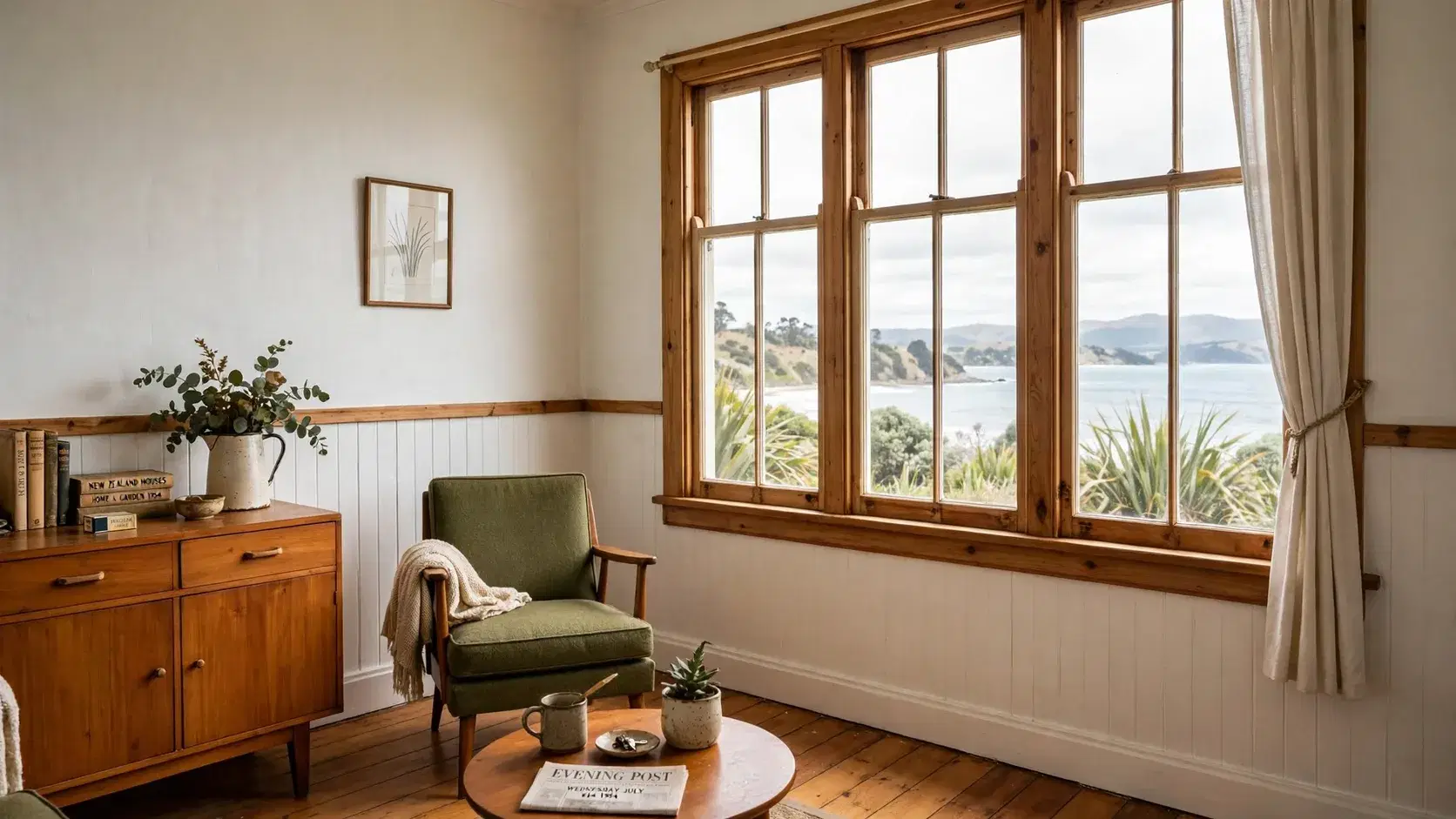
Interior painting in Titahi Bay is 1950s interior painting. The state era homes carry original timber trim, doors and window frames in old oil based enamel, fibrous plaster and early gib linings, and small rooms where every crack and patch shows. The imported prefab houses have their own interiors again, larger windows and lighter construction than the standard state house. Later layers add the 1960s and 1970s homes behind the grid and the modern infill, where the work is open plan colour changes.
One question from owners of the bay’s post-war homes comes up constantly: can you paint over a textured ceiling? The honest answer starts with a test, not a roller. Textured ceilings applied from the 1960s into the 1980s can contain asbestos, so nobody scrapes, sands or disturbs one until it has been tested. If it tests clear, we paint it like any ceiling. If it does not, we talk through safe options such as leaving it undisturbed, or bringing in licensed removal before any repaint. The same care goes into the trim: old enamel gets sanded and de-glossed so new water based coats actually grip, cracks repaired, floors and furniture masked, and low odour modern paints keep the house liveable while we work.
Exterior Painting Titahi Bay
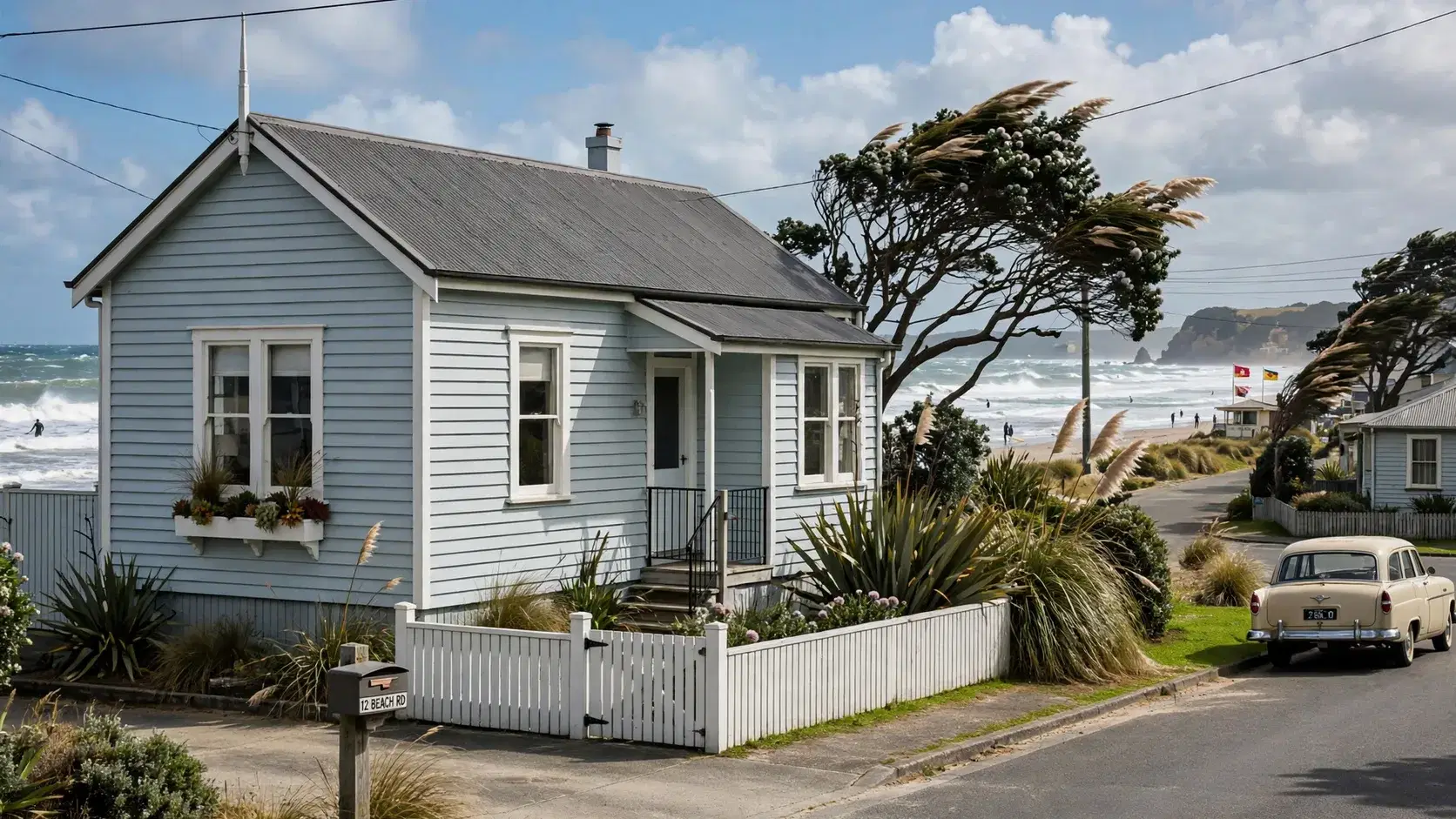
Exterior painting in Titahi Bay is open coast painting, the hardest painting environment in Porirua. Every other Porirua suburb we paint sits on the harbour; the bay faces the open Tasman across a one kilometre surf beach, and homes behind Bay Drive and Beach Road take salt laden onshore wind that harbour suburbs never see. The beachfront rows sit inside the high corrosion zone, within metres of the surf, so the work starts with a thorough salt wash, corrosion treatment where rust has started, and coating systems chosen for direct coastal exposure, not the harbour standard.
How long should an exterior paint job last here? Honestly, at the shorter end of the usual ranges: the beachfront and exposed view streets work their coatings harder than any sheltered street, and regular wash downs are part of the maintenance, not an extra. The harbour side at Onepoto is calmer, tidal water rather than surf, but still salt laden. Tell us your street and which coast you face, and we will tell you honestly what your house needs and how long it should hold.
Interior Plastering Titahi Bay
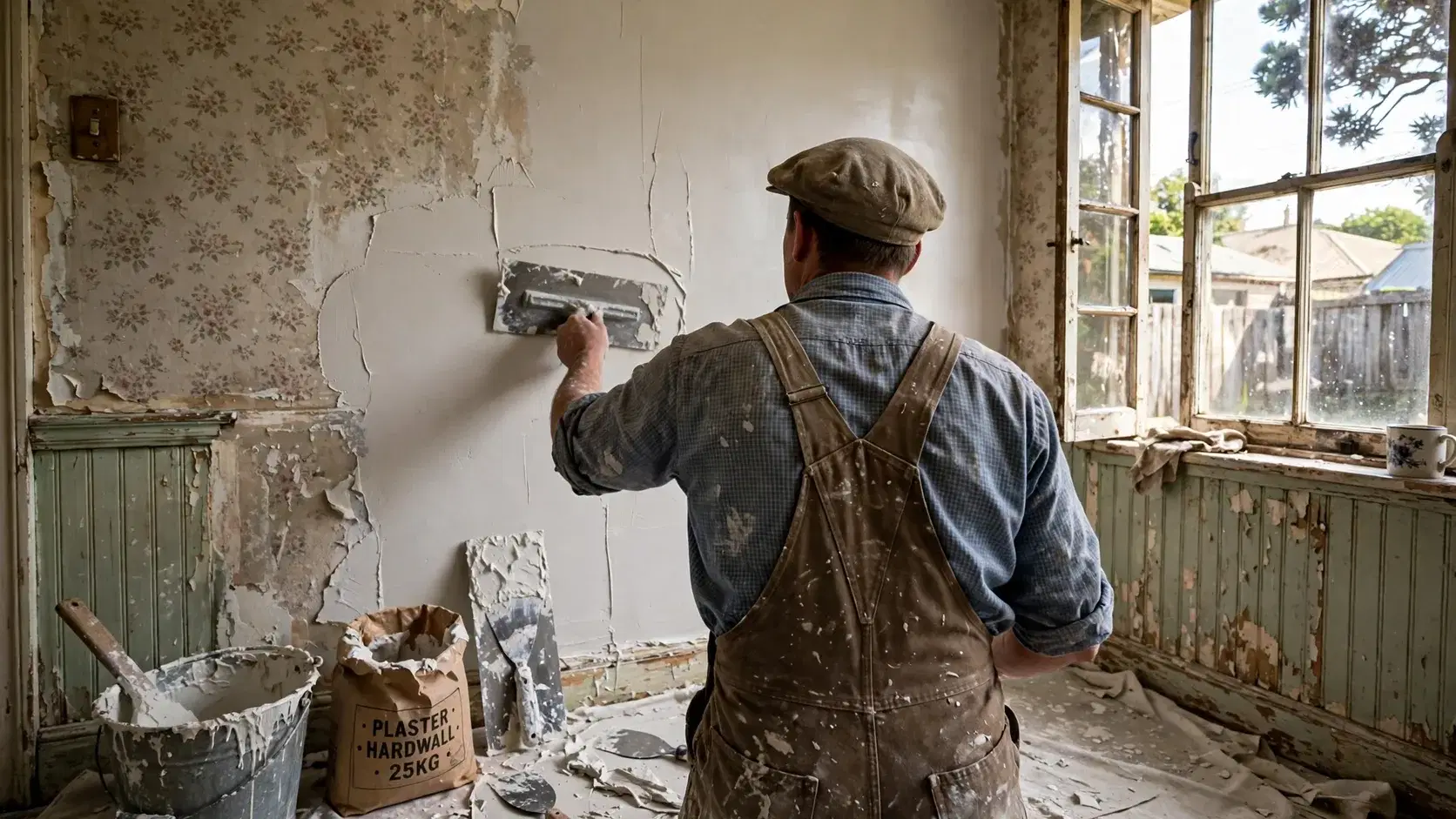
Interior plastering in Titahi Bay follows the state housing era. Homes built that fast, that long ago, have had seventy years of the house moving with the seasons, and settlement cracks across ceilings and along gib joins are the classic repair through the Main Road grid. The prefab houses add their own panel joins and lighter linings, and the beachfront layer, down to the 1910s bach on Beach Road, adds genuinely old plaster that needs gentle handling.
Our plasterers repair cracks properly, cutting out and stopping rather than smearing filler over a moving crack, skim coat tired walls to a paint ready finish, and repair the water damaged plaster that shows up where a tile roof or flashing has quietly leaked, a common find in a suburb of 1950s roofs. Plastering and painting are quoted together, so the finish you see at the end is one team’s work, with no gap between the plasterer’s standard and the painter’s. If a wall has been patched five times in seven decades, we will tell you if a full skim is better value than one more patch.
Exterior Coatings Titahi Bay
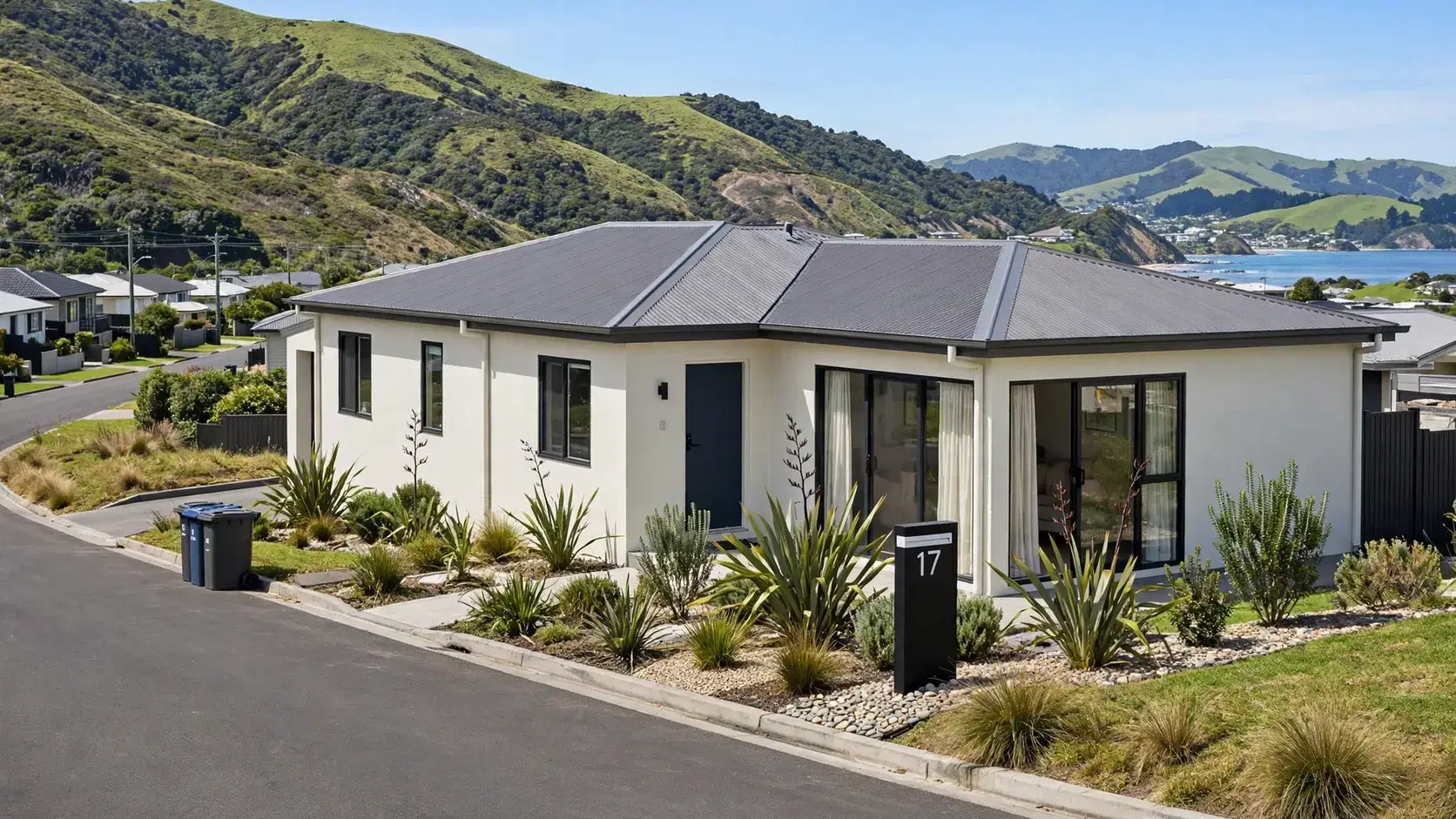
Exterior coatings in Titahi Bay are the specialist systems that protect the homes paint alone cannot, and here they belong to the suburb’s newest layer: the roughcast and texture coated homes in the modern streets (Main Road’s 2000s sample among them) and the mixed material infill. Those claddings live on their coating and their control joint sealants: once hairline cracks open and sealants tire, water gets behind the system, and the Wellington region’s 1990s and 2000s building era made that repair bill famous. We apply elastomeric and high build coating systems that bridge hairline cracks, flex with the building, and reseal the joints as part of the job.
The older claddings get honest conversations too. Fibrous cement walls, which run through the state stock, are painted, not coated over with heavy systems, and any damaged fibro gets identified before prep, because of what it can contain. One Titahi Bay warning deserves its own line: a 1940s Main Road house carries a fibrous cement ROOF on its council record, and roofs like that are never coated, blasted or sanded blind, they are tested first. Brick homes do not need their walls coated at all; on brick homes the work is the trims, eaves, soffits, joinery, gutters and roof. The system is matched to the cladding, not to a sales target.
Pressure Washing Titahi Bay
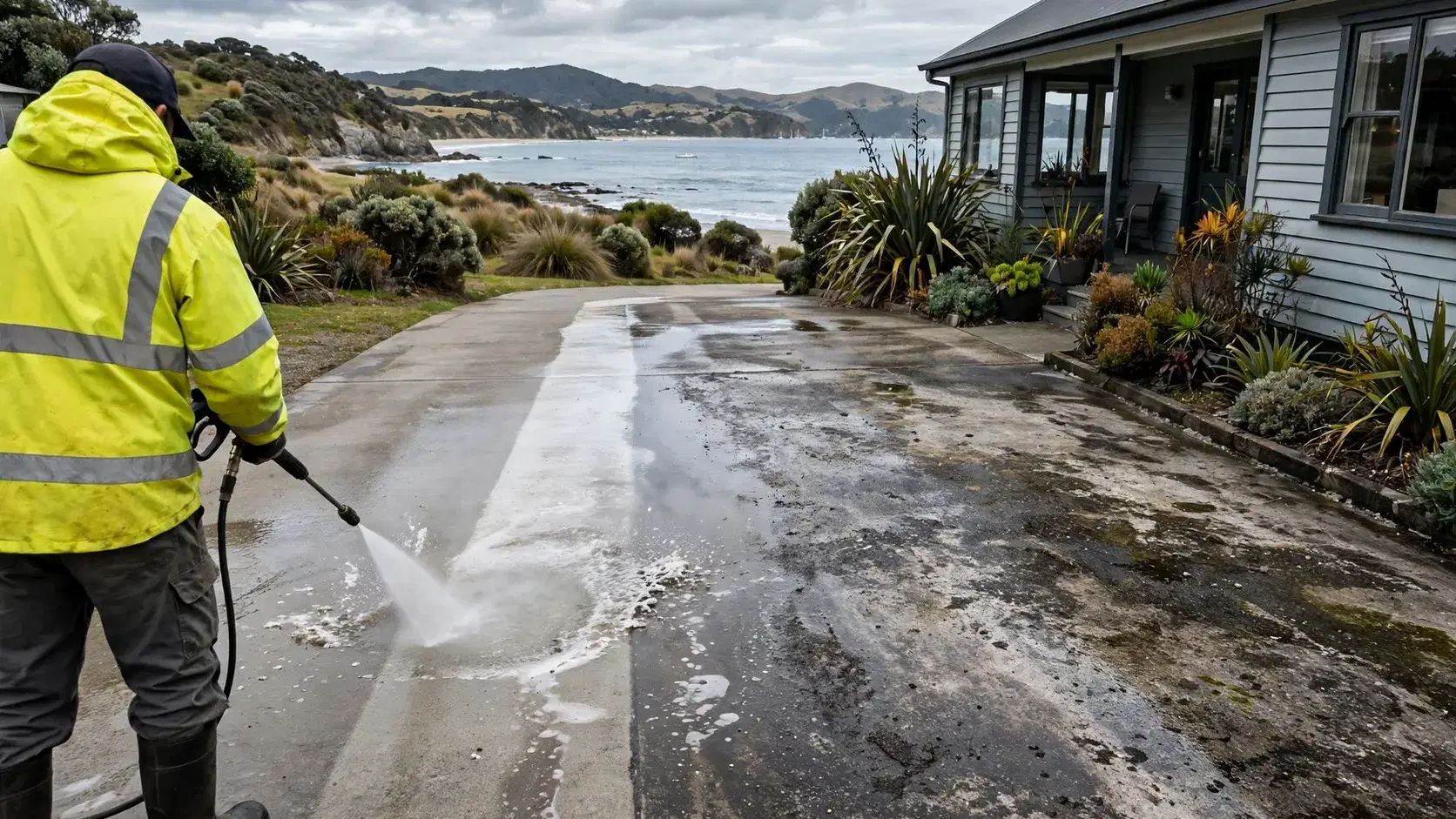
Pressure washing in Titahi Bay does two jobs: it is the first step of a proper repaint, and it is a clean-up and maintenance service in its own right for the salt film, mould, algae and grime that build up on cladding, decks, paths and driveways. On this coast the salt wash is not optional maintenance, it is the maintenance: sea spray salts concentrate exactly where rain never rinses, under eaves, behind downpipes and on sheltered walls, and corrosion does its worst work in those unwashed areas. Beachfront homes benefit from regular wash downs between repaints, and we can schedule them like clockwork.
Should you waterblast a house before painting it? Yes, a wash is part of proper prep, but the method matters. We soft wash where the surface calls for it, and one rule never bends: asbestos era materials are never waterblasted. In Titahi Bay that means fibrolite cladding and soffits through the state stock, and any fibrous cement roofing. Blasting them breaks the material up and spreads fibres, so those surfaces get tested first and handled the safe way.
Mould Removal Titahi Bay
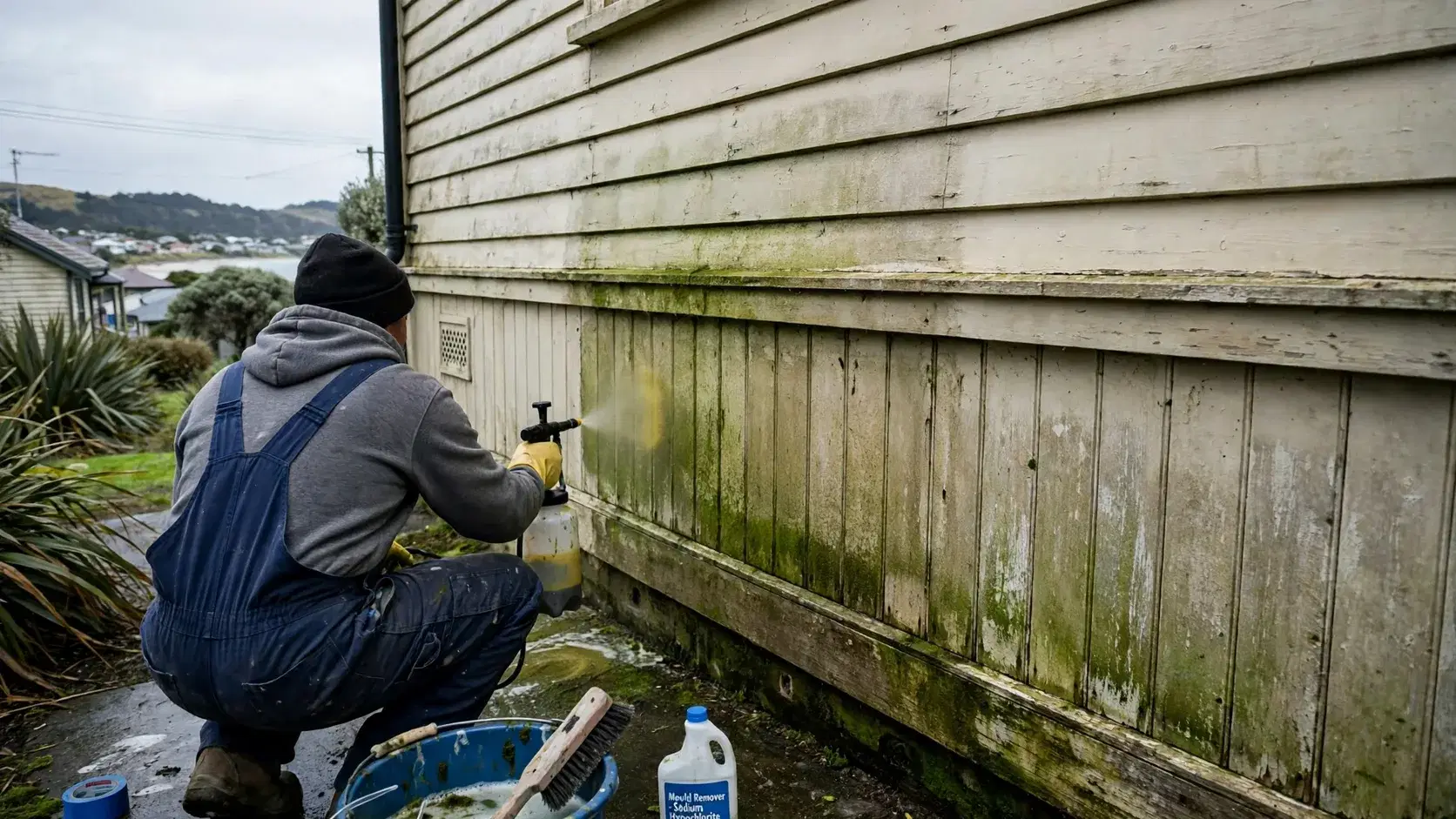
Mould removal in Titahi Bay works against the coast itself. Wind driven rain pushes moisture into every weakness on the exposed faces, salt on beachfront walls holds damp against the paint film, and the shaded south facing walls dry last after every southerly. Nationally, the 2023 Census counted 18.1 percent of New Zealand dwellings as damp and 14.0 percent with significant mould, and a suburb of 1950s homes on an open coast has every mechanism those figures describe, working at full strength.
Our mould work kills the growth at the root rather than bleaching the surface, treats the affected cladding and trim, and then paints with mould resistant systems chosen for coastal, damp exposure. We will also tell you honestly what is feeding it: a leaking gutter, a failed tile bedding letting water track in, vegetation hard against a shaded wall. Kill the mould, fix the cause, and coat it properly, and it stays away for years instead of months.
Butynol Coating Titahi Bay
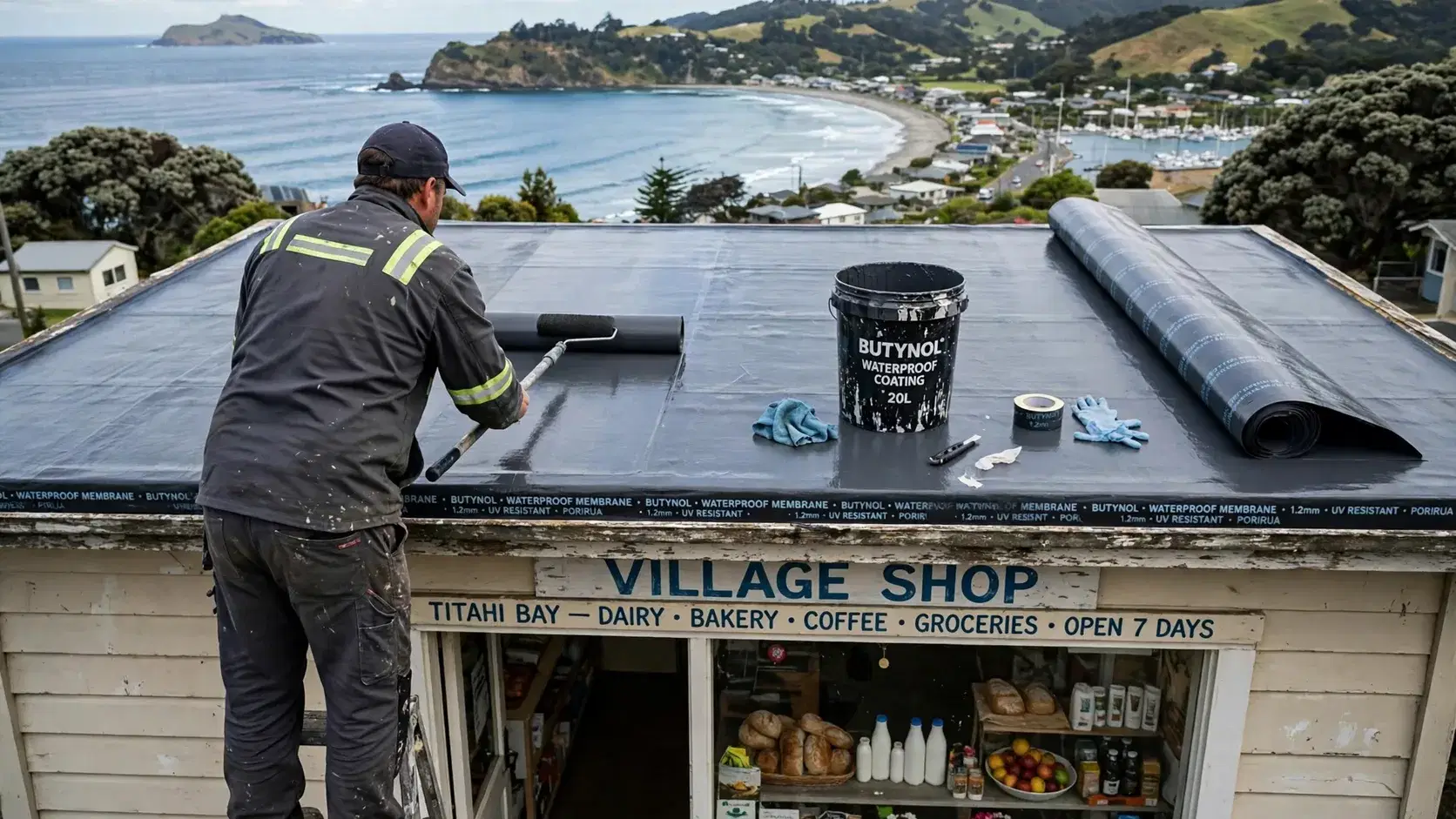
Butynol coating in Titahi Bay protects the low slope and flat roofs that standard roof paint cannot save. The suburb has its share: low pitch additions and carports behind the state houses, flat roofed sections on the view street homes, and the membrane roofs of the village centre shops on Main Road. When the original membrane ages, seams lift and the surface perishes under the coastal sun and salt, and patching buys months, not years.
We strip or overlay failing membranes depending on their condition, prepare the substrate properly, and apply Butynol waterproofing systems with the laps, upturns and detailing done to specification. A flat roof over a living space has no margin for shortcuts, because the leak you see inside is never directly under the hole. If your low slope roof is ponding water or the membrane is cracking, we will inspect it and tell you straight whether a recoat will hold or the substrate needs work first.
Roof Painting Titahi Bay
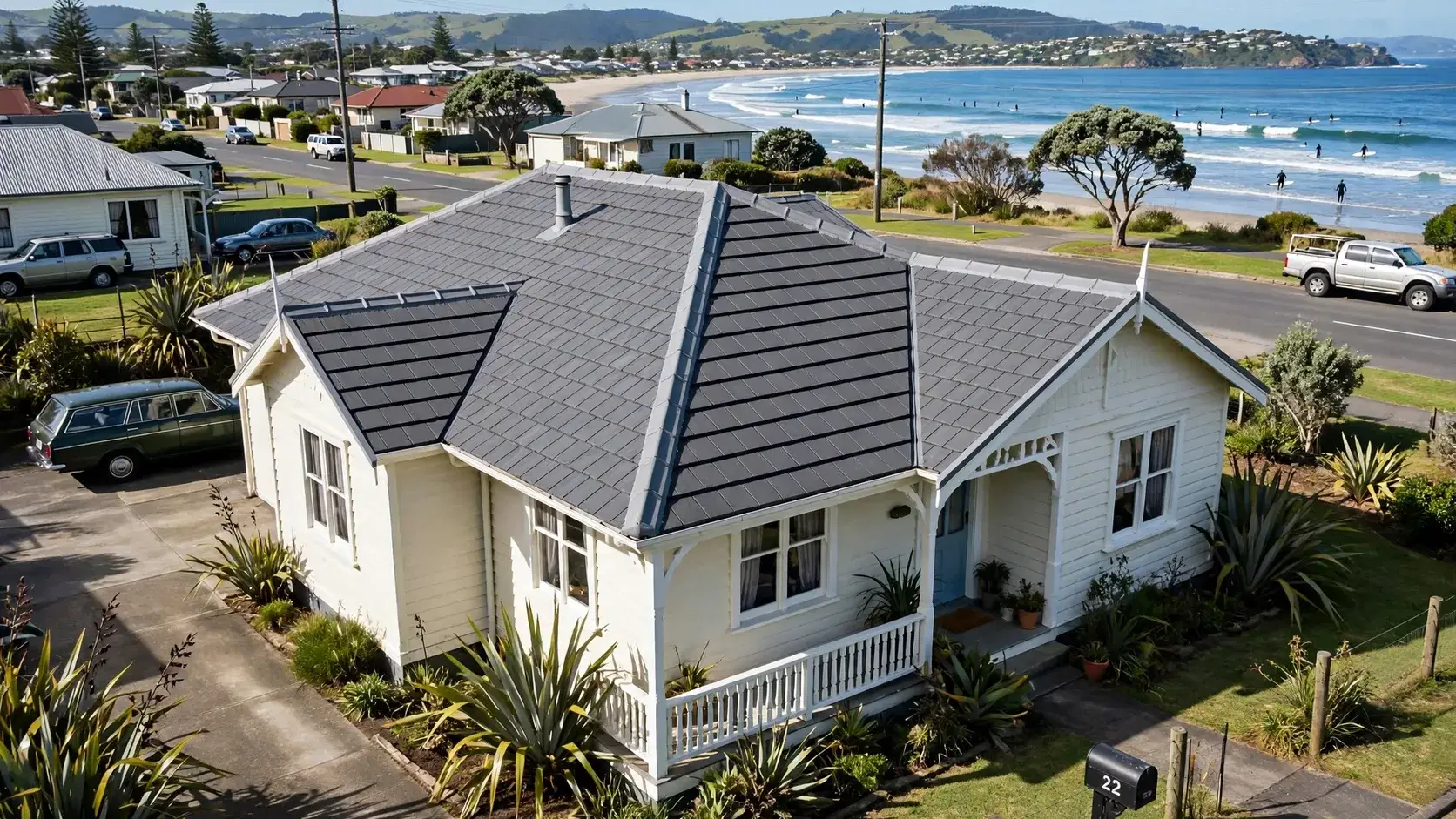
Roof painting in Titahi Bay starts with a surprise: this is a tile roof suburb. When we sampled Porirua City Council records across the bay, every one of the eight 1950s homes carried a concrete tile roof, on weatherboard and fibro homes alike. So the bay’s standard roof job is tile roof restoration, and it is a different system from painting iron: concrete tiles of that era lose their surface coating, grow moss and lichen in the salt air, and their mortar bedding and pointing fail, letting water track under the tiles. Restoration means cleaning, repairing bedding and pointing, treating the growth, and recoating with a tile roof system, done in that order.
Iron roofs are the minority here, and they have their own Titahi Bay stories: the 1910s bach on Beach Road, the imported prefab houses with their low pitched corrugated sheet roofs, and the newest infill. Iron follows the usual discipline: wash, treat rust properly, prime with the right system or the new coat peels, and apply two coats of premium roof paint. And the standing warning: the fibrous cement roof recorded on a 1940s Main Road house is never blasted, sanded or coated blind. It gets identified and tested first, because fibrous cement of that era can contain asbestos.
Residential Painting Titahi Bay
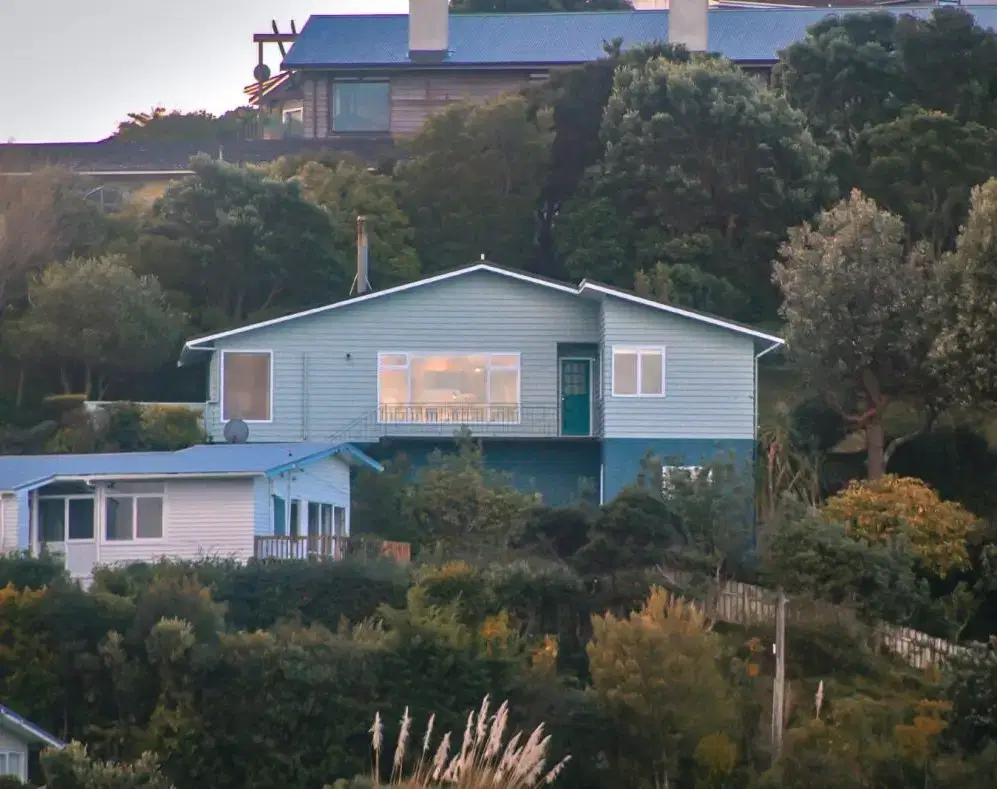
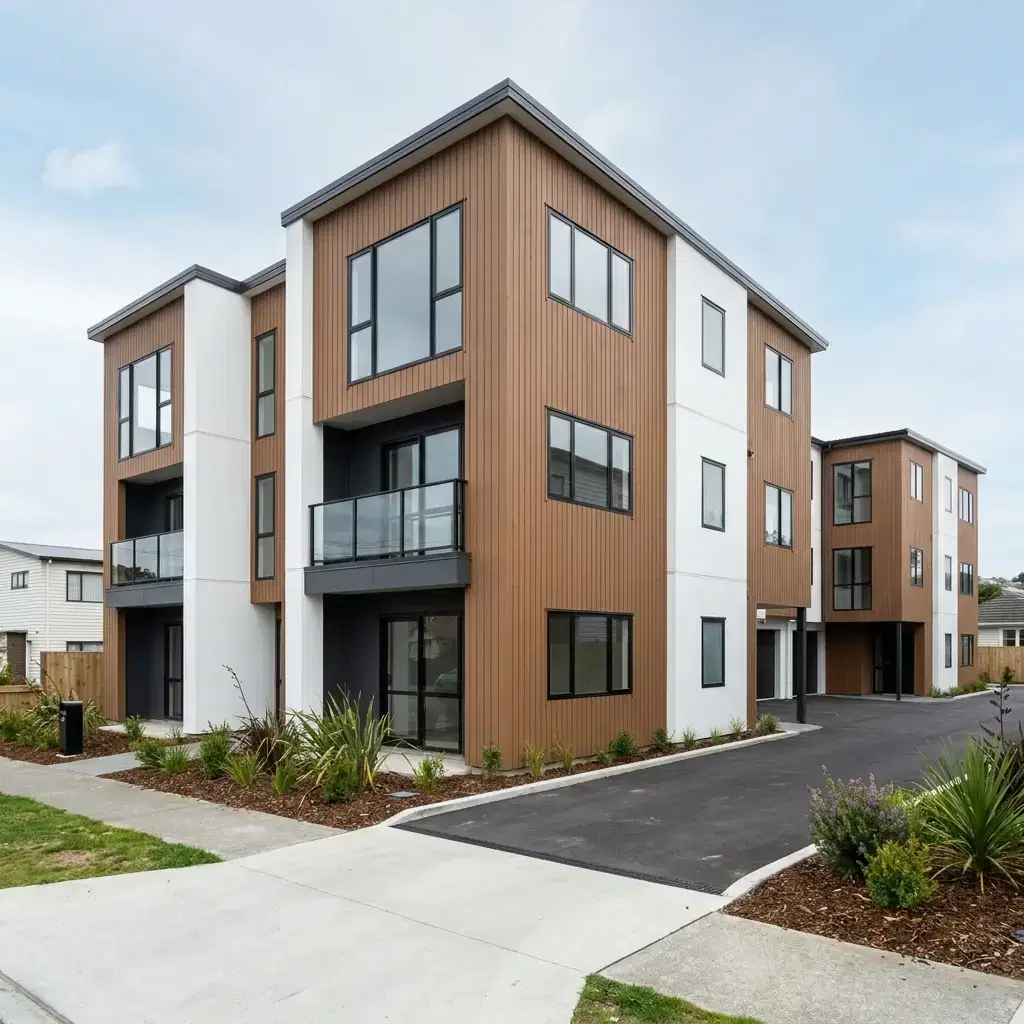
Residential painting in Titahi Bay is our core work: whole home repaints, inside and out, across the bay and the harbour side. The pattern repeats across the layers. A Main Road grid state house gets lead aware prep, its fibrolite checked, and a coastal specification repaint with a tile roof restoration in one program. A beachfront home gets the full salt regime: wash, corrosion treatment, coastal systems, and a wash down schedule to protect the work. A Gloaming Hill view home gets scaffold organised and its texture coats checked. A Onepoto harbour home gets the calmer but still salt laden treatment its shoreline needs.
We win it by knowing the bay: fixed written quote, surfaces and gardens protected, prep done to the standard the cladding and the coastline need, premium coatings matched to the exposure, a tidy site every night, and a walk-through with you at the end. Whether it is a single room in the north bay or a full exterior and roof program on the beachfront, the standard does not change.
Commercial Painting Titahi Bay
Commercial painting in Titahi Bay covers the bay’s working buildings: the village centre shops on Main Road, where the former US Marines Hall stands as part of the shopping centre’s context, the Titahi Bay Surf Life Saving Club in the centre of the bay, the boating club at Onepoto, and the schools and community buildings across the suburb. It is a village scale commercial scene with a coastal twist: every one of these buildings takes the same salt and wind as the beachfront homes, and their coatings work just as hard.
We schedule commercial jobs in stages and outside trading or operating hours where needed, keep access ways and signage clear, and use durable commercial coatings specified for high wear, easy cleaning and coastal exposure. If you run a business or a club in Titahi Bay and the building is letting the side down, we will quote it free and plan the work around your hours, not ours.
Common Paint Problems We Fix in Titahi Bay Homes
After years of painting on the Porirua coast, we see the same failures again and again. If any of these sound familiar, you are not alone:
How Much Does House Painting Cost in Titahi Bay?
The question everyone asks first: what will it cost to paint my house? The honest answer is that it depends on size, condition and access, and Titahi Bay adds two variables of its own: coastal specification prep, and tile roofs. Here are realistic guide prices for Titahi Bay homes:
| Job | Typical guide price |
|---|---|
| Full exterior repaint, 3 bedroom weatherboard home | $8,000 to $15,000 |
| Full interior repaint, 3 bedroom home | $6,000 to $11,000 |
| Roof painting, corrugated iron | $4,500 to $9,000 |
| Single room repaint | $800 to $1,500 |
These are guide prices to help you budget. Published Wellington guides put Porirua’s flat section homes at the lower end of the regional ranges, so the access side of a Titahi Bay quote is usually fair; the coastal prep and any tile roof restoration are the bay’s own extras. A note on the roof line: it prices iron roof painting, and most Titahi Bay roofs are concrete tile, which is quoted separately as a restoration after inspection. Every home is different, and the only accurate figure is a written quote after we have walked the property. What changes the price?
- Preparation. This is the big one, often half the job or more on an older Titahi Bay home. Salt washing and corrosion treatment on the exposed faces, lead aware prep on the 1950s and 1960s stock, asbestos testing where the era fits, and decades of layered paint all take time, and any quote that looks cheap usually got cheap by shrinking the prep. That is the corner that fails first, fastest on this coast.
- Roof type and condition. A concrete tile restoration (clean, bedding and pointing repairs, treatment, recoat) is a different scope from an iron roof repaint, and a roof left too long costs more to bring back than one restored in time. The quote separates the roof program from the wall program so you can see both clearly.
- Scaffolding and access. Most of the state stock is single storey on level quarter acre sections, which is ladder and platform work. The view streets and the newer two storey beachfront rebuilds need scaffold, which published Wellington guides price at $2,000 to $5,000 on top of the paint work. We organise the access as part of the quote, you do not have to arrange it yourself.
- Exposure and paint system. Beachfront homes need full coastal systems, harbour side homes a step down, and shaded streets need mould resistant systems. The right system costs a bit more up front and lasts years longer, and on this coast the wrong one is not a saving at all.
- Old materials testing and handling. If your pre-1990 home tests positive for lead paint or asbestos containing materials, controlled methods, containment and proper disposal add time and cost. In a suburb whose biggest decade is the 1950s, this is a routine line in our quotes, not a surprise.
We give free, no obligation written quotes with the work broken down, so you can see exactly what the prep, roof program and coatings cost. No hidden extras halfway through the job. That is not how we do business.


What to Know About Painting Titahi Bay Homes
Titahi Bay is two coasts and one state housing grid sharing a name, and painting here well means knowing which coast and which layer you are standing in. We are based in Whitby, just across the harbour, and we are painting somewhere in the bay most working weeks. Here is the local knowledge that shapes how we quote and paint across the suburb.
The beachfront and Bay Drive (5022) are the suburb’s front line: the one kilometre surf beach, the boat sheds at both ends that are the bay’s signature photograph, the Surf Life Saving Club in the centre, patrolling since 1938, and the streets directly behind the sand, Bay Drive, Beach Road and Toms Road. This is the oldest housing layer too, including the 1910s bach still standing on Beach Road, and it carries the full open coast load: salt at the fence line, driven rain, and the shortest repaint cycles in Porirua. At the beach’s south end, the fossil forest reef, tree stumps about 100,000 years old visible at low tide beside the greywacke rock platform, is the suburb’s strangest and best landmark.
Titahi Bay North (5022) runs toward Whitireia Park, Dimock, Morere and Herewini Streets, with Titahi Bay North School starting as a side school in 1957. The old golf course land at this end held the wartime Marines camp, 1,500 men in a camp designed by the Government Architect, and the north’s 1950s stock, wood walls under concrete tile on level to gently falling sections, was built in its aftermath. Painting here is state era painting with the camp story under the streets.
Central Titahi Bay and the Main Road grid (5022) are the suburb’s heart: the village shops, and beside them the former US Marines Hall of 1942, scheduled in the district plan for its historic and social value, with Porirua Little Theatre founded in the Marines’ recreation hall in 1950. Titahi Bay School opened in 1953 on the camp site itself. Behind the shops runs the regular state grid on quarter acre sections, single storey weatherboard and fibro under tile, including the imported prefab streets of the early 1950s, kitset houses from England and Austria that were an experiment never repeated at that scale.
Titahi Bay South and Gloaming Hill (5022) are the view streets: Te Pene Avenue, Gloaming Hill and Whenua View climbing on easy to moderate contours above the beach’s south end. The 1950s stock climbs with them (5 Whenua View, wood and tile) and the 2000s added brick infill beside it (10A Whenua View). Exposure splits by height here: the elevated faces take the wind and the view together, and the scaffold work concentrates on these streets.
Onepoto and the harbour side (5022) are the bay’s other coast: Te Onepoto Bay and Onepoto Road at the end of Titahi Bay Road, the Titahi Bay Boating Club, and harbour water, tidal and calm, against the surf side’s roar. Onepoto is its own statistical area of about 1,980 people whose addresses run as Titahi Bay, and its painting is harbour painting: still salt laden, still coastal specification, but without the driven surf spray of Bay Drive.
Wherever you are in Titahi Bay, the pattern is the same: the decade tells us the materials, the materials tell us the prep, and the coast tells us the exposure. That is the difference between a painter who works in Titahi Bay and one who just drives through it. Call us for a free quote and we will come and read your house properly.
Our Step-by-Step Professional Painting Process
Free Consultation
We visit your Titahi Bay home, from the beachfront to the view streets, look at the surfaces, roof type and access, test older paint for lead where the era fits, flag anything that needs asbestos testing, and give you a written quote with the work broken down. No obligation, no pressure.
Careful Area Setup
We protect your floors, furniture, gardens and paths, set up safe access and scaffold where the streets climb, and keep the site tidy and secure from day one.
Thorough Surface Preparation
We wash the surfaces (soft wash only on asbestos era materials, never a waterblast, and never on fibrous cement roofing), scrape and sand back to sound paint, treat mould, salt and rust, repair rot, cracks and tile bedding, and prime bare timber and repairs the same day they are exposed.
Premium Paint Application
Two coats of premium paint matched to your coast’s exposure, full coastal systems on the surf side, mould resistant systems on the shaded faces, and the schedule sequenced honestly around coastal weather windows.
Inspection & Full Clean-Up
We walk the whole job with you, fix any touch ups on the spot, remove all masking and rubbish, and leave your home cleaner than we found it, with the workmanship guaranteed.
Not in this suburb? We also paint homes across nearby Whitby, Plimmerton, Paremata, Papakowhai, Aotea and Tawa, so get in touch for a free local quote.
Why Choose Us, Your Trusted Painting Company in Titahi Bay
Capital Painting Services is a family owned and operated painting company based in Whitby, proudly serving Titahi Bay, Porirua and the wider Wellington region. Led by Phil, we are passionate about helping homeowners and businesses protect and enhance their properties with high quality interior, exterior, and roof painting services, all backed by guaranteed workmanship.
Why do Titahi Bay homeowners choose us?

FAQs
Ready to Give Your Titahi Bay Home the Paint Job It Deserves?
Ready to give your Titahi Bay home the paint job it deserves? Whether it is a 1950s state house ready for its next twenty years, a beachfront bach holding the line against the Tasman, or a view home on Gloaming Hill that needs its coatings renewed, we would love to help. Call us today for a free quote, and let’s make your place look its best.
Capital Painting Services: professional house painters in Titahi Bay. Interior painting, exterior painting, roof painting, plastering, pressure washing and more. Family owned and operated, led by Phil, based in Whitby and working right across Titahi Bay. Call 022 071 5878 for your free quote.